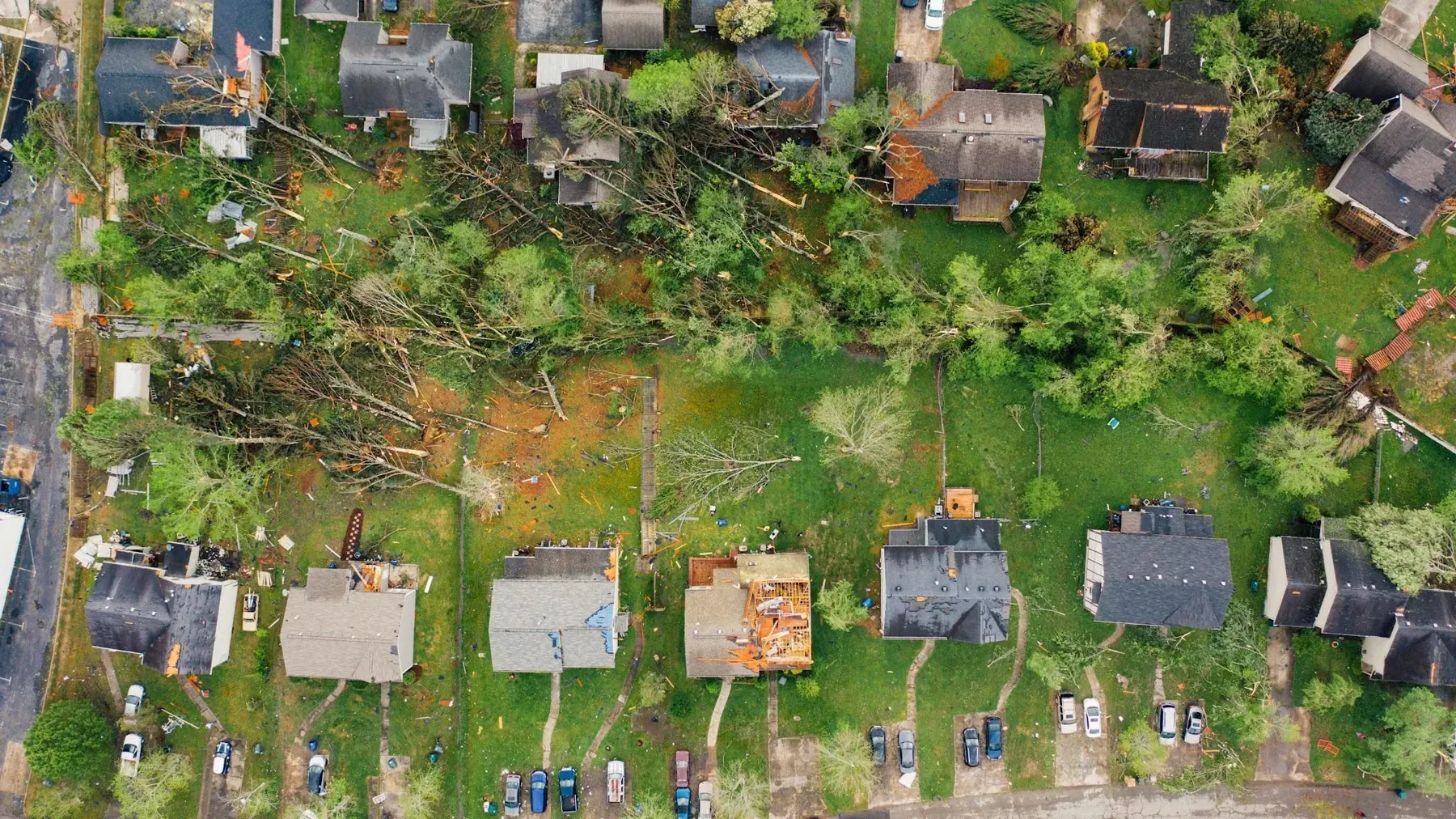
Plenty of homeowners never file afterward. Some assume a claim needs hail, and others write off a few missing tabs as normal wear. Wind is a covered peril on most Colorado homeowners policies, usually under the same wind and hail deductible, but a wind claim is proved differently from a hail claim. This guide explains how.
How wind damages a shingle roof
Asphalt shingles are held down by nails and by a strip of sealant that bonds each course to the one below it. Wind attacks that bond first. Once the seal lets go, the tab lifts and drops with every gust. That flexing leaves a straight crease across the tab, usually near the nail line, and a creased tab eventually tears off.
The damage starts where uplift pressure is highest: the rakes, the ridge and the eaves. On our Pueblo West jobs it often begins along a long, unbroken rake and works inward over several storms. Lifted ridge caps, backed-out nails and punctures from blown debris round out the usual list.
One trap is that a shingle with a broken seal can lie flat again after the wind drops. From the driveway the roof looks fine, while dozens of tabs are loose and waiting for the next storm.

Wind, age or hail?
Adjusters sort roof damage into these three causes, and the evidence for each looks different.
| What you see | Points to wind | Points to age or wear | Points to hail |
|---|---|---|---|
| Missing tabs | Torn along a crease, concentrated on edges and windward slopes, pieces in the yard | Brittle shingles cracking in place across the roof | Rarely the main sign |
| Creases | A straight horizontal line across the tab near the nail line | Random cracks, curling or cupping | Not typical |
| Granule loss | Little, mostly at creases and tears | Even wear, worst on slopes with the most sun | Dark round bruises scattered over the slope |
| Ridge caps | Lifted, cracked at the fold, or missing in runs | Cracked along the whole ridge | Fractured at impact points |
| Gutters, vents, AC fins | Usually untouched | Untouched | Dented |
| Pattern on the roof | One or two exposures, starting at edges | The whole roof | Slopes facing the storm |
If the soft metals are clean and the damage tracks one direction from the edges in, that points to wind. Our hail damage guide covers the other side of the table in detail.
Building a wind claim
- Pin down the date of loss. Carriers check your date against weather records. NOAA's Storm Events Database lists reported high-wind events by county going back decades, but it updates monthly with up to a 90-day delay, so a recent storm may not appear yet. Keep National Weather Service warnings, news reports and your own time-stamped photos from that day.
- Photograph before anything moves. Shoot each slope from the ground, pieces of shingle in the yard, and lifted ridge caps you can see. Leave the ladder work to a roofer.
- Stop the water. Tarp any exposed decking and keep the receipt. Reasonable mitigation costs are usually part of the claim.
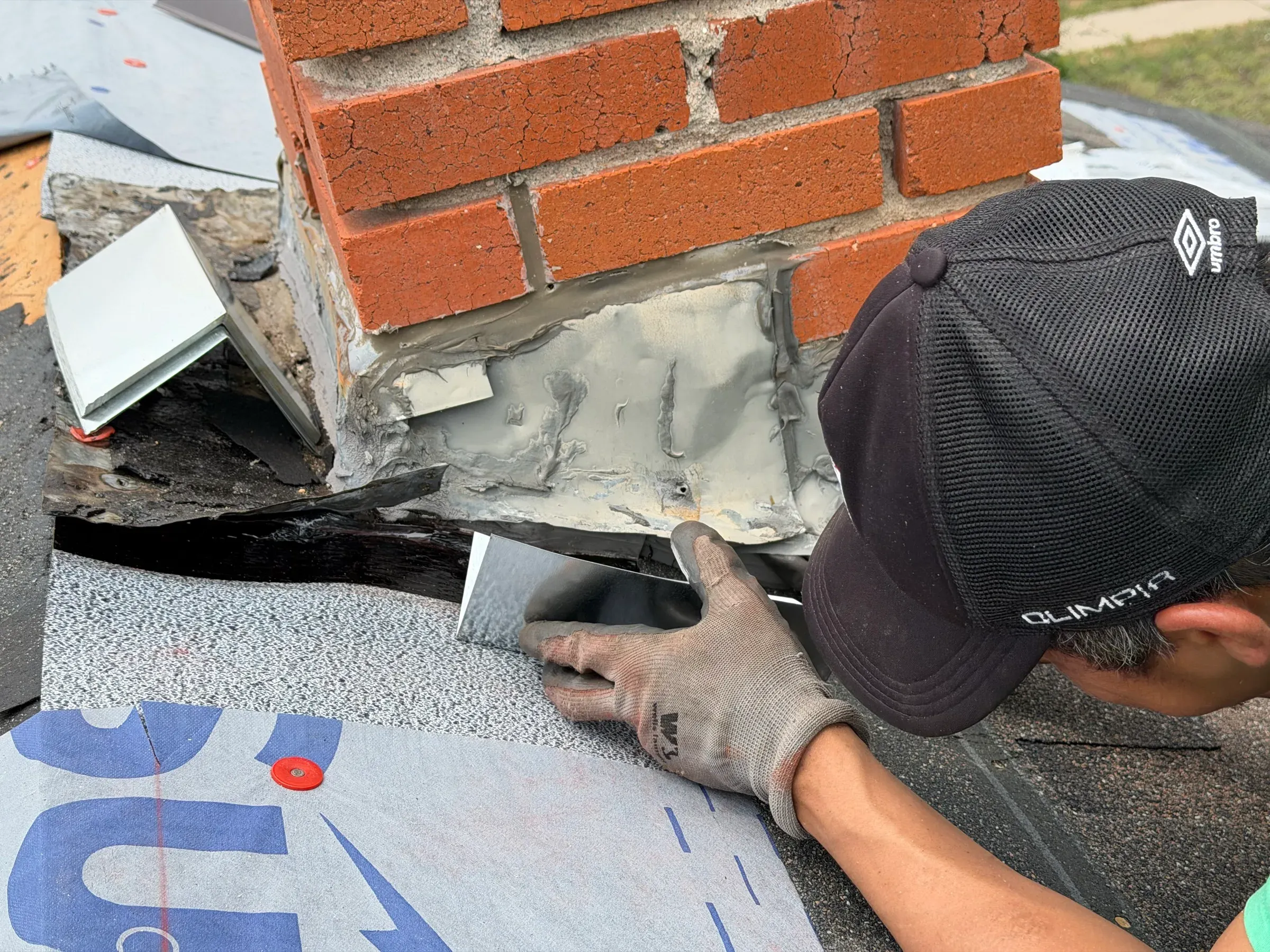
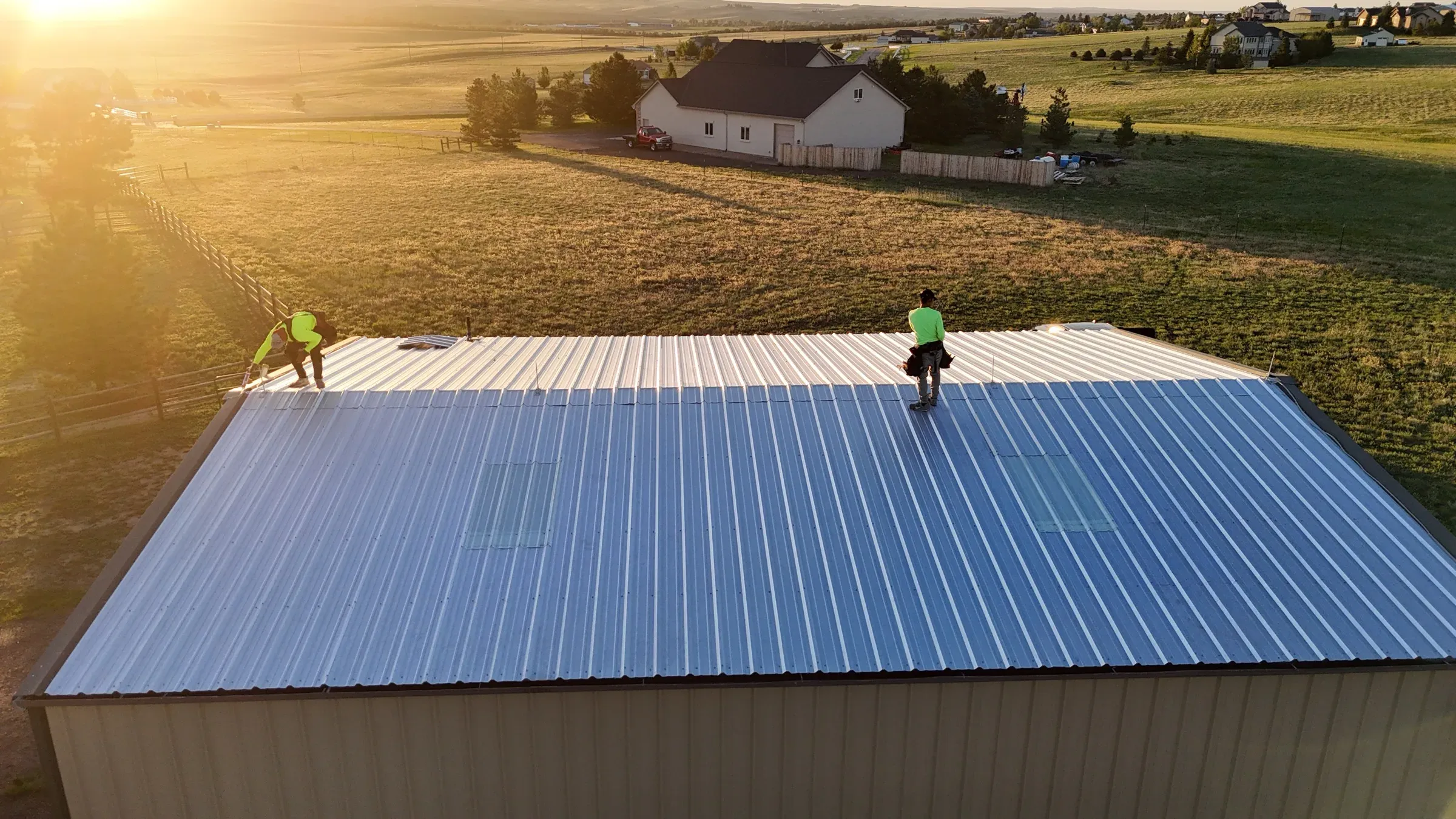
- Inspect every structure on the lot. Detached shops, RV garages and barns are usually covered as other structures, and they're among the items most often left off a first scope in Pueblo West.
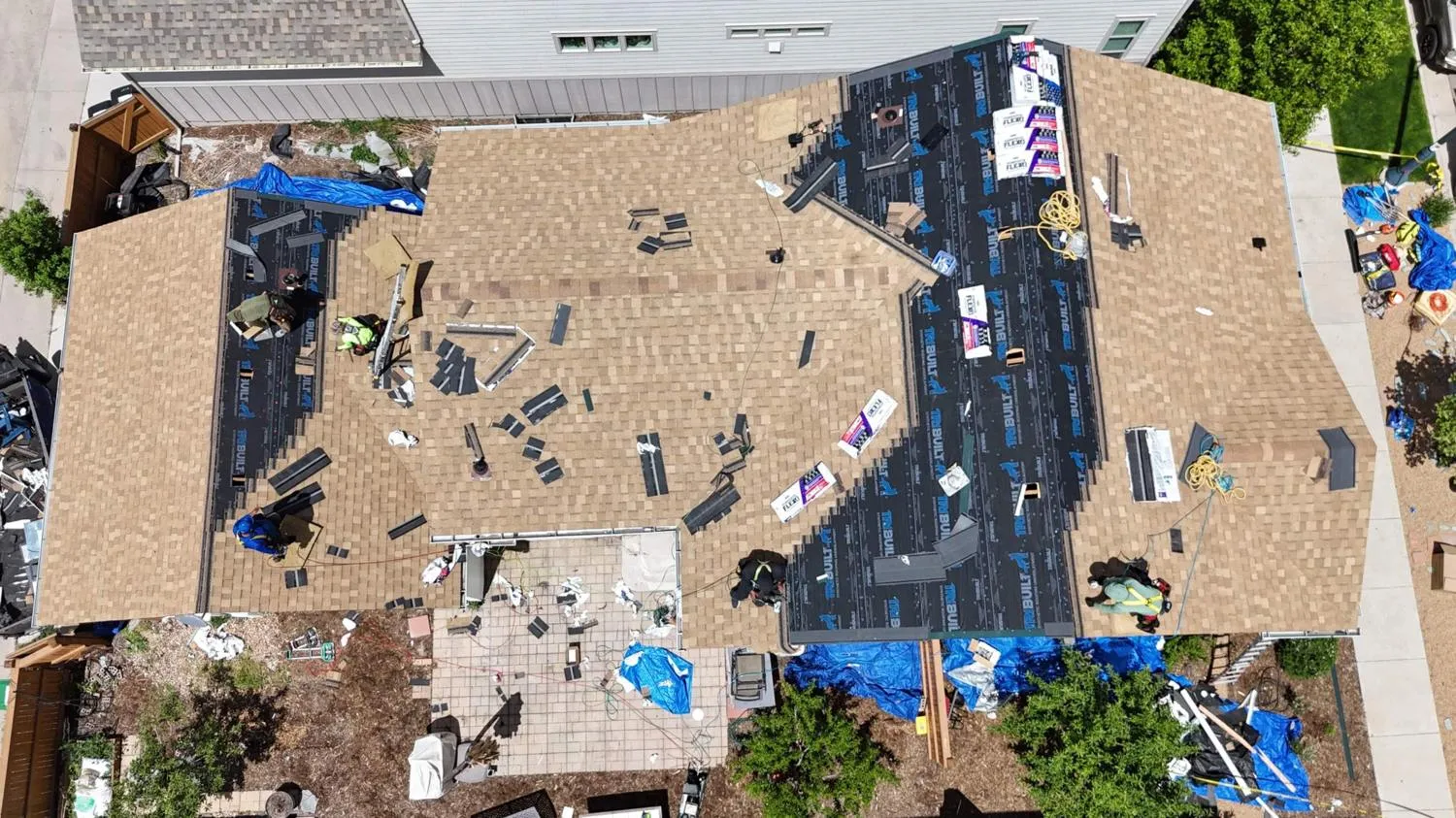
- File, then have your roofer meet the adjuster. Our insurance claim support team walks the roof with the adjuster and points out creased tabs a drone photo misses.
Expect one argument in particular. An adjuster may say the shingles were never sealed properly, or lost their seal to age. The counter is physical evidence: creases and tears that follow a wind direction, damage concentrated at the edges, and a date that lines up with a recorded storm. The adjuster meeting section of our claim guide covers what we document on the roof.
Two storms can mean two deductibles
Most policies treat each date of loss as its own claim, with its own deductible. A March windstorm and a June hailstorm are two events. Combining them under one date, or guessing the date, invites a denial. Filing deadlines commonly run one to two years from the date of loss, so check your policy and don't sit on wind damage. Every gust after the seal breaks makes the roof worse.

Repair or replace after wind
A handful of missing tabs on a roof that's still pliable is a roof repair job. Replacement comes into play when the shingles are so brittle they crack as a crew lifts them to slip in new ones, when the damage is widespread, or when the product has been discontinued. On matching, the Division of Insurance hail FAQ says no Colorado law requires an insurer to match undamaged areas, so read what your own policy says.
Building the next roof to stay on
Wind damage on the mesa is often an installation problem that shows up years later. When we replace a wind-damaged roof, these details get the most attention:
- Wind-rated shingles. Look for ASTM D3161 Class F, tested at 110 mph, or ASTM D7158 Class H, rated for a 150 mph basic wind speed. NRCA's Professional Roofing magazine explains both classification systems.
- Starter strip at the rakes as well as the eaves, so the first course along every edge is sealed down.
- The manufacturer's high-wind nailing pattern. Building code sets a minimum number of nails per shingle, and most high-wind instructions call for six, placed in the nailing zone.
- Ridge cap made for the ridge. Cut field shingles folded over the peak crack at the fold.
- Metal on the most exposed sites. Standing seam handles sustained wind well and also reaches Class 4 for impact resistance.
Getting wind damage on the record
Wind leaves different evidence than hail, and the homeowners who get paid are the ones who record it early: a date, photos, a full inspection of every structure, and a roofer on site with the adjuster. If the next roof goes on with sealed edges and the right nailing pattern, the mesa has a much harder time taking it apart.
Alta Roofing inspects wind and hail damage across Pueblo West, Pueblo and Colorado Springs, shops and barns included. Our storm and hail restoration crew documents every slope before anyone files. Book a free inspection after the next big wind, even if there was no hail.