
Detailed Guide to Hail Damage Roof Repair
Understanding Hail Damage Roof Repair

When a severe hailstorm hits, your roof is often the first line of defense, but it can also be the most vulnerable. Many homeowners find themselves needing hail damage roof repair after a storm. If you suspect your roof has been damaged by hail, here are the immediate steps to take:
- Ensure Safety: Check for immediate hazards around your home.
- Document Damage: Take clear photos and videos of any visible damage to your roof, gutters, siding, and other exterior elements.
- Contact a Professional: Schedule an inspection with a reputable roofing contractor.
- Review Insurance: Understand your homeowner's insurance policy regarding hail damage coverage.
- File a Claim: Submit your insurance claim promptly, as deadlines can apply.
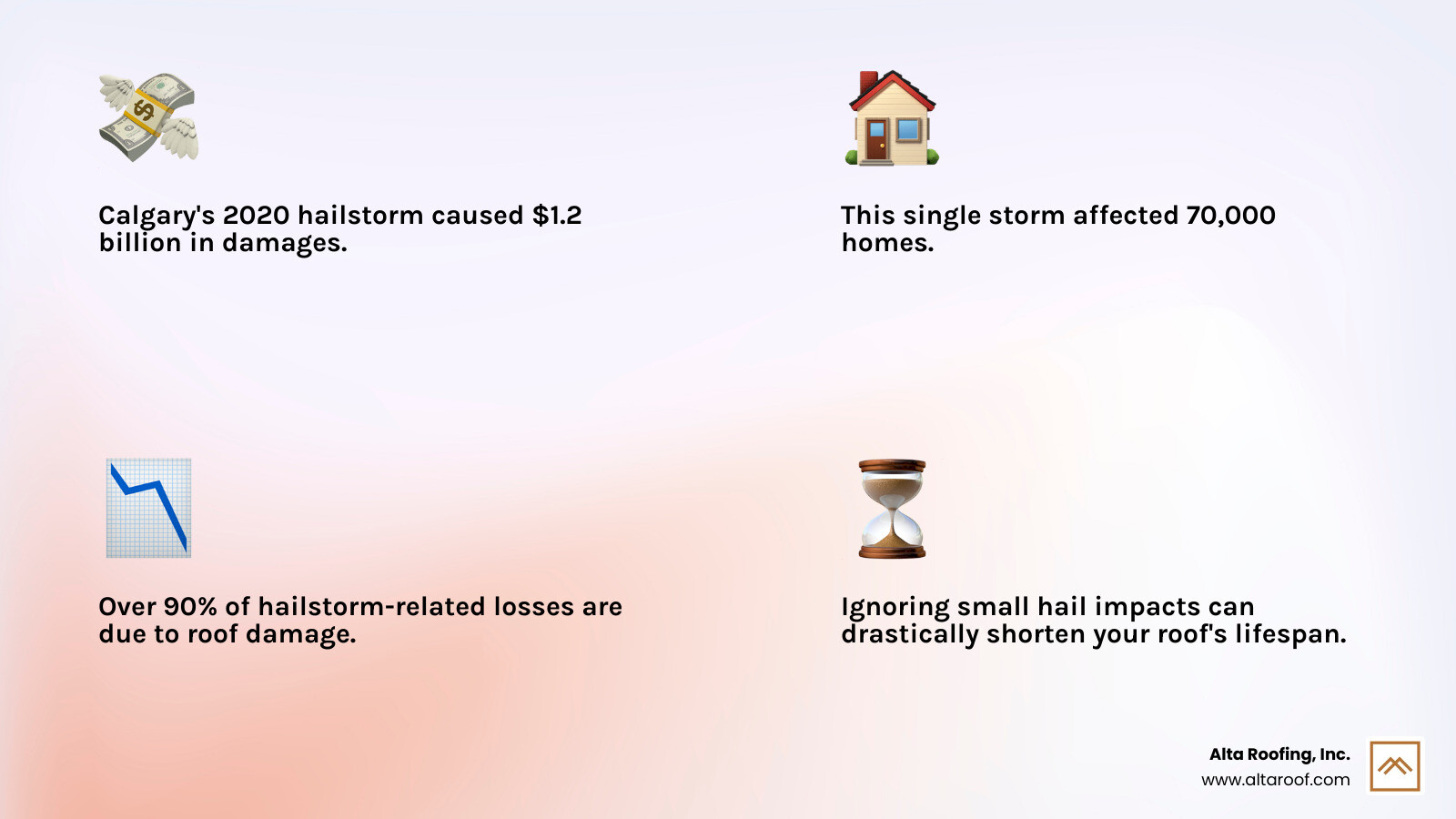
Hail can cause significant and costly damage. For instance, a single hailstorm in Calgary in 2020 resulted in at least $1.2 billion in damages, affecting 70,000 homes. Studies show that over 90 percent of losses from hailstorms are often due to roof damage alone. Ignoring even small impacts can shorten your roof's life and lead to much bigger problems later. This guide will walk you through everything you need to know to protect your home and steer the repair process.
As Barry Goers, an entrepreneur and investor deeply rooted in the construction industry, I've seen the critical need for effective hail damage roof repair. My experience has given me a unique perspective on managing and investing in solutions for these challenges.
Identifying Signs of Hail Damage Across Roofing Materials
Living in Colorado, we are no strangers to wild weather. From Denver to Colorado Springs, our roofs take a beating from ice balls that can range from the size of a pea to a grapefruit. But how do you know if you actually need hail damage roof repair? The signs vary wildly depending on what your roof is made of.
Asphalt Shingles
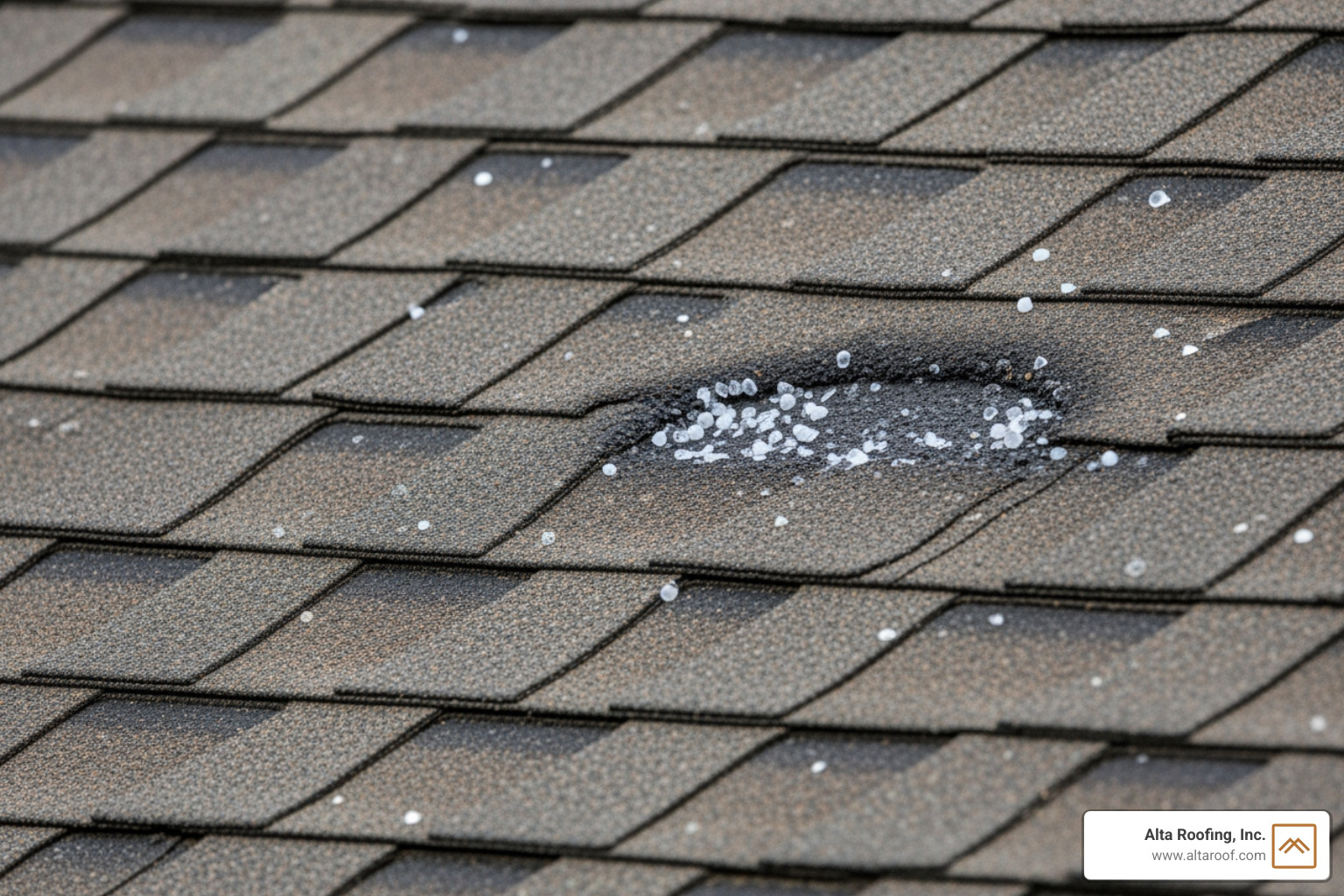
Asphalt shingles are the most common roofing material in our service areas like Aurora and Lakewood. When hail hits asphalt, it often knocks away the protective granules.
- Granule Loss: Look for "bald spots" where the black substrate is exposed.
- Bruising: This is a soft spot in the shingle, similar to a bruise on an apple. You might not see it, but you can feel it.
- Circular Cracks: High-velocity hail can create a "half-moon" or circular crack in the shingle mat.
Metal Roofing
Metal roofs are incredibly durable, but they aren't invincible. In places like Thornton and Arvada, we often see:
- Dents and Dings: While often cosmetic, large dents can weaken the metal’s integrity or damage the fasteners.
- Cracked Coating: If the paint or protective coating cracks, the metal can begin to rust.
Wood Shake Splits
Wood shakes are beautiful but susceptible to impact. Hail damage on wood usually looks like:
- Split Shakes: Look for brown or orange splits with sharp edges. If the split is gray or weathered, it’s likely old age, not storm damage.
- Punctures: Extremely large hail can punch straight through older wood shakes.
Tile Cracks
Whether you have clay or concrete tiles in Castle Rock or Highlands Ranch, hail is a major threat.
- Star Cracks: Impact points often radiate cracks outward.
- Chipped Edges: Hail can knock off the corners of tiles, which compromises the water-shedding ability of the roof.
To see what this looks like in the real world, check out our Hail Damage on Roof Pictures gallery. For more technical details, you can also read about identifying hail damage signs.
Identifying Damage from the Ground and Interior
You don't always have to climb a ladder to know you have a problem. In fact, we recommend staying on the ground for safety!
- Binocular Inspection: Grab a pair of binoculars and scan your roof for missing shingles or distorted textures.
- Gutter Granules: Check your downspouts. If you see piles of granules that look like coarse sand, your shingles are losing their protective layer.
- Attic Leaks: Head up to the attic with a flashlight during a rainstorm. Look for damp insulation, water stains on the rafters, or actual dripping.
- Soft Metal Damage: Look at your gutters, window sills, and AC units. If these "soft metals" are dented, there is a 99% chance your roof is dented too.
If you notice these signs, it might be time for Exterior Home Restoration to ensure your home remains watertight.
Professional Hail Damage Roof Repair Assessment
While a DIY scan is a great start, insurance companies require a professional touch. When we come out to your home in Monument or Fountain, we perform a "test square" assessment.
We mark off a 10x10 foot area on different slopes of your roof. We look for a specific number of "hits" within that square—usually 8 to 10. If the density of damage meets this threshold, it’s a strong indicator that the insurance company will approve a full replacement. We also check for "functional damage," which means the hail has actually compromised the roof's ability to keep water out. If you're ready to get an expert eye on your property, you can Find Local Pros or contact us directly.
Cosmetic vs. Functional Damage: The Long-Term Consequences
One of the biggest debates in the roofing world is the difference between cosmetic and functional damage. Insurance companies love the word "cosmetic" because it often means they don't have to pay. However, for a homeowner in Centennial or Englewood, "cosmetic" damage today can become a disaster tomorrow.
Functional damage is anything that affects the roof’s ability to shed water or shortens its expected lifespan. This includes:
- Exposed fiberglass mats.
- Fractured shingle substrates.
- Cracked tiles or split wood shakes.
Cosmetic damage refers to dings or dents that don't technically cause a leak. But here is the catch: even "cosmetic" dents on an asphalt shingle knock off granules. Those granules protect the asphalt from UV rays. Without them, the sun bakes the shingle, making it brittle and prone to cracking within just a few years.
How Hail Affects Roof Lifespan and Integrity
Ignoring hail damage is a recipe for trouble. With 5,392 recorded hail storms in 2019 alone, the cumulative effect is massive.
- Moisture Buildup: Small cracks allow water to seep under the shingles.
- Mold Growth: Trapped moisture in the decking leads to mold that can affect your family's health.
- Wood Rot: Your roof's structural plywood (the decking) can rot, making the roof "spongy" and dangerous to walk on.
- Structural Weakening: Over time, the constant freeze-thaw cycle in Colorado expands those tiny cracks, eventually leading to a full-scale structural failure.
This is why working with experienced Storm Restoration Contractors is vital. We don't just look for leaks; we look for the "latent" damage that will cost you ten times more down the road.
Navigating the Insurance Claim Process for Hail Damage
At Alta Roofing, our specialty is handling the insurance headache for you. We act as your single point of contact, coordinating everything so you don't have to play phone tag with adjusters.
Understanding Your Policy: RCV vs. ACV
Before you file, you need to know what kind of policy you have. This determines how much money you'll actually get.
| Feature | Replacement Cost Value (RCV) | Actual Cash Value (ACV) |
|---|---|---|
| Payout Basis | Cost to buy a new roof today | Value of the roof minus age/depreciation |
| Out-of-Pocket | Usually just your deductible | Deductible + the "lost" value from age |
| Best For | Most homeowners | Budget-conscious or older homes |
If you have an ACV policy and a 20-year-old roof, the insurance company might only pay for 25% of the replacement. If you have an RCV policy, they pay the whole bill (minus your deductible).
Immediate Steps for Hail Damage Roof Repair
If the clouds have cleared and you suspect damage in Parker or Elizabeth, do this:
- Take Photos: Capture the hail size next to a ruler or a coin. Photograph your dented gutters and any shingles you see on the lawn.
- Make Temporary Repairs: If you have an active leak, use a tarp. Insurance companies expect you to "mitigate" further damage.
- Review Your Policy: Check your deductible. Some Colorado policies have a specific "Hail Deductible" which is a percentage of your home's value (e.g., 1% or 2%).
- Mind the Deadlines: Most companies require you to file within 12 to 24 months of the storm.
For more guidance, GAF provides a great resource on What to do after a storm damages your roof. If you are looking for local experts, we are the premier Roofers in Colorado Springs CO.
Working with Adjusters and Contractors
When the insurance adjuster arrives, we like to be there. Why? Because adjusters are human—they miss things. We use the National Severe Storms Laboratory hail data to prove a storm occurred on a specific date, and we point out the subtle "bruising" that an adjuster might overlook.
We also handle "supplemental claims." If we start the hail damage roof repair and find rotten wood underneath that wasn't in the original estimate, we document it and bill the insurance company directly so you aren't stuck with the surprise cost.
The Real Cost of Hail Damage Roof Repair
Let’s talk numbers. We know that's what everyone wants to know.
- Inspection Costs: Many companies charge $75 to $800 for a formal inspection, though at Alta Roofing, we often provide assessments to help you decide if a claim is worth it.
- Minor Repair Averages: Small repairs (replacing a few shingles or fixing a vent) usually cost around $940.
- Full Replacement: For a standard home in Colorado, a full replacement averages between $9,000 and $15,000, though large custom homes can easily reach $20,000 to $40,000.
Factors that influence the price include the "pitch" (steepness) of your roof, the number of layers to be removed, and the material you choose. You can get a quick idea of your costs with our Instant Quote tool.
When to Repair vs. Replace Your Roof
Not every storm requires a brand-new roof.
- Repair if: The damage is localized to one area, the roof is less than 10 years old, and the shingles are still flexible.
- Replace if: Damage is spread across multiple slopes, the roof is over 15 years old, or the "10x10 test" shows significant hit density.
Choosing between the two is a big decision. We recommend talking to Local Roofing Contractors who understand the specific climate of the Front Range.
Preventative Measures and Hail-Resistant Materials
In Colorado, it's not a matter of if it will hail again, but when. If you are replacing your roof, consider upgrading to Class 4 Impact-Resistant Shingles.
These shingles are tested using the UL 2218 standard, where a steel ball is dropped on the shingle to see if it cracks the underside.
- Insurance Discounts: Many insurance companies in Colorado offer significant premium discounts (up to 20-30%) if you install Class 4 shingles.
- Durability: They can withstand much larger hail than standard shingles, potentially saving you from needing another hail damage roof repair next year.
Other tips for prevention:
- Tree Trimming: Keep branches at least 10 feet away from your roof. During a storm, wind can turn branches into saws that rip through your shingles.
- Regular Maintenance: Small issues like loose flashing make it easier for hail and wind to cause catastrophic failure.
- Metal Roofing: If you’re tired of the hail cycle, metal is a fantastic long-term investment.
For specific advice for Northern Colorado areas, see our guide on Hail Damage Fort Collins.
Frequently Asked Questions about Hail Damage Roof Repair
How much hail damage warrants a full roof replacement?
Generally, if a professional finds 8 to 10 significant hits within a 10x10 foot "test square" on at least two or three sides of the roof, insurance companies will typically approve a full replacement. If there are leaks or structural compromises, replacement is almost always necessary.
Does homeowners insurance cover hail damage repairs?
Yes, most standard homeowners insurance policies cover hail damage as a "peril." However, the amount they pay depends on whether you have an RCV or ACV policy and what your specific deductible is.
How long do I have to file a hail damage claim in Colorado?
While it varies by provider, most insurance companies in Colorado require you to file a claim within one year (12 months) of the date of the storm. Some policies allow up to two years, but acting quickly is always better to avoid "wear and tear" denials.
Conclusion
At Alta Roofing, Inc., we know that dealing with hail damage roof repair is stressful. Whether you are in Denver, Colorado Springs, or out in Woodland Park, our goal is to make the restoration process as smooth as possible. We don't just fix roofs; we restore your peace of mind by handling the insurance adjusters and ensuring every trade—from gutters to siding—is handled with expert care.
Don't wait for a leak to tell you there's a problem. If a storm just rolled through your neighborhood, reach out to us. We’ll give you an honest assessment and help you protect your biggest investment.
Explore our full range of Services or Contact Us today to schedule your professional inspection. Let's get your home back to its best condition together!
