
From Aurora to Westminster: Navigating Hail Damage in Colorado
Why Fort Collins Homeowners Must Understand Hail Damage
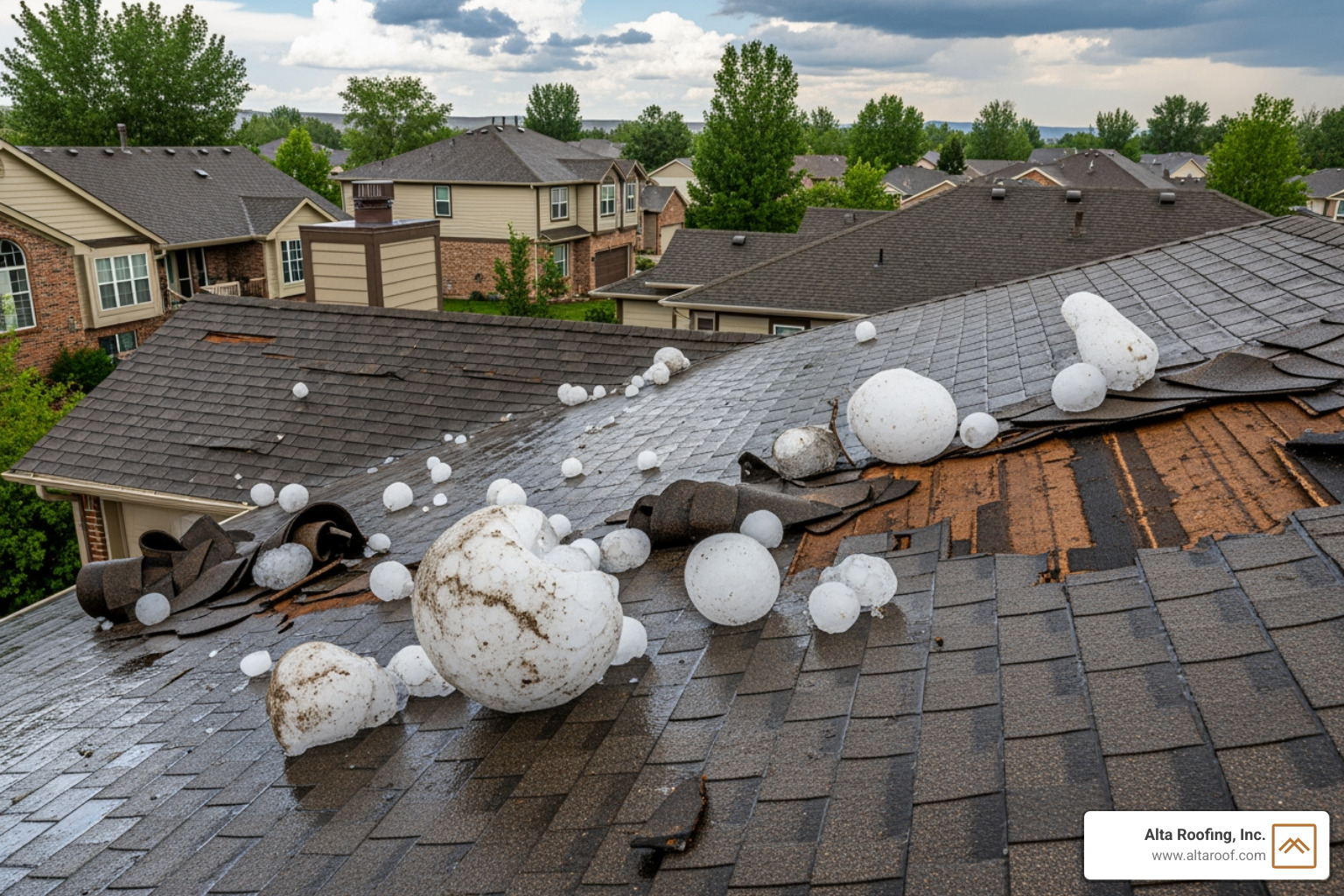
Hail damage Fort Collins is a serious concern for homeowners in Northern Colorado, where the region experiences some of the most frequent and severe hailstorms in the United States. If you're trying to understand hail damage and what to do after a storm, here's what you need to know:
Key Facts About Fort Collins Hail:
- Frequency: Fort Collins averages more than 25 hail events per year between May and July
- Severity: The largest hail reported was 2.50 inches in diameter (baseball-sized)
- Recent Activity: 93 on-the-ground hail reports by trained spotters in the past 12 months
- High-Risk Area: Zip code 80525 has the highest number of damaging hail reports (50 reports)
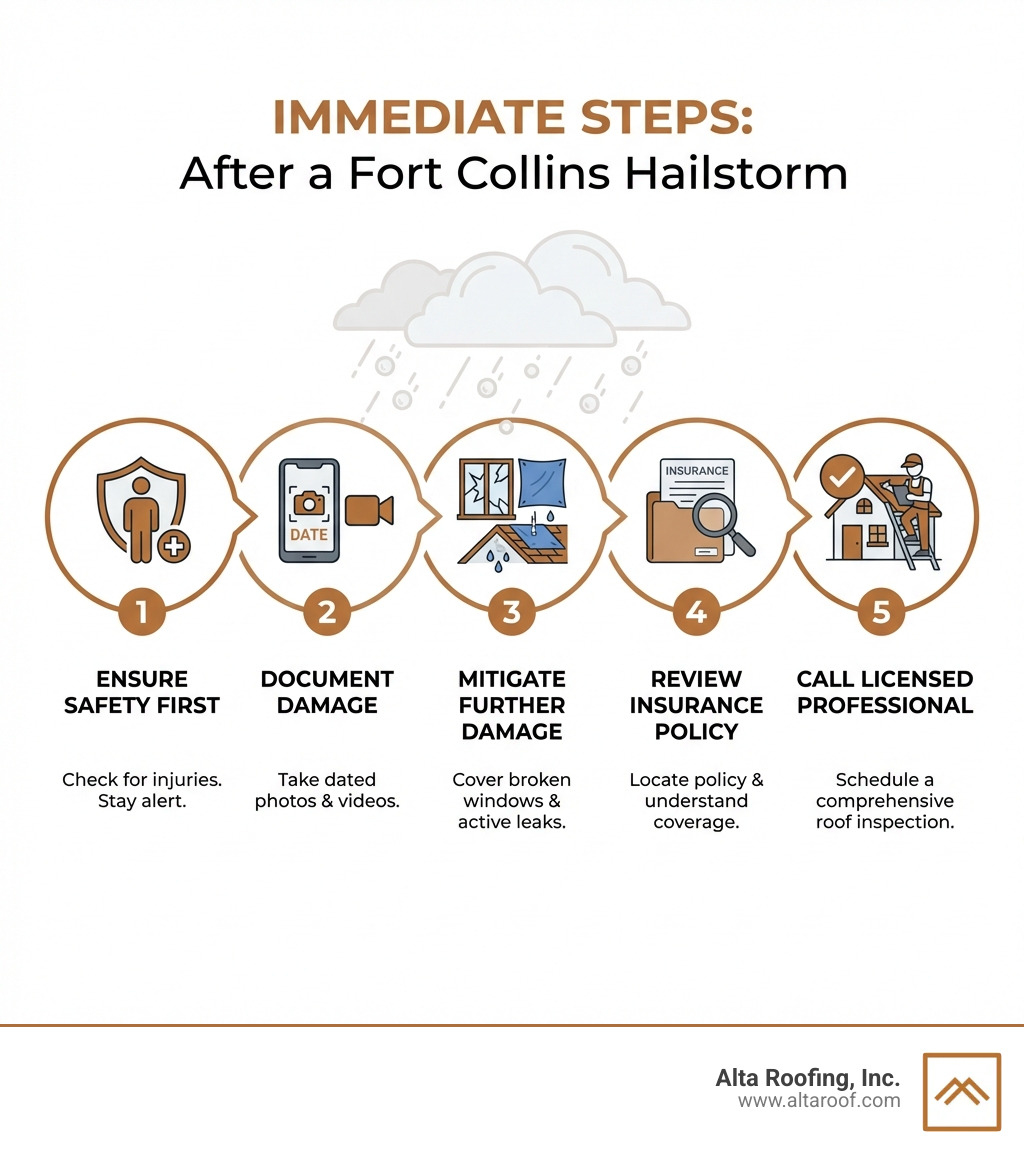
Immediate Steps After a Hailstorm:
- Ensure everyone's safety first
- Document all visible damage with dated photos
- Cover any broken windows or active leaks
- Contact your insurance company promptly
- Schedule a professional roof inspection
Welcome to Fort Collins—where stunning mountain views and excellent quality of life come with a side of severe weather. Between May and July, this area sees more than two dozen hail events on average. These storms don't just ding up cars. They can crack shingles, strip protective granules from your roof, dent gutters and siding, and create hidden damage that leads to costly water intrusion down the road.
The problem is that hail damage isn't always obvious from the ground. What looks like minor cosmetic damage can actually be structural weakening that compromises your roof's ability to protect your home. A "bruised" shingle may not leak today, but Fort Collins' freeze-thaw cycles will turn that weakness into a crack—and that crack into a leak.
Many homeowners underestimate the urgency. They see a few dents and think, "I'll deal with it later." But insurance companies have strict deadlines for filing claims, and damage left unaddressed can void your roof warranty or lead to claim denials when the next storm hits.
This guide will help you understand what hail damage looks like, how to assess your risk using local hail maps and historical data, and what steps to take immediately after a storm. You'll learn why professional inspections matter, how to steer the insurance claim process, and what it means to invest in impact-resistant roofing that can stand up to Colorado's hail season.
Here at Alta Roofing, Inc., our team has spent years in the Colorado construction and storm restoration industry. We've seen how hail damage Fort Collins homeowners face can be devastating without proper preparation and response. Our experience has shown us the critical importance of quality restoration work and proactive protection to safeguard your home.
Understanding the Threat: Hailstorms in Fort Collins and Northern Colorado
Colorado, particularly the Front Range where Fort Collins proudly sits, is often referred to as "Hail Alley." This isn't just a catchy nickname; it's a stark reality for homeowners. The unique meteorological conditions here, where updrafts in severe thunderstorms keep water droplets high enough to freeze and grow, combined with the higher elevation that gives hail less time to melt before impact, create a perfect recipe for damaging hailstorms.

We've seen it all, from pea-sized pellets to colossal baseball-sized stones. For instance, the largest hail reported near Fort Collins was a staggering 2.50 inches in diameter. These aren't just isolated incidents. The Fort Collins area has experienced 93 reports of on-the-ground hail by trained spotters in the past 12 months alone, and Doppler radar has detected hail near the city on 92 occasions in the past year. This persistent threat means that understanding and addressing hail damage Fort Collins is not a luxury, but a necessity.
What the Statistics Say About Fort Collins Hail
The numbers don't lie: Fort Collins is a hotspot for hail.
- Hail Event Frequency: Between May and July, Fort Collins averages more than 25 hail events a year. That's a lot of potential impacts on your home!
- On-the-Ground Reports: In the past 12 months, trained spotters have reported hail on the ground 93 times in the Fort Collins area. This indicates frequent, observable hail events.
- Largest Reported Hail: The largest hailstone near Fort Collins measured an impressive 2.50 inches in diameter, which is roughly the size of a tennis ball. Such large hail can cause significant damage to roofs, siding, and vehicles.
- Peak Season: The months of May, June, and July are the prime time for hailstorms in Northern Colorado. This means homeowners need to be particularly vigilant during this period.
- High-Risk Zip Codes: If you live in zip code 80525, you're in an area with a notably higher risk, reporting 50 damaging hail events. This kind of localized data helps us understand where the impact is most concentrated.
How to Use Hail Maps to Assess Your Risk
In an age of information, we have powerful tools at our fingertips to understand the hailstorm threat. Hail maps are invaluable resources for homeowners in Fort Collins and across Colorado. They provide visual representations of past hailstorms, detailing their paths, intensity, and the size of hail that fell.
You can explore detailed historical data of hail events in Fort Collins by visiting a Hail Map for Fort Collins, CO. These maps allow us to:
- Track Storm Paths: Visualize exactly where a storm traveled and which neighborhoods were affected. This can help confirm if your property was in the direct path of a damaging storm.
- Verify Hail Size: Many maps provide specific hail size estimates for reported events (e.g., quarter, half dollar, golf ball). This information is crucial for understanding the potential severity of damage to your home.
- Access Historical Storm Data: Look back at years of data to understand the frequency and intensity of hail events in your specific area. This can inform decisions about roof maintenance and upgrades.
- Confirm Dates for Insurance Claims: Having accurate dates and times of hailstorms is vital when filing an insurance claim. Hail maps can provide this precise information, strengthening your case.
By leveraging these resources, homeowners can move from general concern to informed action, understanding their specific risk and having the data needed to respond effectively after a storm.
Identifying Hail Damage on Your Home's Exterior
After a hailstorm, the first thing many homeowners do is step outside to survey the damage. While a quick visual check is natural, it's crucial to approach this task safely and systematically. We always recommend a professional inspection, but a preliminary DIY inspection from the ground can help you understand the situation.
Always prioritize safety. Never climb onto a wet or damaged roof yourself. Instead, use binoculars from the ground to get a closer look. Walk around your property, paying close attention to all exterior surfaces.
Common Signs of Hail Damage on Your Roof
Your roof is your home's first line of defense against the elements. Hail damage can be subtle, but knowing what to look for can prevent minor issues from becoming major headaches.
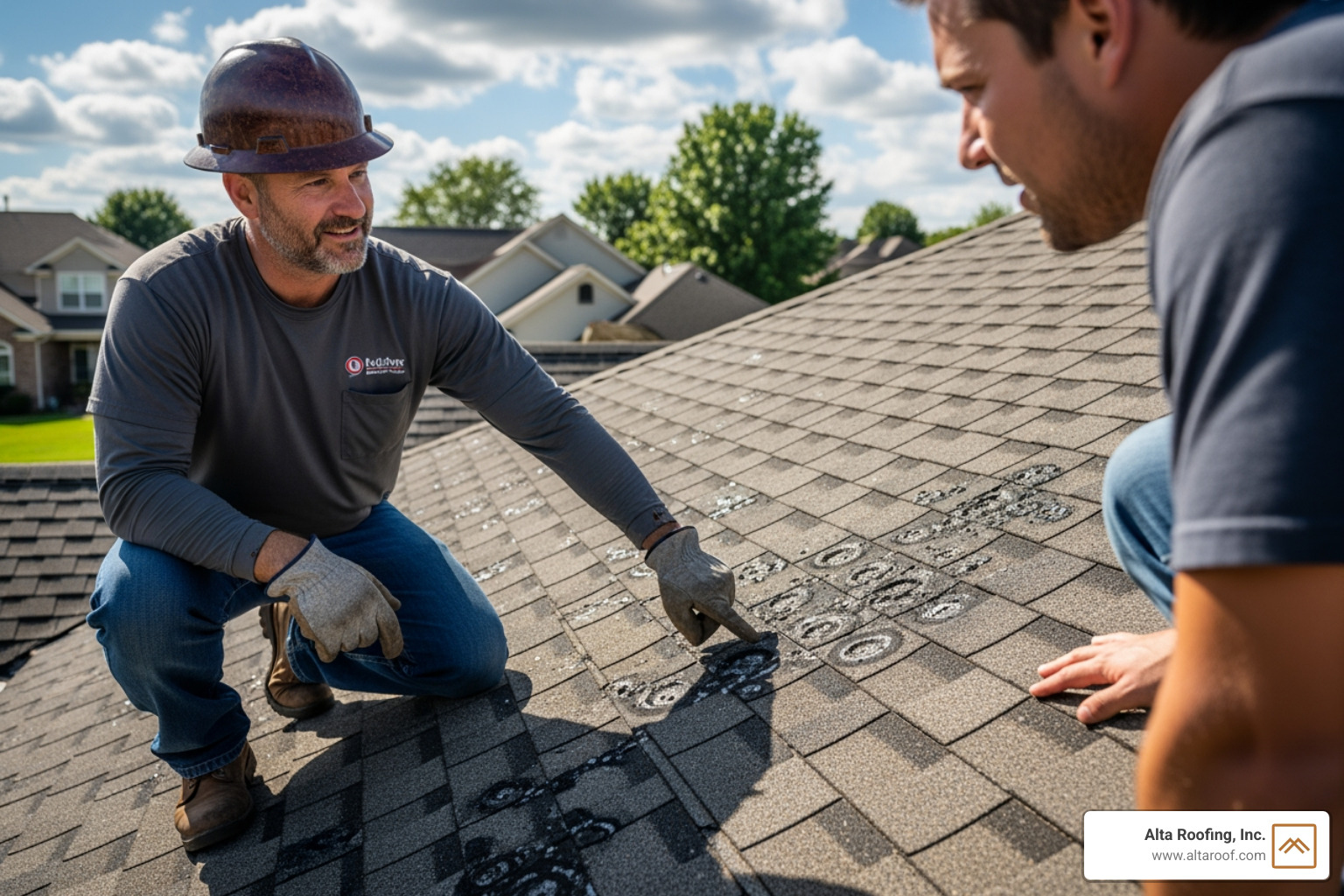
Here are the common signs of hail damage on a roof:
- Dents on Shingles (Bruises): Hailstones can cause circular or irregular indentations on asphalt shingles. These "bruises" might not immediately break the shingle's surface, but they weaken its integrity, making it vulnerable to future weather cycles and eventual cracking.
- Granule Loss: Asphalt shingles are coated with protective granules that shield them from UV rays and the elements. Hail impact can dislodge these granules, leaving behind shiny, bald spots on the shingle. You might also find an accumulation of granules in your gutters or downspouts, a tell-tale sign of wear.
- Exposed Fiberglass Mat: When granule loss is severe, the underlying fiberglass mat of the shingle can become exposed. This significantly reduces the shingle's protective capabilities and accelerates its deterioration.
- Cracked or Broken Shingles: Larger or harder hailstones can cause shingles to crack, split, or even break off entirely. Look for jagged edges or missing pieces of shingles.
- Damage to Roof Vents and Flashing: Metal components on your roof, such as vents, skylight frames, and flashing around chimneys, are susceptible to hail. Look for dents, dings, or warping on these surfaces.
Beyond the Roof: Siding, Gutters, and Windows
While the roof often takes the brunt of a hailstorm, other parts of your home's exterior can also suffer significant damage. Ignoring these areas can lead to further problems down the line.
- Dented Gutters and Downspouts: These are often the most obvious indicators of hail. Look for circular dents or dings along the length of your gutters and on the downspouts. Severe impacts can also cause them to detach or bend out of shape.
- Cracked or Chipped Siding: Depending on the material, siding can show various forms of hail damage. Vinyl siding might crack or fracture, especially if hit by larger hail. Wood siding can show dents or splintering, while metal siding can be dented or creased.
- Damaged Window Screens: Hail can tear or puncture window screens. While often cosmetic, it's an easy sign to spot and can indicate that larger hail was present.
- Broken Window Trim or Seals: In severe storms, hail can strike window frames, causing dents or cracks in the trim. More critically, it can compromise the seals around windows, leading to future leaks and drafts. We've seen reports of smashed windows from hen egg and tennis ball sized hail in the Fort Collins area.
- Paint Chipping: On painted surfaces like window frames, doors, or even stucco, hail impacts can chip away paint, leaving exposed areas vulnerable to moisture and further deterioration.
Your Post-Storm Action Plan for Hail Damage in Fort Collins
When a hailstorm rolls through Fort Collins, it can leave behind a trail of uncertainty. Knowing what to do immediately and in the days following is crucial for protecting your property and navigating the repair process efficiently.
Immediate Steps After a Hailstorm
Once the storm has passed and it's safe to venture outside, a clear action plan can make all the difference. Think of this as your post-storm checklist:
- Ensure Safety: Your safety and the safety of your family are paramount. Check for downed power lines or other immediate hazards before inspecting your property.
- Document All Damage with Photos/Videos: This is perhaps the most critical step. From the ground, take clear, well-lit photos and videos of any visible damage to your roof, siding, gutters, windows, and even your landscaping or vehicles. Date and time-stamp these as much as possible. This documentation will be invaluable for your insurance claim.
- Cover Broken Windows and Active Leaks: If you have broken windows or notice water actively leaking into your home (e.g., ceiling stains, damp attic insulation), take immediate steps to cover them. This might involve temporarily tarping damaged roof sections or boarding up broken windows to prevent further water intrusion.
- Look for Active Leaks Inside: Don't just check outside. Inspect your attic, ceilings, and interior walls for any signs of water penetration, even small damp spots. Early detection of leaks can prevent more extensive water damage and mold growth.
- Find Your Insurance Policy: Locate your homeowner's insurance policy and review your coverage for storm damage. Pay attention to your deductible and any specific requirements for filing claims.
The Critical Role of a Professional Roof Inspection
While your initial ground-level inspection is a good starting point, it cannot replace the expertise of a professional roof inspection. Hail damage is notoriously tricky, and what appears minor to the untrained eye can hide significant underlying issues.
- Hidden Damage Detection: Professional roofers are trained to spot the subtle, often hidden, signs of hail damage that can compromise your roof's integrity. This includes "bruises" on shingles that haven't yet broken the surface, damage to underlayment, or weakened decking beneath the shingles. Ignoring these can lead to gradual water intrusion, mold, and structural rot.
- Safety Risks of DIY Roof Access: Climbing onto your roof, especially after a storm when it might be slick or structurally compromised, is extremely dangerous. Professionals have the right safety equipment and training to assess your roof without putting themselves or your property at risk.
- Comprehensive Assessment for Insurance: A reputable roofing contractor will provide a thorough, unbiased assessment of your roof's condition. This detailed report, complete with photos and measurements, is essential for substantiating your insurance claim and ensuring all damage is accounted for.
- Detailed Damage Report: We will provide a comprehensive report that outlines all hail-related damage, helping you and your insurance adjuster understand the full scope of necessary repairs or replacement.
For more information on how we can help with comprehensive storm damage restoration, visit our Storm Damage Restoration Services page.
Navigating the Insurance Claim Process for Hail Damage in Fort Collins
Dealing with insurance companies can feel daunting, but with the right approach, it doesn't have to be. As your partners in storm restoration, we're here to guide you through every step.
- Contacting Your Insurer: As soon as you've completed your initial documentation, contact your insurance company to report the hail damage. Insurance companies have strict deadlines for filing claims, so prompt action is key.
- Claim Filing Timeline: Most policies require claims to be filed within a specific timeframe, often one year from the date of loss. Missing this window can result in your claim being denied.
- Meeting the Adjuster: Your insurance company will send an adjuster to inspect your property. It's highly beneficial to have your chosen roofing contractor present during this inspection. We can point out all damage, including the less obvious areas, ensuring nothing is overlooked.
- Understanding Your Estimate vs. Contractor's Scope: The insurance adjuster will provide their estimate for repairs. Your contractor will also provide a detailed scope of work. It's crucial that these align. If there are discrepancies, your contractor can work with the adjuster to ensure your home receives the full and proper restoration it needs.
- Depreciation: Be aware that insurance payouts often involve depreciation, meaning you'll initially receive the Actual Cash Value (ACV) of your damaged items, with the remaining recoverable depreciation released once repairs are completed.
Long-Term Consequences and Proactive Protection
Ignoring even seemingly minor hail damage Fort Collins can lead to significant problems down the line. But beyond addressing current damage, homeowners in this hail-prone region also have the opportunity to proactively protect their investment.
Why You Can't Ignore Minor Hail Damage in Fort Collins
It's tempting to put off repairs if the damage doesn't seem urgent, but in a climate like Fort Collins, that can be a costly mistake.
- Gradual Water Intrusion: Those small dents and granule loss spots are weak points. With Colorado's freeze-thaw cycles and subsequent rain, water can slowly seep beneath shingles, leading to leaks that you might not notice until it's too late.
- Mold and Mildew Growth: Persistent moisture from leaks creates a perfect environment for mold and mildew, which can compromise indoor air quality and cause health issues.
- Structural Rot: Untreated water intrusion can eventually lead to rot in your roof's decking, trusses, and even the structural components of your home, requiring much more extensive and expensive repairs.
- Voided Roof Warranties: Many roofing manufacturers' warranties require prompt repair of storm damage. Delaying action could void your warranty, leaving you responsible for future repair costs.
- Decreased Property Value: A damaged roof detracts from curb appeal and signals potential problems to future buyers, negatively impacting your home's market value.
- Future Claim Denial: If you file a claim for new hail damage, and the adjuster finds evidence of pre-existing, unaddressed damage from a previous storm, your current claim could be denied or reduced.
Investing in a Hail-Resistant Roof
The best defense is often a good offense. For Fort Collins homeowners, this means considering impact-resistant roofing.
| Feature | Standard Asphalt Shingles | Class 4 Impact-Resistant Shingles |
|---|---|---|
| Durability | Moderate | High (Tested up to 2" hail) |
| Lifespan | 15-25 years | 20-30+ years |
| Cost | Lower initial | Higher initial |
| Insurance Discounts | Rare | Often eligible |
- Class 4 Impact-Resistant Shingles: These shingles are specifically designed to withstand impacts from hail. They undergo rigorous testing to meet the UL 2218 standard, proving their ability to resist damage from hail up to 2 inches in diameter. In Fort Collins, Class 4 impact-resistant shingles are required for all structures with asphalt shingles when 50% or more of the roof is replaced.
- Material Options: While Class 4 asphalt shingles are a popular choice, other materials offer superior hail resistance. Metal roofs, for instance, are highly durable against hail and are often recyclable. Tile roofs are also very hail-resistant, though they are significantly heavier and may require structural reinforcements.
- Long-Term Savings: The initial investment in a hail-resistant roof pays off over time. You'll likely experience fewer repairs and replacements due saving on labor costs in the future, and enjoy a longer roof lifespan.
- Potential Insurance Premium Discounts: Many insurance companies offer discounts for homes protected with Class 4 impact-resistant roofing due to the reduced risk of claims. This can lead to significant savings on your premiums over the years.
To explore your options for a durable, hail-resistant roof, visit our Roof Replacement Services page.
Conclusion
Living in Fort Collins means embracing the beauty of Colorado, but also acknowledging the reality of frequent and sometimes severe hailstorms. As we've discussed, hail damage Fort Collins homeowners experience is a consistent threat that demands proactive attention and a clear action plan.
We've covered the common signs of hail damage on your roof and other exterior elements, the critical steps to take immediately after a storm, and how a professional inspection and guided insurance claim process can save you stress and money. Furthermore, understanding the long-term consequences of ignored damage and the benefits of investing in hail-resistant roofing are key to protecting your home for years to come.
At Alta Roofing, Inc., we understand the unique challenges Fort Collins and other Colorado Front Range communities like Aurora, Thornton, Lakewood, and Colorado Springs face. We specialize in comprehensive storm damage restoration, acting as your single point of contact to handle everything from initial inspection and detailed reporting to coordinating all necessary trades for a seamless restoration. Our goal is to ensure your home is not just repaired, but made stronger and more resilient against future storms.
Don't let hail damage compromise your home's integrity or your peace of mind. If you suspect your property has been affected by a recent hailstorm, or if you're considering upgrading to a more resilient roofing system, we're here to help.
Contact us for a free hail damage inspection today. Let us help you steer the complexities of hail damage and protect your investment.
