
Hail No! Everything You Need to Know About Storm Damage Repair
Why Storm Restoration and Choosing the Right Contractor Matters

Storm restoration contractors are licensed professionals who specialize in repairing and restoring properties damaged by severe weather events like hail, wind, tornadoes, and heavy snow. They handle everything from emergency tarping and inspections to full roof replacements, siding repairs, and insurance claim assistance—acting as a single point of contact to coordinate all necessary trades and restore your home to its pre-loss condition.
What Storm Restoration Contractors Do:
- Emergency Response: Provide immediate tarping and board-up services to prevent further damage
- Comprehensive Inspections: Use drones and advanced technology to assess all storm damage
- Insurance Assistance: Document damage, provide detailed estimates, and work directly with adjusters
- Complete Restoration: Coordinate roof, siding, gutter, window repairs and replacements
- Quality Assurance: Use manufacturer-certified materials and provide warranties on workmanship
When severe weather strikes Colorado—whether it's hail in "hail alley" along the Front Range or high winds that tear off shingles—the aftermath can feel overwhelming. According to the National Centers for Environmental Information, the U.S. experienced 27 billion-dollar weather disasters in 2024 alone, with severe storms being the most common category since 1980. Your home is likely your biggest investment, and acting quickly after storm damage is critical. Unrepaired damage leaves your property vulnerable to water intrusion, mold, and structural deterioration, while insurance claims typically must be filed within a specific window of time.
The challenge isn't just the physical damage—it's navigating the complex insurance claims process and coordinating multiple contractors while you're already stressed. This is where experienced storm restoration contractors become invaluable. They don't just patch your roof; they guide you through documentation, handle adjuster meetings, and manage everything from material selection to final cleanup. The difference between a reputable local contractor and a "storm chaser" who disappears after taking your deposit can mean the difference between a fully restored home and a financial nightmare.
I'm Barry Goers, founder of Tarben Ventures Ltd., with experience in the construction industry helping homeowners steer complex restoration projects. My work with storm restoration contractors has shown me how critical it is to choose the right partner when your home needs emergency repairs.
After the Storm: A Homeowner's Immediate Action Plan
When a storm rolls through Colorado, it can leave behind a trail of damage that's not always obvious. We've seen everything from small, insidious leaks to outright structural chaos. The key after any significant weather event is to prioritize safety and then act swiftly and strategically. This isn't the time to panic, but it is the time for a plan.
First and foremost, ensure the safety of your family. Check for downed power lines, gas leaks, or structural instability before re-entering your home. If there's any doubt, call emergency services. Once the immediate danger has passed, your next steps are crucial for preventing further damage and ensuring a smooth restoration process. This involves careful documentation, temporary repairs, and promptly contacting your insurance provider.
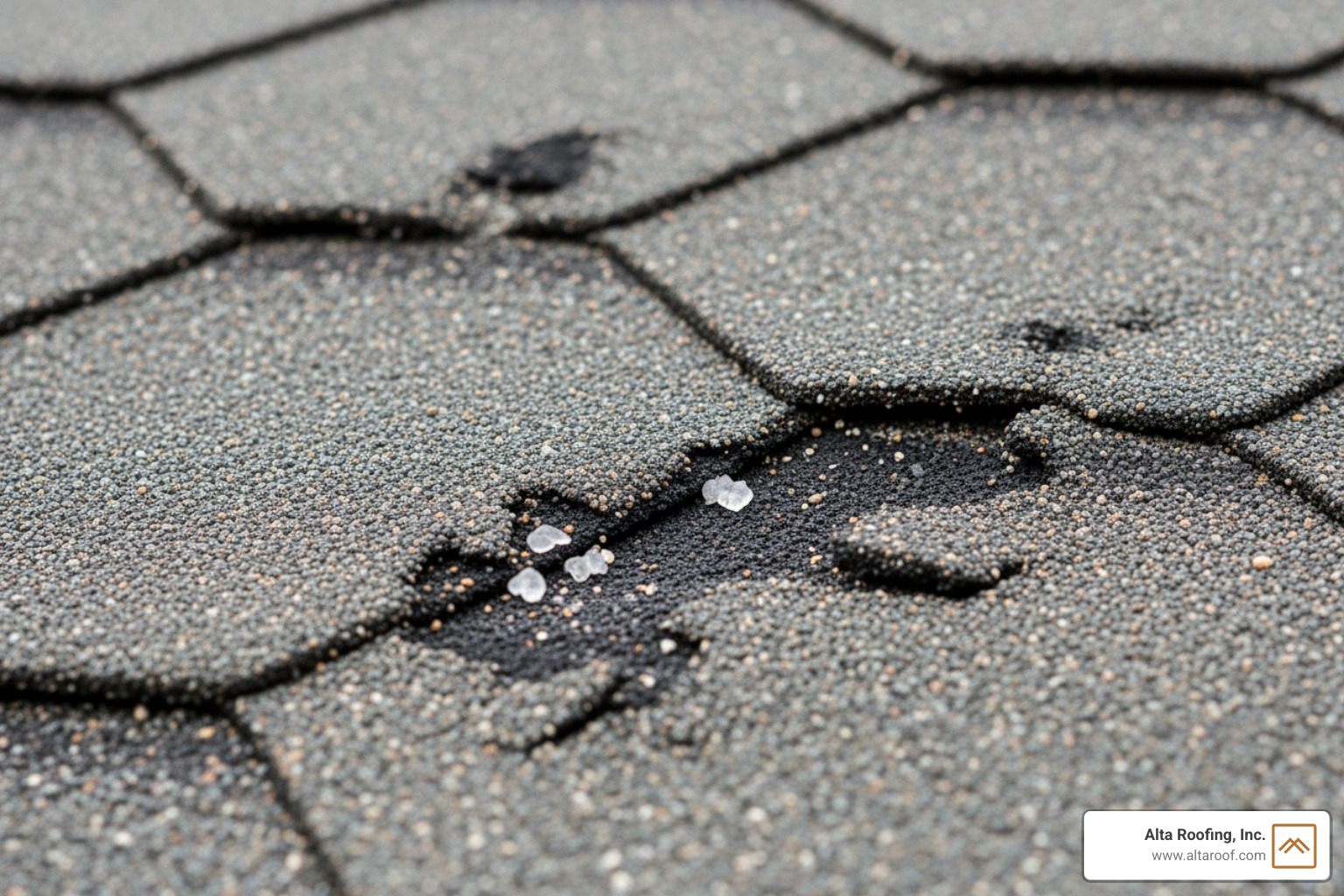
Spotting Roof and Exterior Damage
After a storm, your property’s exterior bears the brunt of the impact. While large holes are easy to spot, much of the damage can be subtle. Here's a list of common signs of storm damage we tell homeowners in Denver, Colorado Springs, and across the Front Range to look for:
- Missing, Cracked, or Bruised Shingles: High winds can lift and tear off shingles, while hail can crack them or create "bruises" (soft spots where the granules have been knocked off). Even if they're not obviously broken, cracked shingles can lead to leaks.
- Granules in Gutters and Downspouts: As shingles age or get hit by hail, they shed their protective granules. Finding an excessive amount of these in your gutters is a tell-tale sign of roof damage.
- Dented Gutters and Downspouts: Hail often leaves noticeable dents on metal gutters and downspouts. If your gutters are dented, there's a good chance your roof experienced similar impact.
- Cracked or Punctured Siding: Hail can also hit your siding, causing cracks, chips, or even small punctures, especially on softer materials like vinyl.
- Window Damage: Look for cracks, chips, or even shattered windows. Sometimes, the window screens or frames can also be bent or damaged by flying debris.
- Leaks in the Attic or Ceilings: This is a definitive sign of roof damage, indicating water has penetrated your roof's layers. Don't ignore even small drips.
- Damage to Other Exterior Elements: Check your decks, fences, mailboxes, and outdoor AC units. If these items show signs of impact, it’s circumstantial evidence that your roof likely took a hit too.
Even if you don't see obvious damage from the ground, the impact of hail, especially the soft hail common in Colorado, or strong winds can compromise your roof's integrity. As Elite Roofing & Solar advises, it's often best to err on the side of caution and get a professional inspection. For more information about our work and examples of storm damage we've repaired, visit our Our Work page.
What to Do Immediately After Finding Damage
Finding storm damage can be unsettling, but taking immediate, organized steps can make a big difference in the restoration process and your insurance claim.
- Prioritize Safety: Before anything else, ensure the area is safe. Avoid downed power lines, gas leaks, or unstable structures. If there's standing water, be cautious of electrical hazards.
- Document, Document, Document: This is critical. Take extensive photos and videos of all visible damage from multiple angles. Capture both close-ups and wider shots that show the context. Note the date and time. This visual evidence will be invaluable for your insurance claim.
- Prevent Further Damage with Temporary Repairs:
- Cover Broken Windows: Use plywood or heavy-duty tarps to cover any broken windows or holes in your siding.
- Tarp Damaged Roof Sections: If your roof has obvious holes or missing shingles, consider safely covering the damaged areas with a tarp. Many reputable storm restoration contractors, including us, offer emergency tarping services to prevent further water intrusion into your attic and home. This is especially important in areas like Aurora, Thornton, and Lakewood where subsequent rains can exacerbate initial damage.
- Mitigate Water Intrusion: If water has entered your home, SERVPRO recommends immediate steps like shutting off the water source (if applicable), turning off circuit breakers to wet areas (if safe), and removing excess water by mopping or blotting. Prop up wet upholstery cushions and place aluminum foil under furniture legs to prevent staining.
- Contact Your Insurance Provider: This should be one of your first calls after securing your property. Your insurance agent can guide you through the initial steps of filing a claim. Insurance claims for hail damage typically have a filing window, so prompt action is essential. They can also explain your policy's specifics, including your deductible.
- Call a Professional for an Inspection: Even if you've done a visual check, a professional inspection by experienced storm restoration contractors is vital. We have the expertise and tools, like drones, to identify subtle damage that might be missed by the untrained eye. For immediate assistance and a thorough assessment, Contact us for an emergency inspection.
The Road to Recovery: Working with Storm Restoration Contractors
Once the immediate aftermath is handled, the real journey to recovery begins. This is where working with professional storm restoration contractors becomes indispensable. They act as your guide and project manager, navigating the entire repair process from start to finish, ensuring your home in Colorado Springs, Castle Rock, or any of our service areas is returned to its pre-storm glory.
The complete repair process involves several key stages: a thorough inspection, navigating the insurance claim, coordinating various trades, utilizing advanced repair technologies, and finally, ensuring the quality and durability of all repairs. Our goal is to make this often-stressful process as seamless as possible for you.

The Professional Inspection and Damage Assessment
A comprehensive inspection is the bedrock of any successful storm restoration. This goes far beyond a quick glance from the ground. Our professional team performs a meticulous assessment of your entire property, not just the obvious damage.
- Thorough Property Inspection: We examine your roof, siding, gutters, windows, and any other exterior elements that may have been affected. This includes checking for granule loss, hail impacts, wind uplift, and water penetration points.
- Drones and 3D Technology: To ensure accuracy and safety, especially on steep or hard-to-access roofs, we use advanced tools like drones and 3D modeling technology. This allows us to capture precise measurements and detailed damage predictions, providing you and your insurance company with the most accurate estimates.
- Detailed Damage Report: Following our inspection, we provide you with a comprehensive report outlining all finded damage, complete with photographic evidence.
- Accurate Cost Estimates: Based on our detailed assessment, we generate an accurate cost estimate for all necessary repairs or replacements. This transparency ensures you understand the scope of work and associated costs.
Elite Roofing & Solar emphasizes that you can't truly know the extent of your roof's damage without a proper inspection. We couldn't agree more. That's why we encourage you to Schedule an appointment for a free inspection with us.
Navigating the Insurance Claim Process
For many homeowners, dealing with insurance after storm damage is the most daunting part of the recovery process. This is where experienced storm restoration contractors truly shine. We have decades of experience working with insurance companies and can effectively guide you through every step.
- Understanding Your Policy: Before filing, it's wise to review your homeowner's hazard insurance policy. Understand what your storm damage coverage includes, your deductible, and any specific requirements for filing a claim.
- Filing a Claim: After your initial contact with your insurance agent, you'll formally file your claim. We can help ensure all the necessary initial information is provided accurately.
- Meeting with the Adjuster: Your insurance company will send an adjuster to assess the damage. We highly recommend having one of our expert project managers present during this meeting. We can point out all the damage we've identified, ensuring nothing is overlooked and that the adjuster has a complete picture of the storm's impact.
- The Role of Storm Restoration Contractors in Insurance Claims: Our role extends beyond just physical repairs. We act as your advocate, providing all the necessary documentation, including our detailed inspection reports and estimates, to make working with insurance companies easier. We speak their language, ensuring that the scope of work aligns with what's needed to fully restore your property to its pre-loss condition, and assist with any insurance adjustments. As Premier Roofing advises, a reputable contractor will work with your insurance, not against it.
- Maximizing Your Coverage: By having us involved from the inspection to the final claim settlement, we help ensure you receive the full coverage you deserve for all legitimate storm-related damages, preventing you from shouldering unnecessary out-of-pocket expenses.
How to Choose the Right Contractor
Choosing the right storm restoration contractors is arguably the most critical decision you'll make after storm damage. The wrong choice can lead to shoddy work, headaches, and even financial loss. In Colorado, we often see "storm chasers" descend on communities after a major weather event. It's essential to distinguish between these transient operations and reputable local businesses.
| Feature | Local, Established Contractor | National "Storm Chaser" Contractor |
|---|---|---|
| Local Presence | Permanent office in your community (e.g., Denver, Colorado Springs) | Operates out of vehicles, temporary offices, or P.O. boxes |
| Reputation | Long-standing community ties, local references, consistent reviews | Little to no local history, few verifiable local references |
| Licensing/Insurance | Fully licensed, bonded, and insured in Colorado | May have licenses from other states, questionable insurance |
| BBB Accreditation | Often A+ rated with Better Business Bureau | Rarely accredited, or may have a poor rating |
| Manufacturer Certs | GAF Master Elite, Owens Corning Platinum Preferred, CertainTeed Shingle Master | Seldom hold high-level manufacturer certifications |
| Warranties | Offers strong workmanship and material warranties | Warranties may be difficult to enforce if they leave the area |
| Communication | Clear, consistent, and responsive | May be hard to reach once the initial sale is made |
| Pricing | Transparent estimates, works with insurance | May offer suspiciously low bids or pressure tactics |
When evaluating storm restoration contractors, look for the following:
- Local Reputation: Choose a contractor with a strong presence and positive reputation in your local community, whether that's Aurora, Parker, or Monument. Elite Roofing & Solar emphasizes looking for an established, locally based, experienced, and communicative company.
- Licensing and Insurance: Verify that the contractor is fully licensed, bonded, and insured in Colorado. This protects you in case of accidents or unfinished work.
- BBB Accreditation: A Better Business Bureau (BBB) accreditation with a high rating (like an A+) indicates a commitment to ethical business practices.
- Manufacturer Certifications: Certifications like GAF Master Elite, Owens Corning Platinum Preferred, or CertainTeed Shingle Master demonstrate a contractor's commitment to quality workmanship and adherence to manufacturer standards. These certifications often come with extended warranty options.
- Warranties: A reputable contractor will offer strong workmanship warranties in addition to manufacturer material warranties.
- Financing Options: Storm damage can be an unexpected expense. Many established contractors offer financing options to help manage costs, such as zero interest, zero payments for a period.
We pride ourselves on being a trusted, local choice for homeowners across Colorado. Learn more about us and our commitment to quality service.
Red Flags on the Roof: How to Spot and Avoid Storm Chaser Scams
After a severe storm, our communities across the Front Range, from Golden to Castle Pines, often become targets for unscrupulous "storm chasers." These opportunistic individuals or companies follow severe weather events, moving from town to town, preying on stressed homeowners who are eager to get their homes repaired. Premier Roofing's article "Roofing Scams That Can Cost You Money" highlights many of these tactics, and we want to ensure you're equipped to spot them.
Here are the red flags to watch out for:
- High-Pressure Sales Tactics: Be wary of anyone who pressures you to sign a contract on the spot, claiming the offer is only valid "today" or that you'll miss out if you don't act immediately. A reputable contractor will give you time to make an informed decision.
- Demands for Large Upfront Payments: While a reasonable deposit might be required, be very cautious if a contractor demands a large percentage of the total cost upfront, especially before any materials have been delivered or work has begun. Premier Roofing advises against giving upfront deposits to unsolicited contractors.
- Vague Contracts: Always insist on a detailed, written contract that clearly outlines the scope of work, materials to be used, timeline, payment schedule, and warranty information. Avoid contracts with vague language or missing details.
- Out-of-State License Plates/No Local Address: This is a classic sign of a storm chaser. If their vehicles have out-of-state plates, they lack a permanent local office (beyond a P.O. box), or they can't provide verifiable local references, it's a huge red flag. They'll be gone as quickly as they appeared, leaving you with no recourse if issues arise.
- Waiving Deductibles (Insurance Fraud): Be extremely wary of any contractor who offers to "waive" or "cover" your insurance deductible. This is illegal and constitutes insurance fraud. Your deductible is your responsibility, and any contractor offering to absorb it is likely inflating other costs or cutting corners elsewhere, which can lead to problems with your insurance company.
- Door-to-Door Sales Without Proper Identification: While some legitimate local businesses do door-to-door sales, be cautious of those who show up unannounced without company identification, uniforms, or credible business cards. Always verify who you're speaking with.
Key Qualifications for Reputable Storm Restoration Contractors
To protect your home and your peace of mind, always choose storm restoration contractors who demonstrate transparency, professionalism, and a commitment to their community.
- Permanent Local Office: A reputable contractor will have a physical office in your area, not just a temporary setup. This signifies their long-term commitment to the community and provides you with a place to go if you have questions or issues down the road. We have offices conveniently located across the Front Range and Colorado Springs, serving communities like Castle Rock, Manitou Springs, and Elizabeth.
- Proof of License and Insurance: Always ask for and verify proof of their general liability insurance and workers' compensation insurance, as well as their state and local licensing. This protects you from liability if an accident occurs on your property.
- Written Estimates: Insist on a detailed, written estimate that itemizes all costs, materials, and labor. A clear estimate prevents surprises later on.
- Customer References: A trustworthy contractor will be happy to provide you with a list of local references from past storm restoration projects. Take the time to call them and ask about their experience.
- Strong Online Reviews: Check independent review sites like Google, Yelp, and the Better Business Bureau. Look for consistent positive feedback and how the company responds to any negative reviews.
- Manufacturer Certifications: As mentioned earlier, certifications like GAF Master Elite or Owens Corning Platinum Preferred indicate a contractor's expertise and commitment to quality, often backed by improved warranties.
For more tips and advice on home maintenance and choosing the right professionals, be sure to Check out our articles for more tips.
Frequently Asked Questions About Storm Damage Repair
We understand that homeowners in areas like Arvada, Woodland Park, and Highlands Ranch often have many questions when faced with storm damage. Here are some of the most common ones we hear:
What is the typical timeline for storm damage repairs?
The timeline for storm damage repairs can vary depending on the severity of the damage, insurance processing times, and material availability. However, here’s a general breakdown we've observed:
- Inspection: Typically, we can schedule an initial inspection within 1-3 days of your call, especially for emergency situations.
- Insurance Approval: Once the claim is filed and the adjuster has assessed the damage, approval can take 1-2 weeks. This period can sometimes be longer if there are disputes or additional documentation required.
- Material Delivery: After approval and contract signing, ordering and receiving materials usually takes 1-2 weeks. Specialized or custom materials might take longer.
- Repairs (Roof, Siding, etc.): The actual repair work for a typical residential roof replacement or extensive siding repair can take anywhere from 1-5 days, depending on the scope and complexity of the project. Smaller repairs can often be completed in a single day. Some urgent repairs, like emergency tarping, can be done within 24 hours.
Overall, from initial damage to completion, the process can range from a few weeks to a few months. We always strive for efficiency without compromising quality.
How is storm damage repair different from general home remodeling?
While both involve improving your home, storm damage repair differs significantly from general home remodeling:
- Necessity, Not a Choice: Storm damage repair is often a necessity driven by an unexpected event, whereas remodeling is usually a planned aesthetic or functional upgrade. You don't choose to have storm damage; you must repair it to protect your home.
- Focus on Restoring to Pre-Loss Condition: The primary goal of storm damage repair is to restore your home to its condition before the storm. Remodeling, on the other hand, aims to improve or change your home beyond its previous state.
- Insurance-Driven Process: Storm repair is heavily intertwined with insurance claims. The scope of work is often dictated by what the insurance company approves based on the damage assessment. Remodeling is typically funded directly by the homeowner.
- Often Involves Multiple Exterior Trades Simultaneously: Storm damage often affects various parts of your home's exterior—roof, siding, gutters, windows. Experienced storm restoration contractors act as a single point of contact, coordinating all these trades to ensure a cohesive and efficient repair process, which is less common in typical remodeling projects.
How can I prepare my property for potential storm damage?
While we can't control the weather in Fountain, Centennial, or Englewood, we can certainly help you prepare your home to minimize potential damage:
- Regular Roof Inspections: Have your roof inspected annually by a professional, especially if it's older or after minor storms. Catching small issues early can prevent major problems.
- Clean Gutters and Downspouts: Clogged gutters can cause water to back up, leading to fascia damage, foundation issues, and even ice dams in winter. Keep them clear to ensure proper drainage.
- Trim Overhanging Trees: Trim branches that are close to your roof or could fall on your home during high winds or heavy snow.
- Secure Outdoor Furniture and Decorations: During severe weather warnings, bring in or secure anything outdoors that could become a projectile, such as patio furniture, grills, and decorations.
- Review Insurance Coverage Annually: Speak with your insurance agent to understand your policy, coverage limits, and deductible. Ensure your policy adequately covers potential storm damage specific to Colorado's weather patterns, including hail and wind.
Conclusion: Your Next Steps to a Fully Restored Home
When a storm hits your home in Colorado, it can feel like a punch to the gut. But as we’ve discussed, having a clear plan and the right partners makes all the difference. Acting quickly after finding damage is paramount to preventing further issues and ensuring a smooth insurance claim process.
Choosing experienced, local storm restoration contractors like us means you’re not just getting repairs; you’re gaining a trusted partner who will guide you through every step, from detailed damage assessment and navigating complex insurance claims to coordinating all necessary trades for a comprehensive restoration. Our expertise ensures that your home, whether in Littleton, Lone Tree, or any of our service areas, is not just repaired, but fully restored to its pre-loss condition with quality and durability that lasts.
Don't let storm damage overwhelm you. We are here to simplify the process and provide the peace of mind you deserve. For comprehensive storm damage assistance, explore our Services or if you're ready to get started, you can Get an instant quote for your project today.
