
Is That Hail Damage? A Picture Guide for Your Roof
Unmasking Hail Damage: A Visual Guide
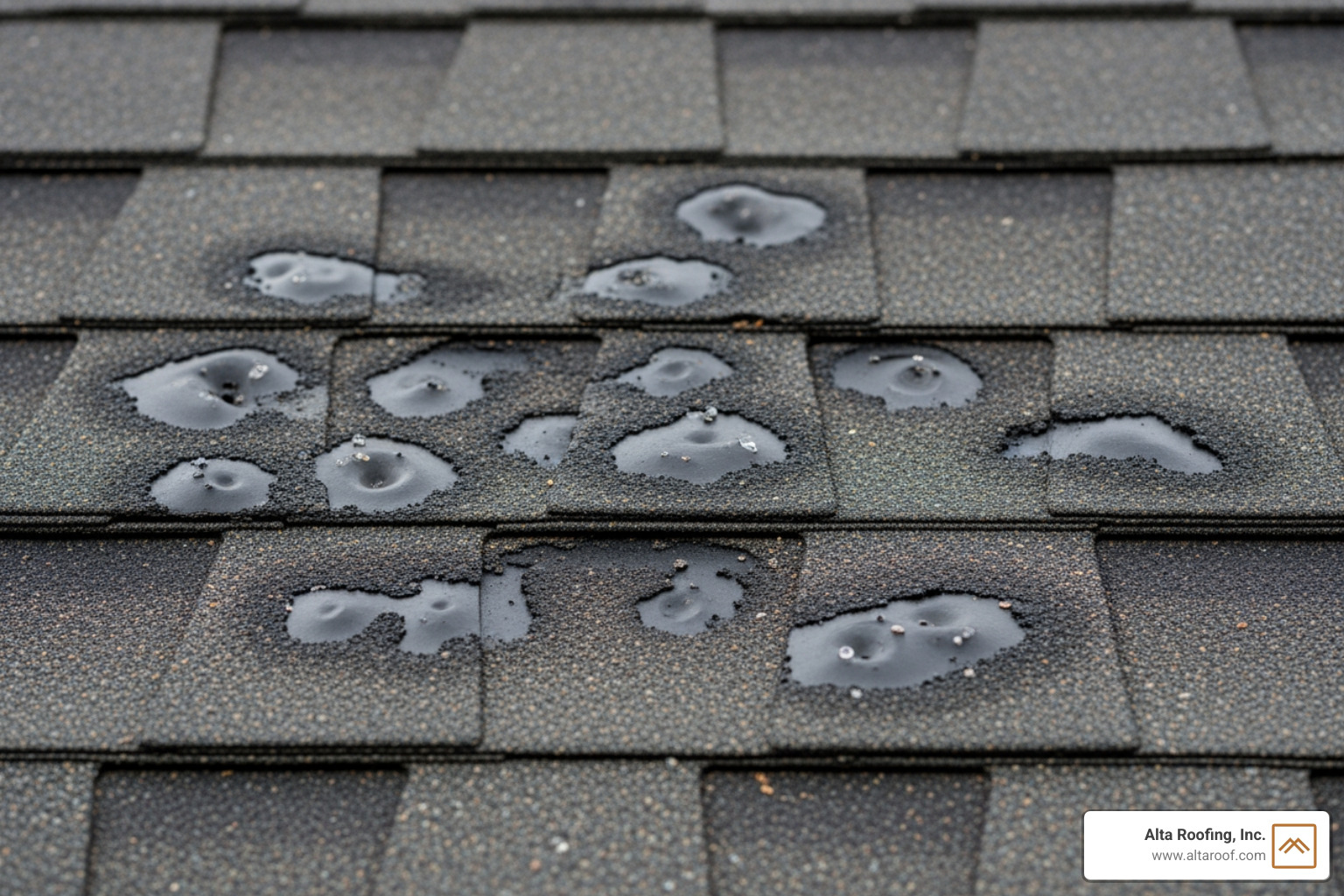
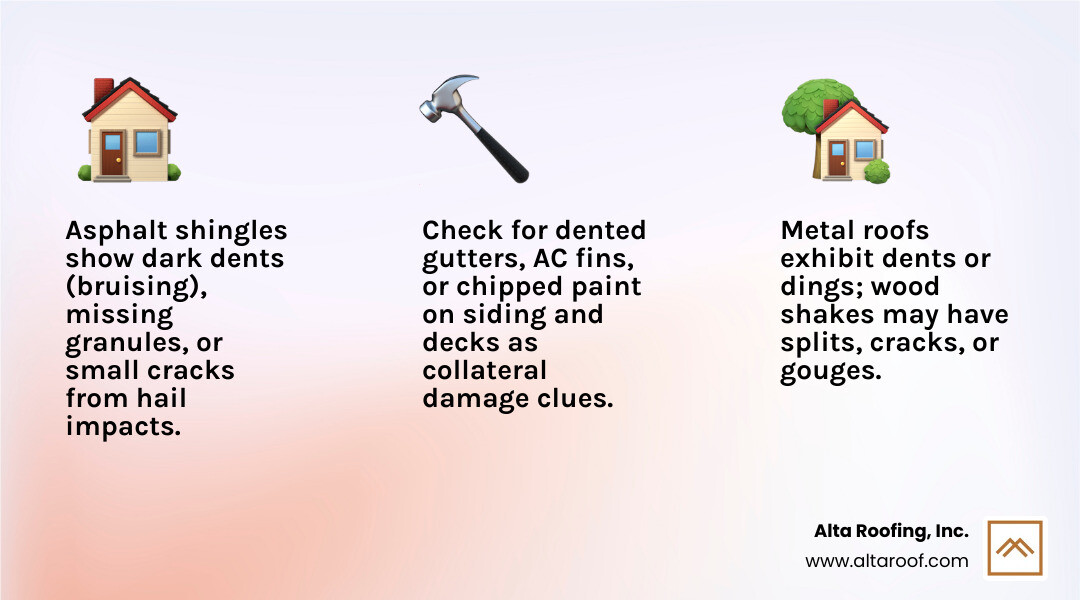
Spotting hail damage on roof pictures can be tricky. But knowing what to look for helps you protect your home. Here’s a quick guide to what hail damage often looks like:
What Hail Damage Looks Like on Your Roof:
- Asphalt Shingles: Dark, soft dents (bruising), areas where protective granules are missing (bald spots), or small cracks.
- Metal Roofs: Visible dents or dings on the surface.
- Wood Shakes: Splits, cracks, or gouges.
- Other Exterior: Dented gutters, downspouts, air conditioner fins, or chipped paint on siding and decks.
Every year, hailstorms cause billions of dollars in property damage across the U.S. In fact, nearly half of all homeowner insurance claims involve hail or wind. Many homeowners don't even realize their roof has been hit. Damage often can't be seen from the ground. This guide uses pictures to help you understand what to look for. Always remember: safety first. Never climb on your roof if you suspect damage; inspect from the ground.
Barry Goers is an entrepreneur and investor with deep roots in the construction industry. He understands the critical importance of identifying hail damage on roof pictures for homeowners facing post-storm repairs. This article aims to make that process clearer and simpler for you.
The First Clues: Identifying Hail Damage From the Ground
After a hailstorm rolls through Colorado, leaving its icy calling card across Denver, Colorado Springs, Aurora, or any of our service areas, your first instinct might be to look up at the roof. However, the safest and smartest first step is a thorough ground-level inspection of your property. We call this looking for "collateral damage." If hail was strong enough to damage items around your home, it’s a strong indicator your roof likely took a hit too.
What should you be on the lookout for? Start by walking around your home, paying close attention to these areas:
- Dented Gutters and Downspouts: These are often the easiest indicators. Hail impacts can leave visible dents, dings, or even cracks in aluminum or plastic gutters.
- AC Unit Fins: Check the condenser fins on your outdoor air conditioning unit. Small dents or flattening of these delicate fins are a tell-tale sign of hail impact.
- Chipped Deck Paint: If you have a painted deck, hail can chip away at the paint, leaving small, circular marks.
- Damaged Siding: Vinyl siding might show white stress lines, cracks, or even holes. Other types of siding can exhibit dents or chipped paint.
- Torn Window Screens: Hail can tear or puncture window screens.
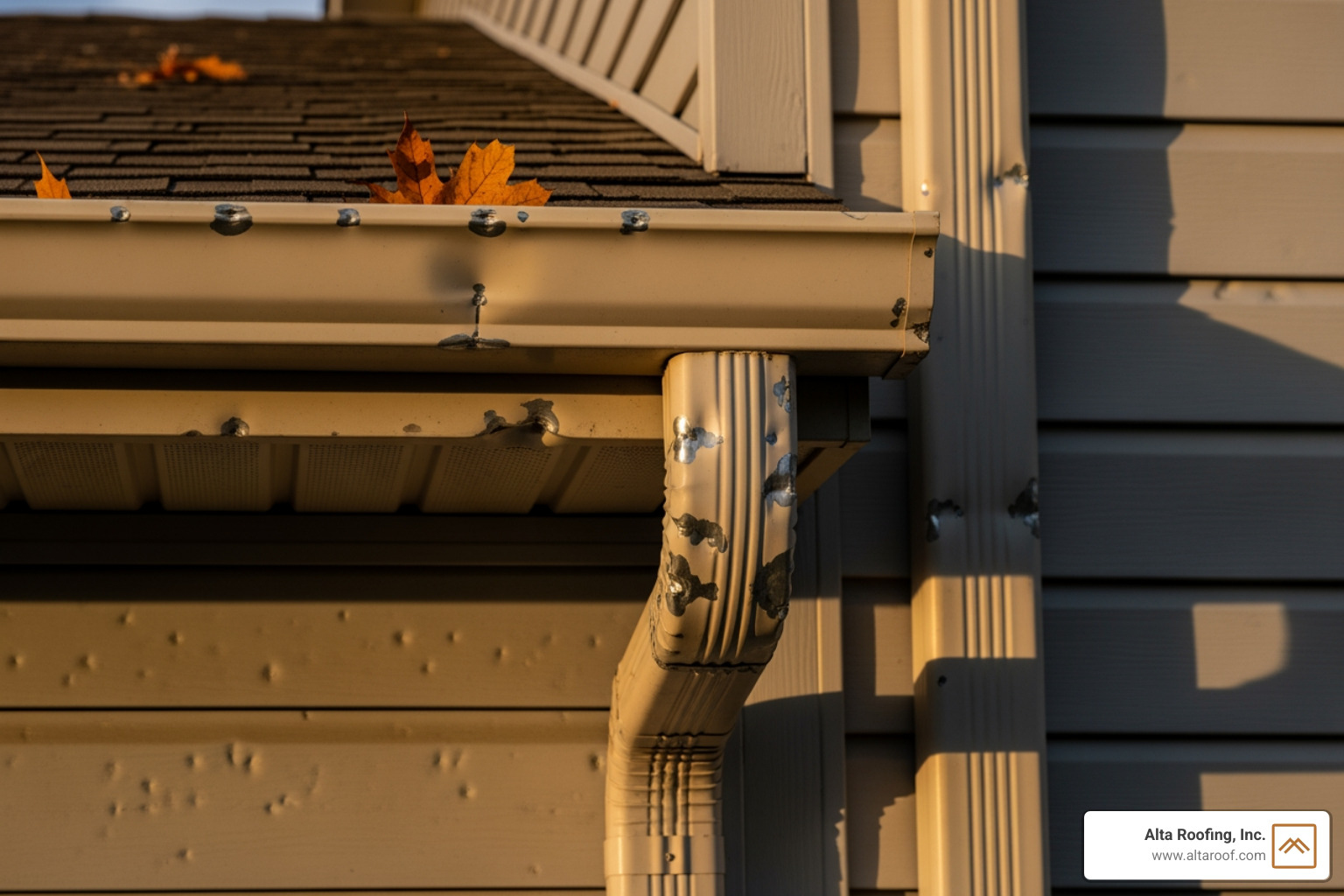
While a ground inspection is a great starting point, it has limitations. You might not see everything from down below. Subtle bruising or granule loss on shingles can be invisible from the ground, especially on higher-pitched roofs. This is where binoculars can be your best friend, allowing you a closer look at your roof's surface, vents, and flashing without risking a fall. For a comprehensive overview of our services, including roof inspections, visit Our Work.
What to Look for on Siding, Gutters, and Windows
When hail strikes, it doesn't discriminate. Your siding, gutters, and windows are just as vulnerable as your roof. Here’s a more detailed breakdown of what to identify:
- Dents and Dings: The most common sign. Look for circular indentations on metal gutters, downspouts, and even metal siding. These can vary in size depending on the hailstone.
- Cracks: Hail can crack vinyl siding, especially if it's older or brittle. On windows, look for spiderweb cracks or chips on the glass itself, or damage to the window sills and casings.
- Paint Chips: On painted surfaces like wooden siding, window frames, or deck railings, hail can cause paint to chip off, revealing the material underneath.
- Scouring Marks: Sometimes, hailstones can leave streak-like marks, particularly on painted metal surfaces, as they scrape along.
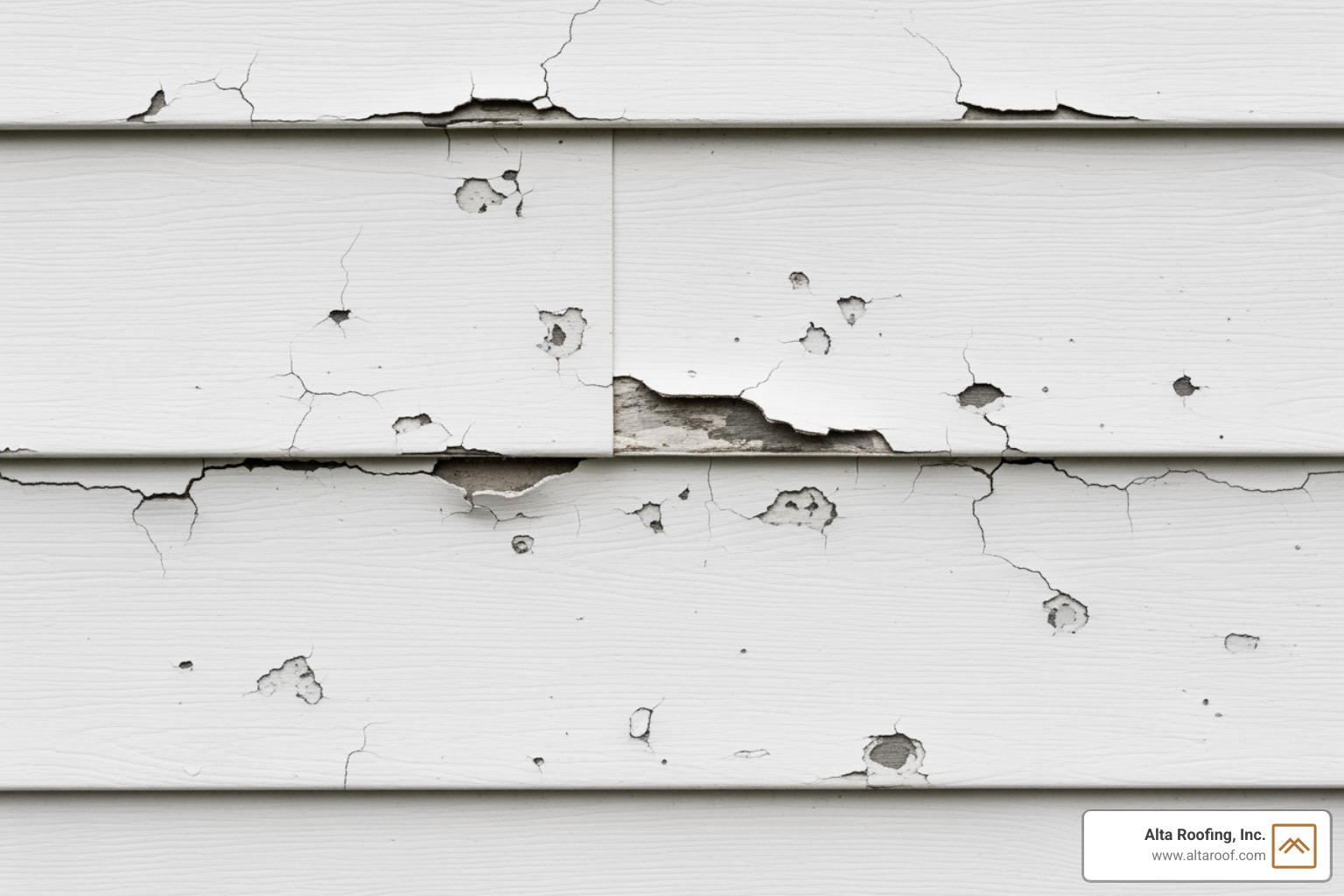
These external clues can provide crucial evidence when it comes time to assess the overall damage to your property.
Why a Ground Inspection Isn't Enough
While a ground-level inspection is essential for initial assessment and safety, it's rarely sufficient for a complete picture of hail damage on roof pictures. Here’s why:
- Hidden Damage: Hail often hits at an angle, and the impact points might be on the sides of shingles or tucked away in valleys, making them invisible from the ground.
- Subtle Bruising: On asphalt shingles, hail can cause "bruising" – a softening of the shingle mat beneath the granules – without immediately dislodging granules. This damage compromises the shingle's integrity but is almost impossible to see from afar.
- Roof Slope Issues: Different roof slopes and orientations catch hail differently. What looks fine from one side of the house might be severely damaged on another.
- Safety Risks of Climbing: Climbing onto a hail-damaged roof yourself is incredibly dangerous. Shingles can be slick, unstable, or even cracked, leading to falls. We strongly advise against it.
- Need for Professional Assessment: A professional roofer knows exactly where to look, how to identify subtle damage, and how to differentiate hail damage from normal wear and tear. They have the right safety equipment and expertise to conduct a thorough and accurate inspection.
For these reasons, if you suspect hail damage, your next step should always be to call a professional roofing company like Alta Roofing, Inc.
A Closer Look: Hail Damage on Roof Pictures for Different Materials
Once a professional roofer is on your roof (safely, of course!), they'll conduct a detailed inspection. One common technique involves marking hail hits with chalk. This helps to count impacts, differentiate them from other blemishes, and provides clear visual evidence for you and your insurance adjuster.
A critical distinction a professional will make is between functional and cosmetic hail damage. Functional damage impairs the roof's ability to protect your home, leading to leaks or shortening its lifespan. Cosmetic damage, on the other hand, affects the roof's appearance but not its protective function. This distinction is vital because it significantly impacts insurance claims, as we'll discuss later.
Hail Damage on Asphalt Shingles
Asphalt shingles are the most common roofing material in Colorado and are particularly susceptible to hail damage. Here's what hail damage on roof pictures of asphalt shingles often reveals:
Granule Loss: This is perhaps the most common sign. Hail impacts dislodge the protective ceramic granules that shield the asphalt layer from UV rays. This leaves dark, often circular, spots where the underlying asphalt is exposed. These exposed areas accelerate aging and can lead to leaks.
Bruising: Hail can impact a shingle with enough force to fracture the fiberglass mat underneath without immediately removing granules. This creates a soft spot, or "bruise," that can eventually lead to cracking or premature deterioration.
- Exposed Fiberglass Mat: In severe cases, the hail impact can completely remove the granules and asphalt, exposing the fiberglass matting beneath. This creates a direct path for water.
- Cracks and Fractures: While less common from hail alone, especially on newer shingles, hail can cause existing cracks to worsen or create new ones, particularly at the edges of shingles.
- Weakened Seal Strips: The adhesive strips that seal shingles together can be weakened or broken by hail, making them more vulnerable to wind uplift.
On average, it takes a 1-inch or above diameter hailstone to cause damage to common asphalt shingles. For more visual examples, you can check out What does hail damage look like on shingles?.
Hail Damage on Metal Roofs
Metal roofs, such as standing seam or corrugated metal, offer excellent durability, but they are not immune to hail. The damage often presents differently than on asphalt shingles:
Dents and Dings: The most obvious sign of hail damage on a metal roof is the presence of dents. These can range from small, subtle indentations to significant depressions, depending on the size and force of the hailstones.
Cosmetic vs. Functional Damage: Many dents on metal roofs are purely cosmetic, affecting appearance but not the roof's structural integrity or weatherproofing. However, deep dents, especially near seams or fasteners, can compromise the roof's function by affecting drainage or creating stress points.
- Scratched Paint: On painted metal roofs, hail can chip or scratch the protective coating, potentially leading to rust over time if left unaddressed.
- Punctures on Older Metal: While rare on modern, well-maintained metal roofs, extremely large hailstones can puncture older or thinner metal roofing materials.
Hail Damage on Wood Shakes and Other Materials
Wood shakes, popular in many Colorado homes for their rustic charm, react to hail very differently than asphalt or metal:
Splitting or Cracking: Wood shakes are more brittle than asphalt shingles. Hail impacts can cause the wood to split or crack, often with sharp, distinct edges. These splits can become entry points for water.
Gouges and Impact Marks: Large hailstones can gouge the surface of wood shakes, leaving noticeable impact marks.
- Tile Roof Damage: For tile roofs (clay or concrete), hail damage typically appears as chips, cracks, or dents. In severe hailstorms, some tiles may break off completely. Hail can also cause tiles to shift and loosen, compromising their protective capabilities.
- Slate Roof Damage: Slate, while durable, can chip, crack, or break from severe hail impacts, especially if the slate is older or has existing imperfections.
Identifying these distinct patterns of damage across different materials is where professional expertise truly shines.
Understanding the Impact: Hail Size, Wind, and Other Factors
The severity of hail damage on roof pictures isn't just about whether hail fell; it's a complex interplay of several factors. Hailstone characteristics, wind speed and direction, and even your roof's unique features all play a role.
Hailstones themselves vary greatly. They can be pea-sized (1/4-inch) or as large as softballs (4.5 inches or more). Field observations and ice stone impact tests have shown a direct correlation between hailstone size and damage potential. The shape of the hailstone also matters; irregularly shaped or crystallized hailstones can cause more concentrated damage than perfectly spherical ones.
Wind speed and direction are critical. Hailstones driven by high winds strike with greater force and can impact different sides of your roof. A roof side facing the wind during a hailstorm will likely sustain more damage than a sheltered side. The speed of their impact is between 44 to 72 mph for two to four-inch hailstones, which is significant.
Finally, your roof's age and condition, its slope, and orientation can influence its vulnerability. Older roofs with brittle materials or existing wear are more susceptible. A steeper roof might shed hail more easily but could also present a larger surface area to wind-driven hail.
What Size Hail Causes Roof Damage?
It’s a common question: how big does hail have to be to damage my roof? While there's no single magic number, general guidelines exist. On average, it takes a 1-inch or above diameter hailstone to cause damage to common asphalt shingles. However, factors like wind and shingle age can mean smaller hail can still cause issues.
Here's a general idea of hail size and its typical damage potential, especially for asphalt shingles:
| Hail Size (Diameter) | Common Comparison | Typical Damage Potential on Asphalt Shingles |
|---|---|---|
| 1/4 inch | Pea-sized | Minimal, mostly cosmetic, or only on very old/brittle roofs. |
| 1/2 inch | Marble-sized | Minimal to light cosmetic. |
| 3/4 inch | Penny-sized | Light cosmetic, potential granule loss on older roofs. |
| 1 inch | Quarter-sized | Significant granule loss, bruising, minor cracking, especially with strong winds. Often the threshold for claimable damage. |
| 1.25 inches | Half-dollar-sized | Moderate granule loss, bruising, cracking. Increased risk of functional damage. |
| 1.75 inches | Golf ball-sized | Severe granule loss, bruising, significant cracking, potential mat fracture, dents on metal components. |
| 2 inches | Hen egg-sized | Extensive functional damage, widespread granule loss, mat fracture, punctures possible. |
| 2.75 inches | Baseball-sized | Devastating damage, including punctures, structural harm, and severe collateral damage. Baseball size hailstones fall at nearly 100 miles per hour. |
It’s important to remember that hailstones vary in size and shape, impacting the severity of damage. For more on this, check out Hailstone size variations.
What is Hail Spatter and Is It Considered Damage?
When hail hits a dirty or dusty roof, it can sometimes clean off small, circular areas. This phenomenon is called "hail spatter." It looks like clean, round spots against a dirtier background.
Is it considered claimable damage? Generally, no. Hail spatter is primarily an aesthetic effect. It doesn't compromise the integrity of your roofing materials or reduce its functional lifespan. While it's a clear indicator that hail fell and hit your roof, it's not typically considered functional damage by insurance companies. However, hail spatter can be a helpful clue for a professional inspector, signaling that a more thorough search for actual functional damage is warranted.
From Damage to Dollars: The Insurance Claim Process
Finding hail damage can be stressful, but understanding the insurance claims process can ease the burden. Most homeowners insurance policies cover hail damage, often classifying it as an "Act of God" or a weather-related event.
A key aspect of your policy to understand is the difference between Actual Cash Value (ACV) and Replacement Cost Value (RCV). ACV policies pay out the depreciated value of your roof, while RCV policies cover the cost of a new roof at today's prices. Your deductible will also play a role, as this is the amount you're responsible for before your insurance coverage kicks in.
Steps to Take Immediately After a Storm
Time is often of the essence after a hailstorm, especially in Colorado where subsequent storms can complicate things. Here’s what we recommend you do:
- Document the Date and Time: Note when the storm occurred. This helps link any damage directly to a specific event for your insurance claim.
- Take Photos of Hailstones: If it's safe to do so, immediately after the storm, take pictures of any remaining hailstones on the ground or in gutters. Include a ruler, coin, or even your hand for scale. This provides concrete evidence of hail size.
- Perform a Safe Ground Inspection: As discussed, walk around your property and look for collateral damage on siding, gutters, AC units, and decks. Document everything with photos.
- Find a Reputable Contractor: Before even calling your insurance company, contact a local, reputable roofing company like Alta Roofing, Inc. We offer free, no-obligation inspections. Our experts can assess the damage accurately and advise you on whether filing a claim is appropriate. This prevents unnecessary claims if the damage is minor.
- Prevent Further Damage: If there's any immediate risk of water intrusion, take temporary measures like covering damaged areas with a tarp. Keep receipts for any emergency repairs, as these may be reimbursable. For more insights on when a repair or replacement might be necessary, visit our guide on How to Know When It's Time to Replace Your Roof.
Navigating the Claim: Evidence and Adjusters
Once you've had a professional assessment and decided to move forward, the next phase is navigating the insurance claim:
- Filing the Claim: Contact your insurance provider as soon as possible. Most insurance policies require you to file a claim within one to two years of the storm event, but acting immediately is always best. Waiting too long can make it harder to prove the damage was from a specific storm.
- Meeting the Adjuster: Your insurance company will send an adjuster to assess the damage. It is crucial to have your chosen roofing contractor present during this inspection. Our experts can point out all the damage, ensuring nothing is missed, and speak the "insurance language" to advocate on your behalf.
- Evidence is Key: Provide the adjuster with all the documentation you've gathered: photos of hailstones, collateral damage, and your contractor's detailed inspection report, complete with chalk-marked hail damage on roof pictures.
- Reviewing the Adjuster's Report: The adjuster will create an estimate (often an Xactimate estimate). Review this carefully with your contractor to ensure all damage is included and the proposed repair or replacement costs are fair. If there are discrepancies, your contractor can help you negotiate.
Functional vs. Cosmetic Damage: What Your Policy Covers
This distinction is where many homeowners encounter challenges during the claims process.
- Functional Damage: This refers to damage that impairs the roof's ability to protect your home. Examples include significant granule loss exposing the asphalt mat, cracks that allow water penetration, punctures, or widespread bruising that shortens the roof's lifespan. Functional damage typically warrants an insurance payout for repair or replacement.
- Cosmetic Damage: This affects the appearance of your roof but not its protective function. Small dents on a metal roof, minor granule loss that doesn't expose the mat, or hail spatter are often considered cosmetic.
In 2013, the American Association of Insurance Services introduced a "Cosmetic Damage Exclusion" option for insurers. This means some policies may explicitly exclude coverage for purely cosmetic damage. It's vital to understand your specific policy and to rely on a professional roofer to help distinguish between cosmetic and functional damage, ensuring you receive the coverage you deserve. We specialize in navigating these complexities for our Colorado clients. Learn more about how we can assist with storm restoration on our Services page.
Repair, Replace, or Reinforce: Your Roof's Future
Ignoring hail damage is like ignoring a small leak in a boat – it will eventually lead to bigger problems. The potential long-term consequences of leaving hail damage unaddressed can be severe and costly:
- Leaks: The most immediate and obvious concern. Damaged shingles or compromised flashing create entry points for water.
- Mold and Mildew: Water intrusion can lead to mold and mildew growth in your attic, walls, and ceilings, posing health risks and requiring expensive remediation.
- Structural Rot: Persistent leaks can cause the roof deck, rafters, and other structural components to rot, weakening your home's integrity.
- Shortened Roof Life: Even seemingly minor granule loss exposes the asphalt to UV rays, accelerating its degradation and significantly shortening the roof's lifespan.
- Higher Energy Bills: A compromised roof can lose its insulating properties, leading to increased heating and cooling costs.
- Future Claim Denials: If you experience a second storm and haven't addressed previous damage, your insurance company might deny subsequent claims, arguing the damage was pre-existing.
Deciding whether to repair or replace your roof after hail damage depends on the extent of the damage, the age of your roof, and your insurance policy. Our experts at Alta Roofing, Inc. will help you make the best decision for your home in Colorado.
Typical Repair and Replacement Methods
Once the damage is assessed, we'll determine the best course of action:
- Shingle Replacement: For isolated hail hits or minor damage, individual asphalt shingles can be carefully removed and replaced. This is often an option if the damage is confined to a small area and matching shingles are available.
- Patching: For metal roofs, small dents might be repairable through patching or specialized dent removal techniques, though this is less common for widespread hail damage.
- Full Roof Replacement: This is often the most common outcome for significant hail damage, especially if the damage is widespread across multiple roof slopes, the roof is older, or matching shingles are no longer available. A full replacement ensures your entire roof is restored to optimal protective condition.
- Emergency Tarping: In cases of severe damage with immediate leak risks, temporary tarping can be used to protect your home while awaiting permanent repairs or replacement.
Upgrading to Impact-Resistant Roofing
If you're replacing your roof, consider upgrading to impact-resistant (IR) roofing materials. This can be a smart long-term investment, especially in hail-prone areas like Colorado.
- Class 4 Rated Materials: The gold standard for hail resistance, Class 4 shingles (and other materials) have passed rigorous testing under the UL 2218 standard. They are designed to withstand impacts from steel balls dropped from significant heights without cracking or puncturing.
- Potential Insurance Discounts: Many insurance companies offer discounts on homeowner's premiums for installing Class 4 rated roofs, as they significantly reduce the risk of future hail damage claims.
- Long-Term Value: While initially more expensive, IR roofs offer superior protection, potentially saving you money on future repairs and providing peace of mind.
For a list of qualifying products, you can refer to resources like Products Qualifying for Impact Resistant Roofing Credits. We can help you explore these options for your home in Castle Rock, Parker, or any of our Colorado service locations.
Frequently Asked Questions about Hail Damage on Roof Pictures
We hear a lot of questions from homeowners after a hailstorm. Here are some of the most common ones:
How long do I have to file a hail damage claim?
Most insurance policies require you to file a claim within one to two years of the storm event. However, we strongly advise acting immediately after suspecting damage. Waiting can make it harder to link the damage to a specific storm, as other factors (like wear and tear or subsequent minor weather events) could complicate the assessment. Some insurers may even have shorter notification requirements, so always check your specific policy for deadlines. Don't let a small window of opportunity close on you.
Will filing a hail claim increase my insurance rates?
Generally, no. Hail damage is typically considered an "Act of God" or a weather-related event, which is a no-fault claim. Unlike at-fault claims (like liability for an accident), it usually does not impact your individual premium. However, it's worth noting that if an entire region, like Colorado Springs or Denver, experiences widespread catastrophic hail events, overall insurance rates for everyone in that area might see adjustments due to the high volume of claims.
Can I just get my roof repaired instead of replaced?
It depends on the extent and type of the damage. If there are only a few isolated damaged shingles and your roof is relatively new, a repair might be a viable option. However, if the damage is widespread across multiple roof slopes, if your roof is older, or if the specific shingle type is discontinued and a perfect match isn't possible, a full roof replacement is often the only viable and insurable solution. A professional inspection from Alta Roofing, Inc. will provide a clear recommendation based on the full scope of the damage.
Secure Your Home After the Storm
Inspecting for hail damage on roof pictures is crucial for protecting your home's value and integrity. This picture guide shows that from dented gutters to bruised shingles, the signs can be both obvious and subtle. Documenting everything and acting quickly is key. For homeowners in Colorado, navigating the aftermath of a storm and the complexities of an insurance claim can be overwhelming. Working with a local expert like Alta Roofing, Inc. ensures all damage is found and your claim is handled professionally, restoring your peace of mind. If you suspect hail damage in Denver, Aurora, Thornton, Lakewood, Colorado Springs, Castle Rock, Manitou Springs, Elizabeth, Parker, Golden, Arvada, Woodland Park, Highlands Ranch, Littleton, Lone Tree, Fountain, Centennial, Englewood, Castle Pines, or Monument, don't wait for a small leak to become a big problem.
Contact Us for a professional inspection; Alta Roofing Inc. is your storm restoration expert and insurance claim assistance partner, proudly serving Colorado.
