
How to File Roofing Insurance Claim Fast
Why Filing an Insurance Claim for Roofing Damage Matters
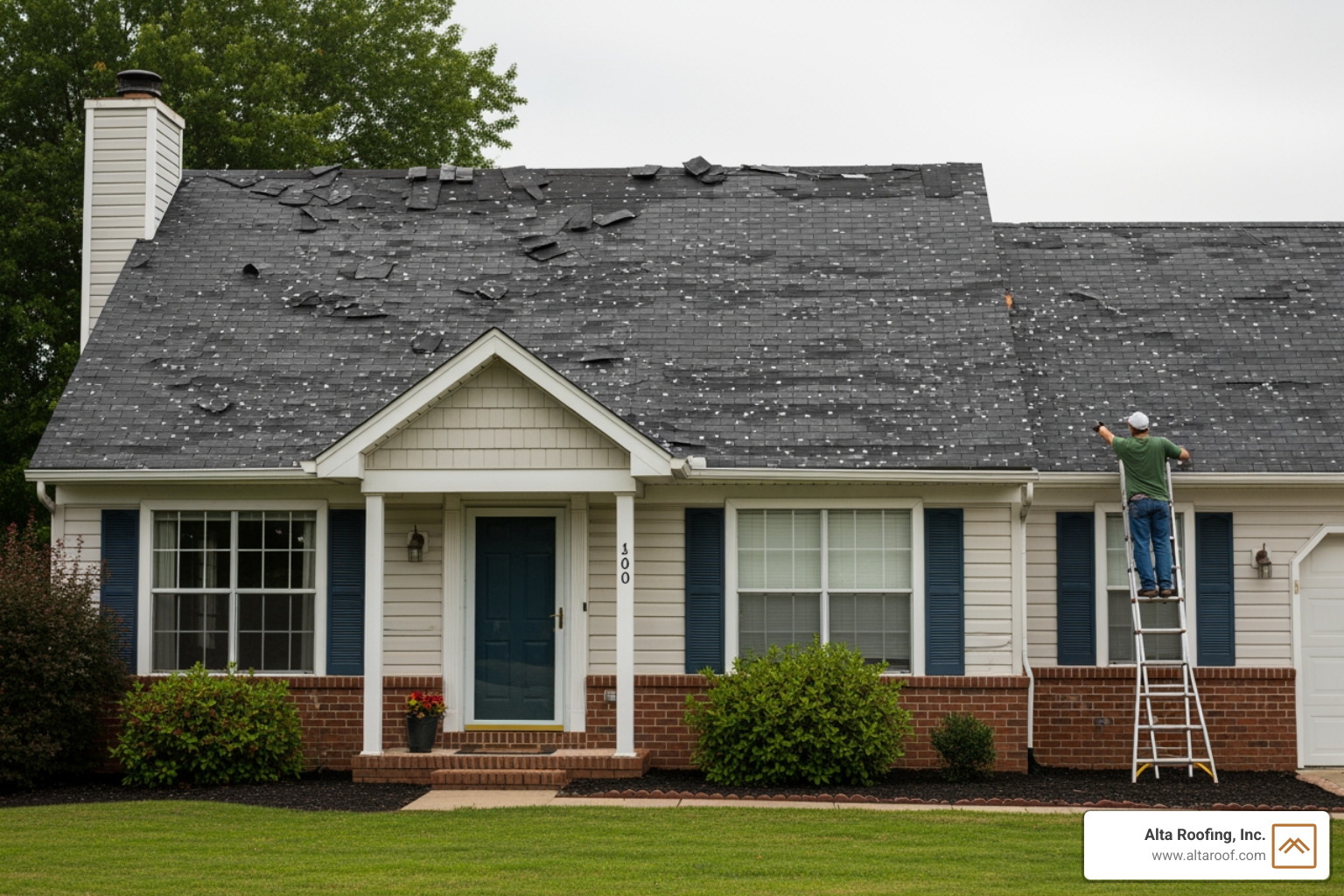
Insurance claim roofing is the process homeowners use to get their insurance company to pay for storm-damaged roofs. When Colorado's severe weather strikes—bringing hail, wind, or heavy snow—your roof often takes the biggest hit. Filing a successful claim can mean the difference between paying thousands out of pocket or getting your roof fully restored at minimal cost.
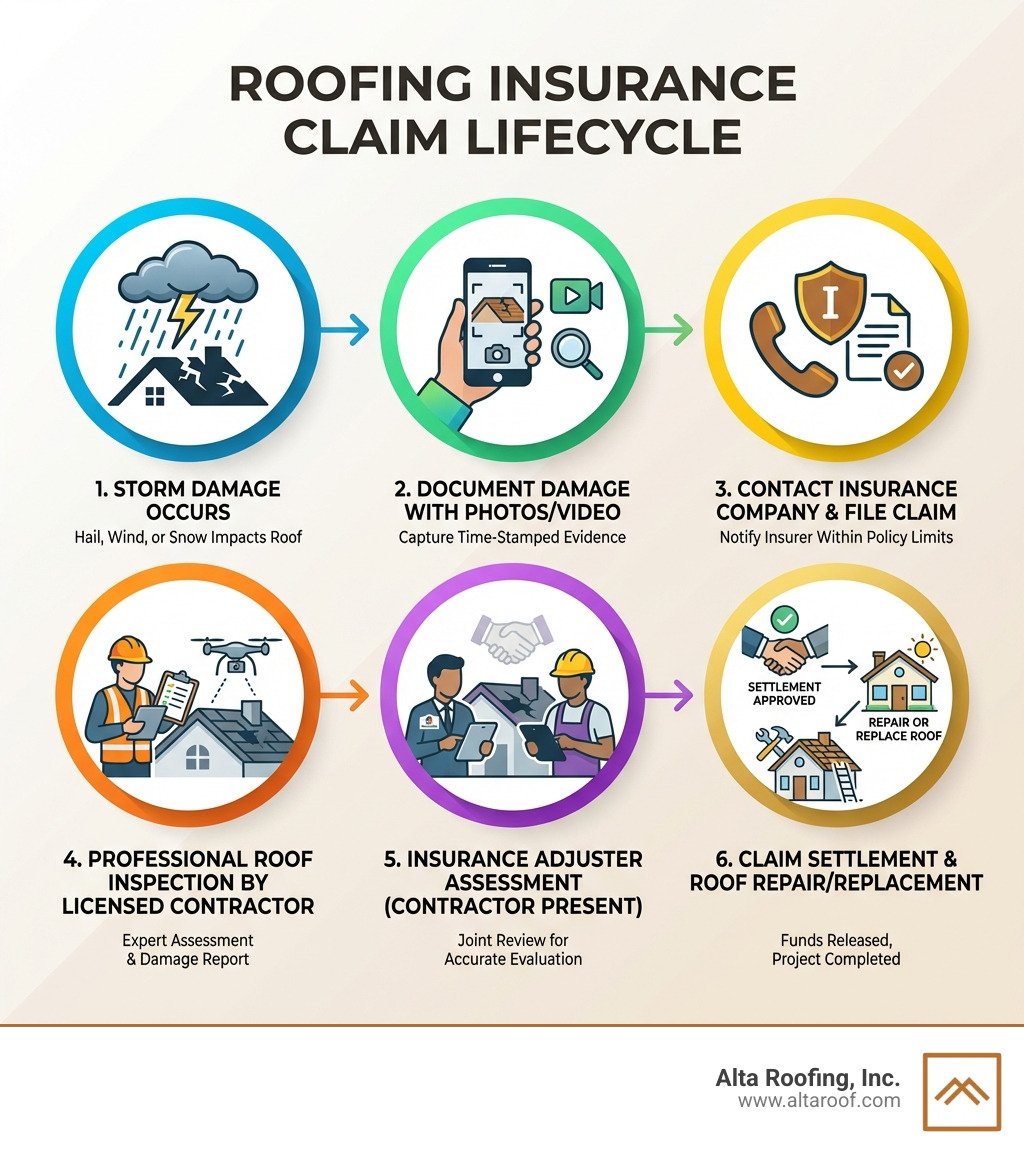
Quick Answer: The 5 Essential Steps to File a Roofing Insurance Claim
- Document the damage immediately with time-stamped photos and videos
- Contact your insurance company within 30-60 days of the storm
- Get a professional roof inspection from a licensed contractor
- Meet with the insurance adjuster (have your contractor present)
- Review the settlement offer and negotiate if needed
Most homeowners insurance policies cover sudden, accidental damage from weather events like hail, wind, and falling debris. However, they typically don't cover damage from normal wear and tear, poor maintenance, or aging roofs. The key is understanding what your specific policy covers—and how to document your claim properly.
Why the process feels overwhelming: You're dealing with multiple parties (your insurer, adjusters, contractors), complex policy language (ACV vs. RCV, deductibles, depreciation), tight deadlines, and the stress of a damaged home. Many homeowners make costly mistakes by waiting too long to file, failing to document damage thoroughly, or accepting lowball settlements without negotiation.
The good news? With the right preparation and professional support, you can steer this process successfully and get your roof restored to full protection.
I'm Barry Goers, and through my construction industry experience with Tarben Ventures Ltd., I've seen how critical proper insurance claim roofing procedures are for homeowners facing storm damage. My background in building projects and investment has given me deep insight into what separates successful claims from denied ones.
Navigating the Insurance Claim Roofing Process
When Mother Nature decides to throw a tantrum over Colorado, your roof is often the first line of defense. From the sudden impact of hail in Colorado Springs to the relentless winds whipping through Denver and Fort Collins, our roofs take a beating. Understanding the insurance claim roofing process is essential for every homeowner. It ensures you're not left holding the bag (or the bill!) after a storm.
Step-by-Step Guide to Filing
The moment you suspect roof damage, a clear, step-by-step approach can save you a lot of headaches, and potentially, a lot of money. Here's how we recommend you proceed:
- Assess and Document the Damage Immediately: As soon as it's safe, take photos and videos of all visible damage from the ground. Look for missing shingles, dents from hail (especially on vents, gutters, and siding), granule loss, or any signs of leaks inside your home. Make sure your photos are time-stamped if possible. This initial documentation is crucial because most policies require storm damage to be reported within 30–60 days, and insurers expect professional documentation for approval. This helps establish a clear timeline and extent of the damage.
- Contact a Reputable Roofing Contractor for Inspection: Before even calling your insurance company, it's wise to get a professional, unbiased assessment from a local roofing company like Alta Roofing. Why? Because a certified roofer can distinguish between storm damage (which is usually covered) and pre-existing wear and tear (which typically isn't). This initial inspection strengthens your claim by providing expert evidence and a detailed scope of work. Our team at Alta Roofing specializes in these inspections and can provide you with comprehensive Local Roofing Contractors services. We're here to help you know When to Replace Your Roof or if a repair will suffice.
- Review Your Insurance Policy: Take a moment to understand your specific coverage. Familiarize yourself with your deductible, whether you have Actual Cash Value (ACV) or Replacement Cost Value (RCV) coverage (we'll dive into this soon), and any specific exclusions. This knowledge empowers you when you speak with your insurance provider.
- File the Claim with Your Insurance Company: Now, armed with your documentation and a contractor's assessment, contact your insurance company. Provide them with the storm date, the damage you've observed, and any reports from your roofer. They will assign you a claim number, which is essential for tracking your case.
- Schedule the Adjuster's Inspection (with your roofer present): Your insurance company will send an adjuster to assess the damage. This is a critical step. We strongly recommend having your chosen roofing contractor present during this inspection. Our experts can speak the same technical language as the adjuster, point out hidden damage they might miss, and ensure a thorough and fair assessment. This collaboration often leads to a more accurate and favorable outcome for your claim.
- Review the Settlement Offer and Negotiate if Needed: Once the adjuster completes their assessment, your insurance company will provide a settlement offer. Review this offer carefully with your roofing contractor. If the offer seems low or doesn't cover all necessary repairs, don't hesitate to negotiate. Your contractor can provide additional documentation or a detailed estimate to support your case.
- Schedule Approved Repairs: Once the claim is approved and settled, you can proceed with scheduling the repairs or replacement. Our team at Alta Roofing is ready to help you restore your roof to its former glory.
Following these best practices from GAF's guide on Best practices for filing a claim helps ensure a smoother process. Remember to make temporary repairs (like tarping) to prevent further damage, but save all receipts!
Essential Documentation for Your Insurance Claim Roofing File
Think of your documentation as the story of your roof's damage, told with irrefutable evidence. The more detailed and organized it is, the stronger your insurance claim roofing case will be.
Here's what you'll need:
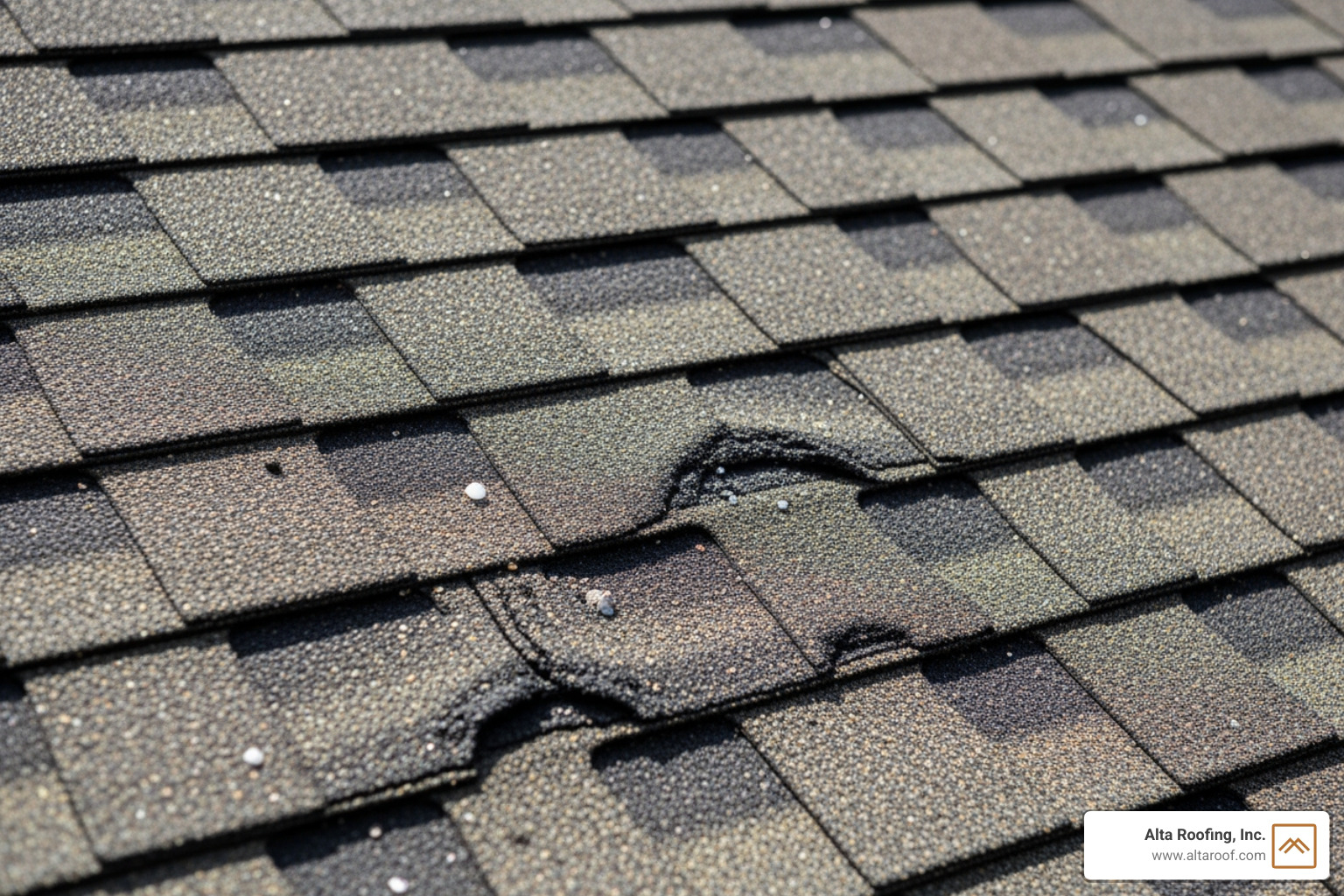
- Time-Stamped Photos and Video Evidence: This is your best friend. Capture every angle of the damage, both up close and from a distance. Include pictures of any fallen debris, broken windows, or damaged gutters. Don't forget to photograph any interior damage, like water stains on ceilings. For examples of what to look for, check out our guide on Hail Damage on Roof Pictures.
- Detailed Contractor's Report: A professional inspection report from a reputable roofer should outline the type and extent of damage, its likely cause (e.g., hail, wind), and a comprehensive estimate for repairs or replacement. This report serves as objective proof of your claim.
- Receipts for Temporary Repairs: If you had to make any emergency repairs (like tarping your roof to prevent further water intrusion), keep all receipts. Your insurance policy often covers these mitigation costs.
- Date of Loss: Clearly record the date and time of the storm or event that caused the damage. This helps your insurer verify the claim against weather records.
- Policy Information: Have your policy number readily available.
- Communication Log: Keep a detailed log of all communications with your insurance company and adjuster, including names, dates, times, and summaries of conversations.
Professional documentation is key for approval. Without it, you might find yourself explaining "what ifs" instead of presenting "what is."
Understanding Coverage: ACV vs. RCV and Deductibles
One of the most confusing aspects of insurance claim roofing is understanding how your policy actually pays out. The terms Actual Cash Value (ACV) and Replacement Cost Value (RCV) are crucial to grasp, as they significantly impact your reimbursement.
Actual Cash Value vs. Replacement Cost Value
Let's break down these two types of coverage:
- Actual Cash Value (ACV): This coverage pays for the depreciated value of your roof. Think of it like buying a used car; it's worth less than a brand-new one. Your insurance company will calculate the replacement cost of your roof and then subtract depreciation based on its age and condition. For example, if your roof is 20-years-old and has depreciated significantly, your insurance company will cover significantly less of the cost to replace it, even if the claim is related to a natural event. This means you'll receive a lower payout, leaving you to cover a larger portion of the replacement cost out of your own pocket.
- Replacement Cost Value (RCV): This is the gold standard of coverage. RCV policies pay the full cost to repair or replace your roof at current market prices, without deducting for depreciation. If you have replacement cost coverage, the company will typically pay with two checks. The first check will be a partial payment, representing the actual cash value. Your company will send the rest of your claim amount (the "recoverable depreciation") after you’ve started and completed repairs. This ensures you get enough to rebuild or replace your roof with new materials of similar quality.
Here's a quick comparison:
| Feature | Actual Cash Value (ACV) | Replacement Cost Value (RCV) |
|---|---|---|
| Payout Basis | Current market value minus depreciation | Cost to replace/repair with new materials at current prices |
| Depreciation | Deducted from payout | Not deducted (initially withheld, then paid upon completion) |
| Out-of-Pocket | Higher, as you cover the depreciated amount | Lower, as insurance covers full replacement cost after repairs |
| Benefit | Lower premiums, but less coverage for older roofs | Higher premiums, but more comprehensive coverage |
Understanding which type of coverage you have is vital. We always recommend reviewing your policy with your agent, or referring to resources like Insurance and your roof: What to know to fully grasp the implications for your situation.
Deductibles and Policy Limits
Beyond ACV and RCV, two other terms are critical for your financial responsibility:
- Deductibles: This is the amount you pay out-of-pocket before your insurance coverage kicks in. The deductible is often a fixed dollar amount—usually $500 to $2,000 or more—or it may be a percentage of the home’s insured value. For example, if your roof repair costs $10,000 and your deductible is $1,000, you pay the first $1,000, and your insurer covers the remaining $9,000. Many policies in Colorado also have specific wind and hail deductibles, which can be a percentage (e.g., 1-5%) of your home's total insured value, rather than a fixed dollar amount. It's crucial to understand this, as a 1% deductible on a $400,000 home is $4,000! If a repair estimate is less than your deductible, it often makes more sense to pay out-of-pocket to avoid filing a claim that might impact your future premiums.
- Policy Limits: Every insurance policy has maximum amounts it will pay for different types of claims. These "policy limits" apply to the total amount your insurer will cover for roof repairs or replacement. It's important to ensure your limits are adequate to cover potential damage, especially given rising construction costs.
Knowing these details upfront empowers you to make informed decisions and avoid surprises during the insurance claim roofing process.
Common Reasons for Claim Denials and How to Avoid Them
It's heartbreaking to go through the stress of storm damage, only to have your insurance claim roofing denied. While insurance companies aim to cover legitimate damage, there are common pitfalls that can lead to a denial. Understanding these and taking preventative measures is key.
Maintenance Neglect and Wear and Tear
This is perhaps the most common reason for claim denials. Homeowners insurance is designed to cover sudden, accidental damage, not issues that arise from neglect or the natural aging process of your roof. As one source points out, "If an inspector finds that the damage was caused or worsened by neglect, your claim could be denied."
Here’s how to avoid this:
- Regular Inspections: We recommend annual roof inspections (ideally in the spring and fall) by a professional roofer. This helps identify minor issues before they become major problems. Even a brand-new roof isn’t invincible and can have installation defects, as noted in some research. An inspection establishes a documented baseline of your roof's condition.
- Gutter Cleaning: Keep your gutters and downspouts clear. Clogged gutters can lead to water backup, fascia damage, and even ice dams in colder months, causing leaks that may be attributed to neglect.
- Tree Trimming: Trim overhanging tree branches away from your roof. Falling branches are a common cause of storm damage, and dead or rotted trees that you failed to remove could lead to a claim denial if they fall.
- Minor Repairs Promptly: Address small issues like loose or cracked shingles immediately. Ignoring them can worsen damage during a storm, giving the insurer grounds to deny coverage for the exacerbated portion.
Your insurance company expects you to perform reasonable upkeep on your property. If damage is deemed to be from "normal wear and tear" or "gradual deterioration" rather than a sudden event, your claim is unlikely to be covered. While research on terracotta and cement roofs being vulnerable to wildfires highlights different risks, the underlying principle is that neglect of any roof type can lead to uninsurable losses.
Ordinance and Law Coverage
This type of coverage is often overlooked but can be incredibly important, especially for older homes in areas like Castle Rock or Manitou Springs. Ordinance and Law Coverage helps pay for the additional costs of rebuilding or repairing your home to meet current building codes after a covered loss.
For example, if your 20-year-old roof is damaged by hail and needs replacement, current building codes in your Colorado city might require new ventilation, specific underlayment, or even a different type of shingle that wasn't required when your original roof was installed. Without Ordinance and Law coverage, your standard policy might only cover the cost to replace your roof to its previous (and now non-compliant) condition. The extra costs to bring it up to code would then fall to you.
This coverage is not included in every policy, so check if you have it. If not, consider adding it as an endorsement (or rider) to your policy. It's a small investment that can prevent significant out-of-pocket expenses if a full roof replacement is needed after a storm.
The Role of Professional Inspections and Impact-Resistant Materials
Navigating the aftermath of a storm and dealing with insurance can feel like a full-time job. This is where a professional roofing contractor, especially one experienced in insurance claim roofing, becomes your greatest ally.
How an Insurance Claim Roofing Specialist Advocates for You
When an insurance adjuster comes to assess your roof damage, their primary goal is to determine the company's liability. While they aim for fairness, they might not always spot every nuance of damage, especially hidden issues. This is why having your roofing contractor present during the adjuster's visit is so valuable.
Here’s how our team at Alta Roofing advocates for you:
- Unbiased Assessment: Before the adjuster arrives, we provide you with a detailed, unbiased assessment of your roof's condition, identifying all storm-related damage. This gives you a clear picture of what needs to be repaired or replaced.
- Technical Expertise: Our specialists speak the technical language of roofing and insurance. We can accurately point out specific damage, explain its cause, and present solutions that align with industry standards.
- Negotiation Support: If an adjuster's initial assessment undervalues the damage or misses key issues, we can provide additional documentation, photos, and a comprehensive scope of work to support negotiations. Homeowners often have much better success with their claims when they have an expert on their side.
- Hidden Damage Identification: Hail damage, for instance, can be subtle. Granule loss, bruising on shingles, or damage to flashing might be missed by an untrained eye. Our experts know exactly what to look for, both on the surface and in the underlying structure, to ensure all damage is accounted for.
- Single Point of Contact: As a Colorado-based company specializing in storm restoration, we understand the unique challenges homeowners face in areas like Denver, Aurora, and Castle Pines. We handle the insurance claims process and coordinate all necessary trades, acting as your single point of contact. This comprehensive approach simplifies the entire process, allowing you to focus on getting your home back to normal. You can learn more about our comprehensive offerings on our Services page.
We believe that a knowledgeable roofing contractor can make all the difference in your claim, ensuring you receive a fair settlement for all necessary repairs.
Benefits of Impact-Resistant Roofing
In a state like Colorado, where hail and strong winds are common, investing in impact-resistant roofing materials can offer significant benefits, including potential savings on your homeowners insurance premiums.
- What it is: Impact-resistant roofing products are designed to withstand severe weather. They are often rated using the UL 2218 standard, with Class 4 being the highest rating for impact resistance. These shingles are made with advanced materials that can absorb impact without cracking or breaking.
- Premium Discounts: Many insurance companies recognize the durability of these materials and offer premium discounts to homeowners who install them. By choosing a Class 4 impact-resistant shingle, you're signaling to your insurer that your roof is less likely to be damaged in a hail storm, potentially leading to lower rates.
- Improved Durability: Beyond insurance savings, these materials offer superior protection for your home, reducing the likelihood of needing repairs or replacements after every storm. This means less stress, fewer claims, and a longer lifespan for your roof.
When discussing your roof replacement options, ask us about impact-resistant materials. It's an investment that pays off in both peace of mind and potential financial savings.
Frequently Asked Questions about Roofing Claims
We know that dealing with insurance claim roofing can bring up a lot of questions. Here are some of the most common ones we hear from Colorado homeowners:
How long does the insurance claim process typically take?
The timeline for an insurance claim roofing process can vary, but here's a general idea:
- Approval or Denial: After the adjuster inspects the damage, you can typically expect an approval or denial within a week to ten days.
- Reimbursement Check: Once the claim is approved, it usually takes 30 to 60 days to receive a reimbursement check. Some state laws might even require checks to be received within 30 days of settlement. That for RCV policies, this first check will be the ACV portion, with the recoverable depreciation released after repairs are completed.
Factors like the severity of the storm, the volume of claims in your area (especially after widespread events in places like Golden or Arvada), and the efficiency of your insurance company can all influence these timelines.
What should I do if I disagree with the adjuster's assessment?
It's not uncommon for homeowners to disagree with an adjuster's assessment. The adjuster works for the insurance company, and while they strive for accuracy, they can sometimes miss damage or undervalue repairs.
Here's what we recommend:
- Request a Detailed Explanation: Ask your adjuster for a clear, written explanation of their assessment and why certain damages or costs were excluded.
- Provide Additional Evidence: If your roofing contractor identified damage that the adjuster missed, provide the adjuster with your contractor's detailed report, photos, and estimates. Our team at Alta Roofing is experienced in this and can help present a strong case.
- Get a Second Opinion: You have the right to get a second opinion from an independent roofing inspector or another reputable contractor. Their report can serve as powerful evidence in your appeal.
- Appeal the Decision: Most insurance companies have an appeal process. Follow their guidelines for submitting an appeal, providing all supporting documentation.
- Consider a Public Adjuster: If you're still not getting a fair shake, you might consider hiring a public adjuster. Unlike the insurance company's adjuster, a public adjuster works solely for you and advocates on your behalf. They typically charge a percentage of the settlement.
- Mediation or Legal Action: As a last resort, if all else fails, you might explore mediation or legal action.
The key is to remain calm, communicate professionally, and back up your arguments with solid evidence.
Can I make temporary repairs before the adjuster arrives?
Absolutely, and you should! Making temporary repairs is called "mitigation," and it's your responsibility as a homeowner to prevent further damage after a loss.
- Preventing Further Loss: If your roof has a hole or significant damage, it's crucial to tarp it or take other immediate steps to prevent water from entering your home and causing more extensive (and costly) interior damage.
- Document Everything: Before you make any temporary repairs, take photos and videos of the damage. This is essential for your claim.
- Track Expenses: Keep all receipts for materials and labor related to your temporary repairs. Your insurance policy typically covers these reasonable mitigation expenses.
- Safety First: Only undertake temporary repairs if it's safe to do so. If the damage is extensive or requires working at heights, it's best to call a professional emergency service.
Your insurer will appreciate your proactive efforts to prevent secondary damage, and it strengthens your claim by showing you acted responsibly.
Conclusion
Navigating the insurance claim roofing process doesn't have to be a daunting experience. With the right knowledge, thorough documentation, and the support of an experienced and reputable roofing contractor, you can ensure a fair and successful outcome for your home.
At Alta Roofing, Inc., we're more than just roofers; we're your dedicated partners in storm restoration. Specializing in roof replacement, repairs, and comprehensive storm damage restoration, we pride ourselves on handling insurance claims and coordinating all necessary trades. We act as a single point of contact for homeowners throughout Colorado, particularly in Colorado Springs, Denver, Aurora, Thornton, Lakewood, Castle Rock, Manitou Springs, Elizabeth, Parker, Golden, Arvada, Woodland Park, Highlands Ranch, Littleton, Lone Tree, Fountain, Centennial, Englewood, Castle Pines, and Monument.
We understand the unique weather challenges our beautiful state presents and are committed to helping you protect your most valuable asset. Don't let the complexities of an insurance claim overwhelm you.
Reach out to us today for a free inspection and let us guide you through every step of the process. Your peace of mind is our priority.
Contact us now!
