
Is Your Roof Hail-Damaged? A Checklist for Homeowners
Why Identifying Hail Storm Roof Damage Quickly Protects Your Home and Investment
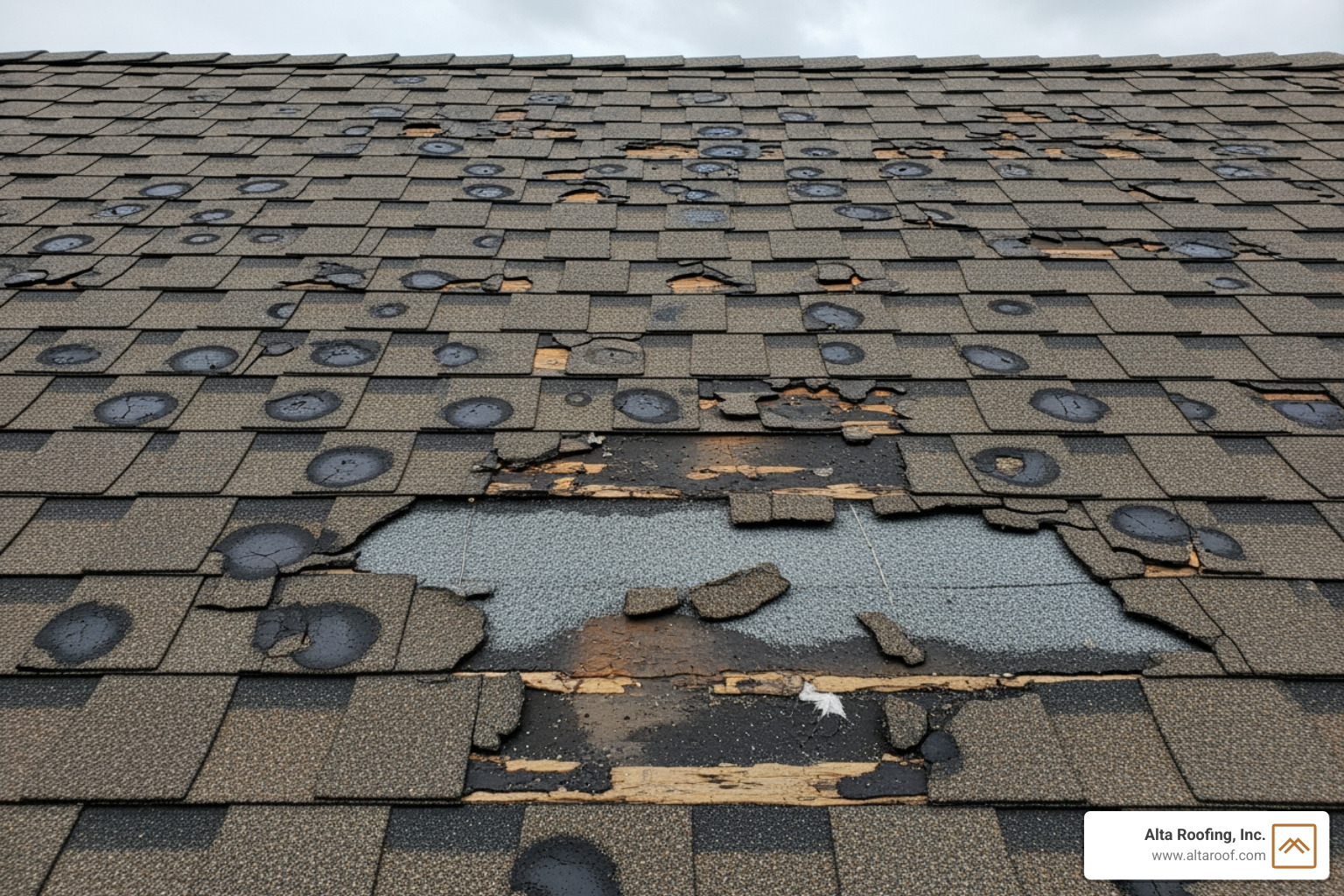
Hail storm roof damage is one of the most common and costly forms of weather-related property damage, causing over $1 billion in losses annually in the United States. When hailstones strike your roof, they can compromise shingles, crack tiles, and dent metal, creating vulnerabilities that lead to leaks, water intrusion, and mold. Understanding how to identify this damage is critical for protecting your home and ensuring a successful insurance claim.
Quick Answer: Key Signs of Hail Storm Roof Damage
- Asphalt Shingles: Missing granules, dark spots or "bruises," cracked or dented shingles, exposed fiberglass mat
- Metal Roofs: Dents and dings on panels, gutters, or vents
- Wood Shakes: Splintering, sharp-edged splits with brown/orange coloring
- Clay/Concrete Tiles: Chipped, cracked, or shattered tiles
- Collateral Damage: Dented gutters, damaged siding, cracked window sills, debris in downspouts
- Interior Signs: Water stains on ceilings or walls, visible attic damage
Hail damage isn't always obvious from the ground. Small dents, granule loss, and weakened seal strips may not be visible but can drastically shorten your roof's lifespan. Colorado homeowners are particularly vulnerable—the state is part of "Hail Alley" and experienced over 150 damaging hail storms in a recent year.
The consequences of ignoring hail damage are serious. Even minor impacts can allow water to seep beneath shingles, leading to rotting wood, compromised structural integrity, and expensive interior repairs. Most insurance policies cover hail damage, but you typically have six months to one year to file a claim and need thorough documentation to support it.
This checklist will walk you through everything you need to know: how to spot damage on different roofing materials, what immediate steps to take after a storm, how to steer the insurance claims process, and when to repair versus replace your roof.
I'm Barry Goers, founder of Alta Roofing, Inc., and I've spent years helping Colorado homeowners steer the complexities of storm restoration. Through our work with hundreds of families dealing with hail storm roof damage, I've learned that early identification and a clear action plan are the keys to a smooth recovery and full insurance reimbursement.
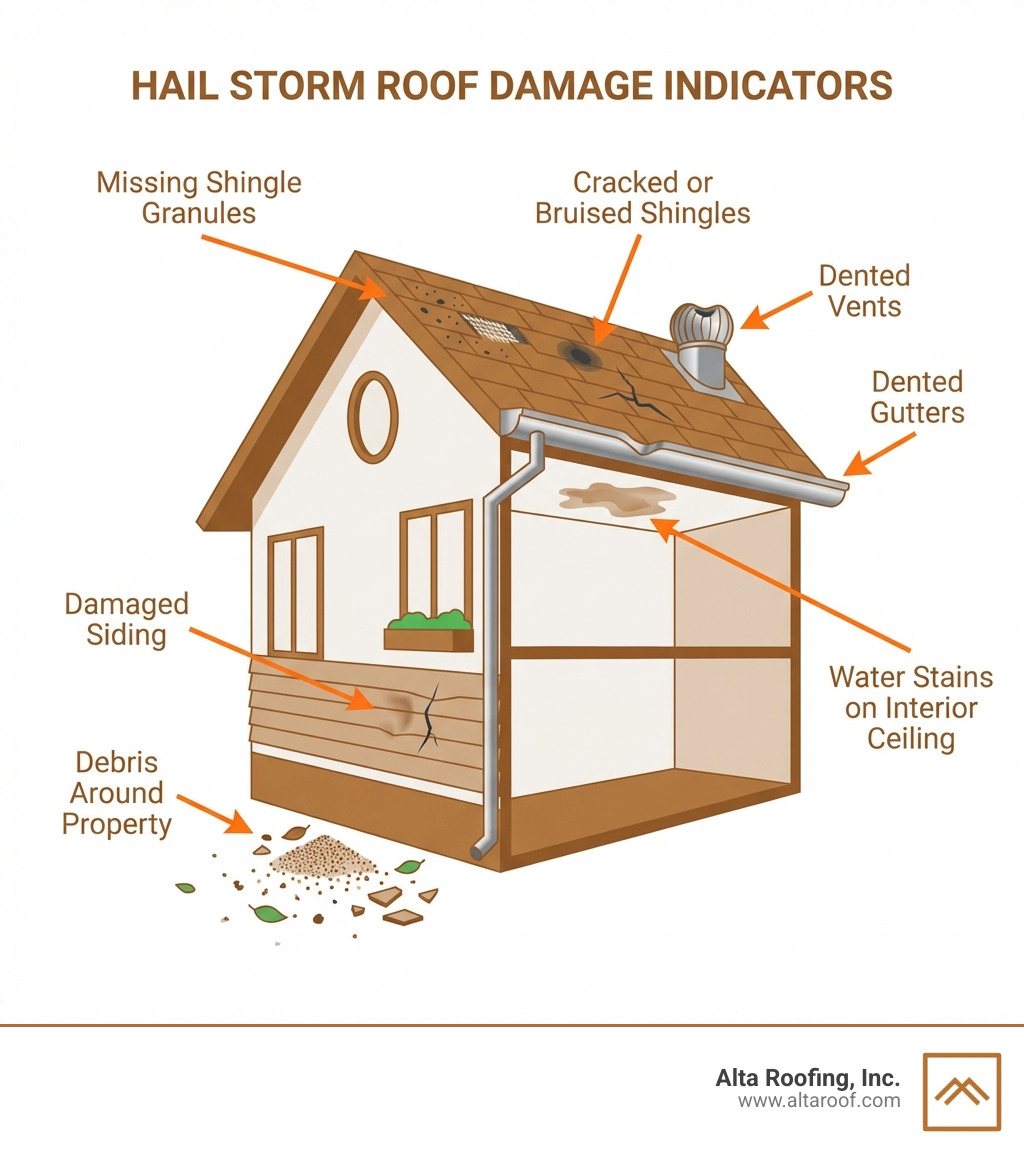
How to Spot Hail Damage on Your Roof (Even the Hidden Signs)
The first step is a thorough inspection from the ground up. Hail damage isn't always obvious, but certain clues can reveal the extent of the problem. Ignoring these signs can lead to costly water damage, mold growth, and structural issues down the line.
Signs of Hail Damage on Asphalt Shingles
Asphalt shingles are the most common roofing material in Colorado and across the U.S., covering about 75% of homes. This means they're often the first line of defense against hailstones, and they show hail storm roof damage in distinct ways.
When hail strikes an asphalt shingle, it dislodges protective granules that shield it from UV rays and weather. This granule loss appears as dark spots or "bruises," and you may find loose granules in your gutters. These spots aren't just cosmetic; they expose the asphalt to sunlight, accelerating its deterioration and shortening the shingle's lifespan.
Beyond granule loss, look for random impact marks that have no discernable pattern. These are often circular or irregular depressions. If you gently press on these areas, they might feel soft or bruised spots, similar to a ripe apple. This "bruising" indicates that the hailstone has fractured the fiberglass mat beneath the asphalt, compromising the shingle's structural integrity.
Other critical signs of hail storm roof damage on asphalt shingles include cracked shingles. These cracks can range from small, hairline fractures to larger, more noticeable breaks. Sometimes, the impact can cause the shingle to lose its seal, leading to exposed fiberglass mat where the asphalt and granules have been completely removed. You might also notice "black hits" or areas where the asphalt appears shiny, indicating that the protective layer is gone.
It's important to differentiate actual hail damage from normal wear and tear. Blistering, cracking from UV degradation, or scuffing from installation can mimic hail damage. However, true hail impact will typically leave a random pattern of strike marks and a detectable "bruise" in the shingle's mat. For a visual guide on what to look for, check out this resource on how to identify hail damage.
Signs of Damage on Wood, Metal, and Tile Roofs
While asphalt shingles are prevalent, many Colorado homes feature other roofing materials, each with its own way of showing hail storm roof damage.
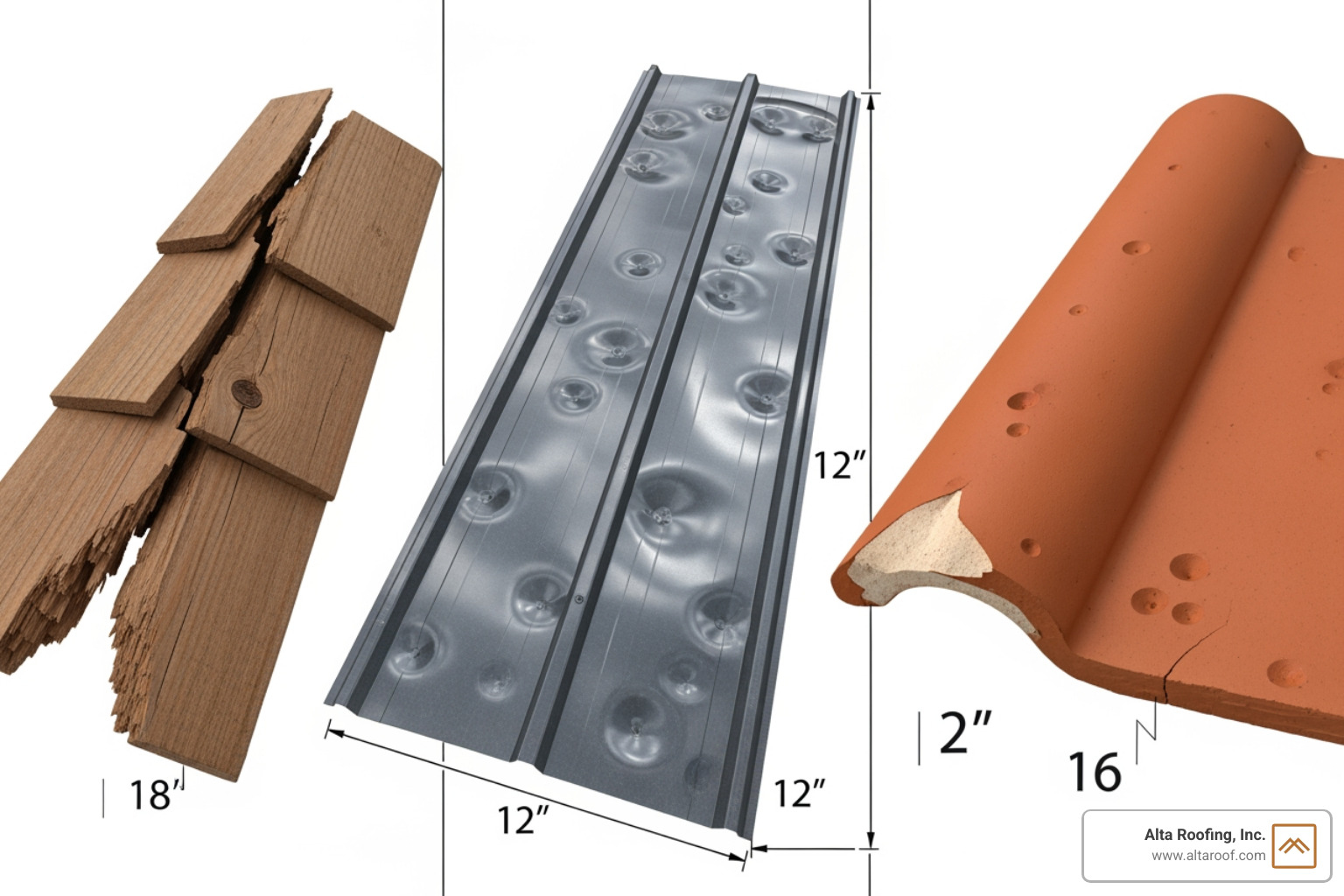
Wood shakes and shingles, for instance, are beautiful but can be vulnerable. Hail impacts on wood can cause splintering and deep cracks. You might observe a split in the shake that looks brown or orange, with sharp corners and edges, and little to no weathering at the edges. These impacts can also lead to missing or dislodged shakes, exposing the underlayment and making your roof highly susceptible to leaks.
Metal roofing, while generally more durable against hail than asphalt, isn't entirely immune, especially to larger hailstones. While normal-sized hail might not leave a mark, extremely large hailstones can create noticeable dents and dings on the panels. These dents can compromise the protective coating, potentially leading to rust and corrosion over time if left unaddressed. We've seen many metal roofs in areas like Denver and Aurora withstand smaller hail with ease, but those softball-sized chunks can still wreak havoc.
For homes with clay or concrete tiles, hail storm roof damage often manifests as chipped or shattered tiles. A severe hailstorm can make a tile roof look like it was hit with a hammer. You might also find tiles that have shifted, slid, or fallen off, which can expose the underlayment to the elements. These tiles are rigid, so instead of bruising, they tend to break upon impact.
If you have any of these roofing types, a careful inspection after a storm is crucial. Our Our Work gallery features examples of how different roofing materials can be affected by severe weather.
Collateral Damage: Clues from Around Your Property
Sometimes, the most obvious signs of a hailstorm's intensity aren't on the roof itself, but in the surrounding areas of your property. These "collateral damages" serve as strong indicators that your roof likely sustained damage as well.
Look for dented gutters and damaged downspouts. If these metal components, which are typically quite sturdy, show dents, it's a clear sign that hail of a significant size and force fell on your property. The same applies to chipped siding or cracked window sills. Vinyl siding can crack, and aluminum siding can dent from hail impacts. Even seemingly minor issues like paint chips on window frames or dented mailboxes can tell a story of a powerful hailstorm.
Don't forget to check your A/C units for dented fins or covers, and inspect any outdoor furniture, decks, or fences for impact marks. Spatter marks, where hail knocks oxidation or dirt off metal surfaces, are also a good sign that hail occurred, even if not directly damaging the surface. These observations are critical for painting a complete picture of the storm's severity for your insurance claim.
Colorado, being a prominent part of what's known as Hail Alley, experiences these types of widespread damages frequently. If you observe any of these external signs around your home in Colorado Springs, Castle Rock, or any of our service areas, it's highly probable that your roof also experienced significant hail storm roof damage.
Your Immediate Post-Storm Action Plan
After a severe storm, a calm and methodical approach is best. Follow these steps to secure your property and prepare for the restoration process. Your safety is the top priority—never climb on a wet or potentially damaged roof.
Step 1: Document Everything
Thorough documentation is the most crucial step after a hailstorm and the backbone of a successful insurance claim for hail storm roof damage.
Start by taking photos and record videos of all visible damage, both inside and outside your home. This includes your roof (from the ground, using a zoom lens or binoculars if necessary), siding, windows, gutters, outdoor furniture, vehicles, and anything else impacted. Make sure to note the date and time the storm occurred and when you're documenting the damage. If it's safe to do so, try to measure hailstones you find on the ground by placing a ruler or common object (like a coin) next to them for scale in your photos.
Create a detailed inventory of all damaged items, describing the damage clearly. The more evidence you collect, the stronger your claim will be. This shows your insurance provider the full extent of the loss and helps prevent disputes later on.
Step 2: Perform Temporary Fixes
Once you've documented the damage, your priority is to prevent further damage. This is often an insurance policy requirement and shows you are actively mitigating the loss.
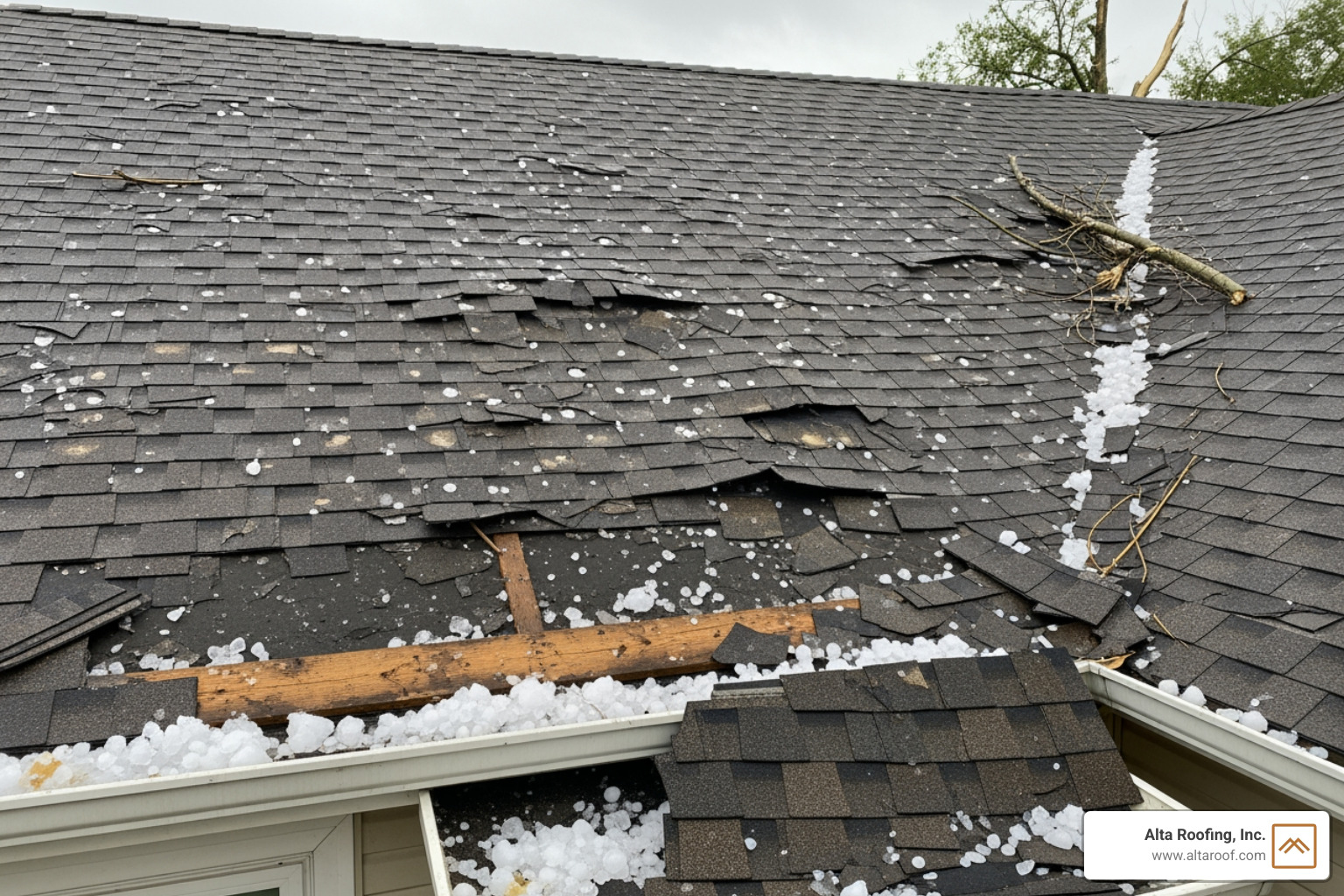
If you have active leaks inside your home, carefully place buckets or tarps to catch the water. For significant roof damage, such as large holes, you may need to perform tarping leaks. This involves temporarily covering the damaged area with a tarp to prevent more water from entering. If windows are broken, consider boarding broken windows to secure your home.
It's vital to keep all receipts for emergency materials you purchase for these temporary fixes. Your insurance policy will typically reimburse you for these costs. While we don't recommend climbing onto a damaged roof yourself, you can often find professional emergency tarping services to handle this safely.
Step 3: Get a Professional Inspection
Even if you've done a thorough ground-level inspection, a professional assessment is indispensable. We strongly advise against climbing on your roof after a storm due to safety risks and the potential for causing more damage. Instead, contact a qualified roofer as soon as possible.
A professional roofer from Alta Roofing, serving areas like Thornton, Lakewood, and Golden, understands the nuances of hail storm roof damage and can identify hidden damage that might not be obvious to an untrained eye. They can distinguish actual hail damage from normal wear and tear or other types of issues. Our team will provide a detailed damage report and accurate cost estimates for repairs or replacement. This expert assessment is crucial for your insurance claim, as it provides credibility and ensures all damage is accounted for. For more information about our comprehensive storm damage services, including inspections and repairs, visit our dedicated page: More info about our storm damage services.
Navigating the Insurance Maze for Hail Storm Roof Damage
Filing an insurance claim can be intimidating, but understanding the process is key to a successful outcome. Most standard homeowner policies cover hail damage, but the specifics can vary.
Understanding Your Homeowner's Policy
Before filing a claim, understand your homeowner's insurance policy. We encourage all homeowners in Castle Pines, Monument, and throughout Colorado to review their policy documents.
Pay close attention to whether your policy covers damage on an Actual Cash Value (ACV) basis or a Replacement Cost Value (RCV) basis. ACV policies pay out the depreciated value of your roof, meaning they subtract for age and wear, leaving you to cover the difference for a new roof. RCV policies, on the other hand, cover the cost of replacing your roof with a new one of similar quality, without deducting for depreciation.
Also, be aware of your deductibles. Most homeowner policies have a 1-2% deductible, meaning you'll need to pay that percentage of your home's insured value before your coverage kicks in. For example, if your home is insured for $500,000 and you have a 1% deductible, you'll pay the first $5,000. It's usually only worth filing a claim if the damage significantly exceeds your deductible.
Finally, note any filing deadlines and policy exclusions. Most policies give you anywhere from six months to one year to file a claim after the storm event, but some can be shorter. Missing this window could mean your claim is denied. Understanding these aspects allows you to approach your claim with confidence and avoid unwelcome surprises.
The Step-by-Step Process for Filing a Hail Storm Roof Damage Claim
Filing a claim for hail storm roof damage can feel overwhelming, but by breaking it down into manageable steps, we can guide you through it.
- Contact your insurance agent: As soon as you've identified potential damage and performed temporary fixes, call your insurance provider or agent. You can often file a claim through their website or app as well. Provide them with the date of loss and a preliminary description of the damage.
- File the claim promptly: Don't delay. Even if you're within the filing window, prompt action can streamline the process.
- Schedule the adjuster's visit: Your insurance company will assign an adjuster to inspect your roof and assess the damage.
- Have your contractor present during the inspection: This is where our expertise at Alta Roofing truly shines. We recommend that one of our experienced roofing professionals, familiar with Colorado's specific storm patterns, be present when the insurance adjuster inspects your roof. We can point out all the subtle signs of hail storm roof damage that might otherwise be missed, ensuring a comprehensive assessment. This greatly increases the likelihood of a fair and accurate payout.
- Provide your documentation: Share all the photos, videos, and detailed inventory you collected in Step 1 of your action plan with both the adjuster and your contractor.
The goal is to ensure all damage is identified and covered so that your home in areas like Littleton, Lone Tree, or Fountain can be fully restored.
What If Your Claim is Denied or Underpaid?
If your claim for hail storm roof damage is denied or the initial offer seems insufficient, don't despair—you have options.
First, review the adjuster's report carefully. Does it align with what your roofing contractor found? If there are discrepancies, communicate with your insurer to understand why. Ask for specific reasons for the denial or the lower payout.
You have the right to request a second inspection, especially if your contractor believes significant damage was overlooked. We've often found that a second look, particularly with a knowledgeable contractor present, can reveal previously missed damage.
It's also important to understand your right to an independent appraisal. If you and your insurer can't agree on the scope or cost of repairs, your policy may have an appraisal clause, allowing both parties to hire independent appraisers who then select an umpire to resolve disputes.
In more challenging situations, you might consider contacting an attorney specializing in insurance claims or filing a complaint with the Colorado Division of Insurance. For more detailed guidance on navigating difficult claims, this Angi article provides helpful insights: Everything You Need to Know About the Hail Damage Insurance Claim Process.
Repair vs. Replacement: Making the Right Call
Once the damage is assessed, you'll face a critical decision: repair or replace? The right choice depends on the age of your roof, the extent of the damage, and your long-term goals.
When to Repair Your Hail Storm Roof Damage
Sometimes, a full roof replacement isn't necessary. Repairs can be a viable and cost-effective solution for hail storm roof damage when the damage is:
- Minor or localized damage: If only a small section of your roof, or a few scattered shingles, have been impacted, spot repairs might suffice. This is often the case with smaller hailstones or damage concentrated in one area due to wind patterns.
- Newer roof (under 10 years old): A relatively new roof with minor damage can often be repaired without compromising its overall lifespan. Replacing a few shingles is much less disruptive and expensive than a full overhaul.
- Budget constraints: While insurance often covers replacements, if you're paying out-of-pocket or dealing with a high deductible for very localized damage, repairs can be a more immediate financial option.
- Matching shingles are available: For repairs to blend seamlessly and maintain curb appeal, it's crucial to find shingles that perfectly match your existing roof in color and style. If your roof is older, this can sometimes be a challenge due to discontinuation of products or fading of existing materials.
Even with repairs, address them promptly. Small cracks or leaks, left unchecked, can lead to thousands of dollars in water damage and mold growth.
When a Full Roof Replacement is Necessary
While repairs can be a temporary solution, a full roof replacement is often the only prudent course of action for hail storm roof damage, particularly in areas like Centennial, Englewood, and Colorado Springs, where severe hailstorms are common.
- Widespread damage: If hail has impacted a significant portion of your roof, causing numerous bruises, cracks, or granule loss across multiple slopes, a full replacement is usually recommended. Patching many areas can lead to an uneven roof and compromise its overall integrity.
- Older roof (over 15-20 years): Even if the damage seems moderate, if your roof is nearing the end of its typical lifespan (asphalt shingles usually last 20-30 years), a hailstorm can be the final straw. An older roof is more brittle and susceptible to damage, and repairs might not extend its life significantly enough to be cost-effective. In such cases, insurance companies are often more inclined to approve a full replacement.
- Multiple leaks: If your home is experiencing multiple leaks after a hailstorm, it's a strong indicator of widespread compromise that likely requires a complete re-roof.
- Insurance company approves a full replacement: Your insurance company's assessment will play a major role. If their adjuster, often with the input of your roofing contractor, determines that the damage warrants a full replacement, then it's usually the best path forward.
Choosing between repair and replacement can be a complex decision. Our article, How to Know When It's Time to Replace Your Roof, offers more detailed guidance.
Upgrading for Future Protection
When you do opt for a roof replacement, it presents a fantastic opportunity to upgrade your home's protection against future hailstorms, especially here in Colorado. Investing in impact-resistant materials can provide significant long-term benefits.
The gold standard for hail resistance is a Class 4 rating from Underwriters Laboratories (UL 2218 standard) or FM 4473 standard. These materials, often made from specialized composites or modified asphalt, are tested to withstand the impact of steel balls dropped from significant heights. Many insurance providers offer lower premiums for roofs with a Class 4 rating due to their improved durability.
Metal roofing is another excellent option for superior hail protection. Products like DECRA metal roofs carry the highest UL rating for hail impact resistance and are often warranted against damage from hailstones up to 2.5 inches in diameter. Beyond hail, metal roofs offer a host of other benefits:
- Longer Lifespan: Metal roofing lasts two to three times longer than traditional roofing materials, often extending 50 years or more.
- Lower Cooling Costs: By reflecting sunlight, metal roofs can lower cooling expenses by up to 25%, a welcome feature in sunny Colorado summers.
- High ROI and Increased Home Value: Homeowners can recoup up to 85.9% of the installation cost of a metal roof, and it can boost your home's value by up to 6%.
- Insurance Discounts: As mentioned, many insurance providers offer discounts due to their durability and resistance to various weather perils, including hail and fire (Class A fire rating).
Upgrading to these durable materials can provide immense peace of mind and potentially save you money in the long run.
| Material Type | Durability Against Hail | Lifespan (Years) | Average Cost (Installed) |
|---|---|---|---|
| Asphalt Shingles | Moderate (susceptible to granule loss, bruising, cracking) | 15-30 | $5,000 - $15,000 (standard, for average-sized roof) |
| Class 4 Impact-Resistant Shingles | High (designed to withstand larger hail impacts) | 25-50 | $8,000 - $20,000 (for average-sized roof, often with insurance discounts) |
| Metal Roofing | Very High (excellent resistance, often warranted for large hail) | 40-70+ | $15,000 - $40,000+ (varies greatly by style and material, offers long-term savings) |
Frequently Asked Questions about Hail Damage
We understand that homeowners in Colorado have many questions about hail storm roof damage. Here are some of the most common ones we hear:
How long do I have to file a hail damage claim?
This is a critical question. The answer varies by policy, but most require you to file a claim within six months to one year of the storm. Some policies have shorter deadlines, so it's always best to report potential damage as soon as you find it. We recommend checking your policy or contacting your agent immediately after a storm in areas like Parker, Arvada, or Highlands Ranch.
Will my insurance premiums go up if I file a hail claim?
In many states, including Colorado, insurance companies generally cannot single you out for a rate increase solely for filing a claim due to a natural disaster, often called an "Act of God." Hail damage typically falls into this category. However, if there are widespread claims in your area (like after a major hailstorm in Denver or Colorado Springs), overall insurance rates might rise for everyone in that region. Your individual claims history can still influence your rates over time, but one hail claim usually won't cause a direct, individual premium hike.
What's the difference between cosmetic and functional damage?
This distinction is incredibly important when dealing with insurance claims for hail storm roof damage.
- Functional damage impairs the roof's ability to shed water and protect your home. This includes things like fractures in the shingle mat, exposed fiberglass, significant granule loss that leads to accelerated deterioration, or actual holes that could lead to leaks. Functional damage compromises the roof's primary purpose.
- Cosmetic damage, on the other hand, only affects the roof's appearance. This might include minor dents on metal flashing, slight surface scuffs that don't compromise the shingle's integrity, or minor granule loss that doesn't expose the asphalt layer. Many insurance policies will only cover functional damage, meaning they won't pay for repairs if the damage is purely aesthetic and doesn't impact the roof's protective capabilities. This is often a point of contention, and having a knowledgeable roofing contractor, like Alta Roofing, present during the adjuster's inspection can help advocate for what truly constitutes functional damage.
Protect Your Home with a Trusted Partner
Addressing hail storm roof damage requires careful attention to detail. By documenting damage, understanding your insurance policy, and making an informed decision on repairs or replacement, you can restore your home's integrity. Choosing a reputable contractor who specializes in storm restoration is the most important step. A trusted expert like Alta Roofing can manage the entire process—from inspection and insurance negotiation to coordinating all repairs—ensuring your home is protected for years to come.
We understand that dealing with hail storm roof damage can be stressful. That's why we pride ourselves on being a single point of contact for homeowners throughout Colorado, including Woodland Park, Elizabeth, and Monument. Our team handles the complexities of insurance claims and coordinates all necessary trades, so you don't have to. We're here to make your storm restoration as smooth and seamless as possible.
Ready to get a professional opinion on your roof? Contact Us today for a free, no-obligation inspection.
