
Leaky Roof? Don't Wait! Expert Repair Services Explained
Why Immediate Action on a Leaking Roof Matters

Leaking roof repair service is critical when you notice water stains, dripping sounds, or moisture in your home. Here's what you need to know right away:
- Immediate Action Required: Place buckets under active leaks, move valuables, and turn off electricity to affected areas
- Professional Help Needed For: Widespread damage, structural issues, mold presence, or leaks around chimneys and skylights
- Average Repair Cost: $350-$1,500 for most repairs, with labor running $45-$80 per hour
- DIY vs. Professional: Temporary fixes like tarping can help in emergencies, but professional assessment is essential for long-term solutions
- Replacement Consideration: If repair costs exceed 30% of replacement cost or your roof is nearing end of lifespan (15-20 years for asphalt shingles)
Whether you hear a drip, see a stain, or feel a drop, a roof leak means you need to act fast. Even a small leak can cause serious problems. Water travels along rafters, soaking insulation, rotting wood, and creating ideal conditions for mold. A minor issue can quickly become thousands of dollars in damage to your ceilings, walls, and foundation.
The good news is that most roof leaks can be fixed before causing major damage if you know what to do. This guide covers everything from emergency damage control and repair costs to the crucial decision between repair and replacement. You'll learn how to protect your home and how a professional leaking roof repair service can solve the problem for good.
I'm Barry Goers, and through my work with Alta Roofing and other construction ventures, I've seen how quickly Colorado storms can damage roofs and how critical fast, reliable leaking roof repair service becomes. Understanding both the immediate steps and long-term solutions can save homeowners thousands in potential damage.
First Response: What to Do When You Spot a Leak
When you spot a leak, your first priority is damage control. Taking immediate, calm action can significantly reduce the potential for damage to your home and belongings.
The very first thing we recommend is to grab a bucket to catch any active drips. If the leak is widespread, a handy trick is to hang a tarp from the ceiling to funnel the water into a single bucket. You can even use a piece of string, tied from the leak point down into the bucket, to guide the water and minimize splashing.
Next, move any valuable furniture, electronics, or personal belongings to a dry area. Cover floors and remaining furniture with plastic sheeting or old towels. Water travels, so the stained spot on your ceiling might not be directly below the leak source.
Perhaps the most critical step, especially if the leak is near light fixtures or electrical outlets, is to prioritize electrical safety. A leaky roof could pose a fire threat from shorted wires in an attic or ceiling. It is highly recommended to turn off electricity to the affected area at your main breaker panel. If you suspect any electrical components have been compromised, do not touch them, and call an electrician immediately. For a comprehensive guide on what to do when your roof leaks, we often refer homeowners to resources like this guide on what to do when your roof leaks.
Signs That Indicate a Roof Leak
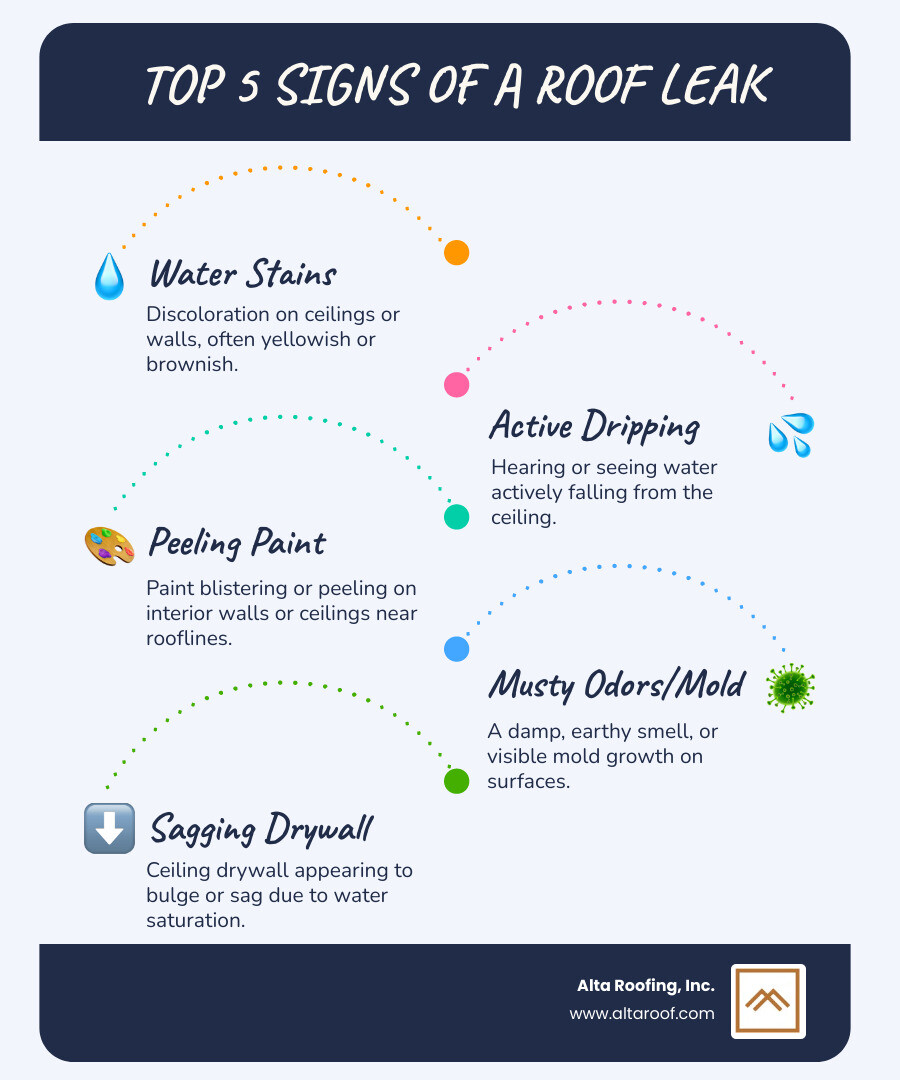
Knowing the signs of a leak can help you catch issues early. Look out for:
- Water stains on ceilings or walls: These are often brown or yellow discoloration, sometimes with a distinct ring pattern.
- Active dripping: This is the most unmistakable sign, especially during or after rainfall.
- Peeling paint near rooflines: Water seeping into walls can cause paint and wallpaper to bubble, crack, or peel.
- Musty odors or visible mold: A damp, earthy odor, especially in your attic or upper floors, could indicate hidden moisture and mold growth.
- Sagging ceiling drywall: Accumulated water can saturate drywall, causing it to sag or bulge, indicating a significant amount of water.
- Exterior wall spots: Water can run down inside your walls and show up as stains on the exterior siding.
Common Causes of a Leaking Roof
Understanding the cause of a leak is the first step toward an effective leaking roof repair service. Common factors are often exacerbated by Colorado's weather.
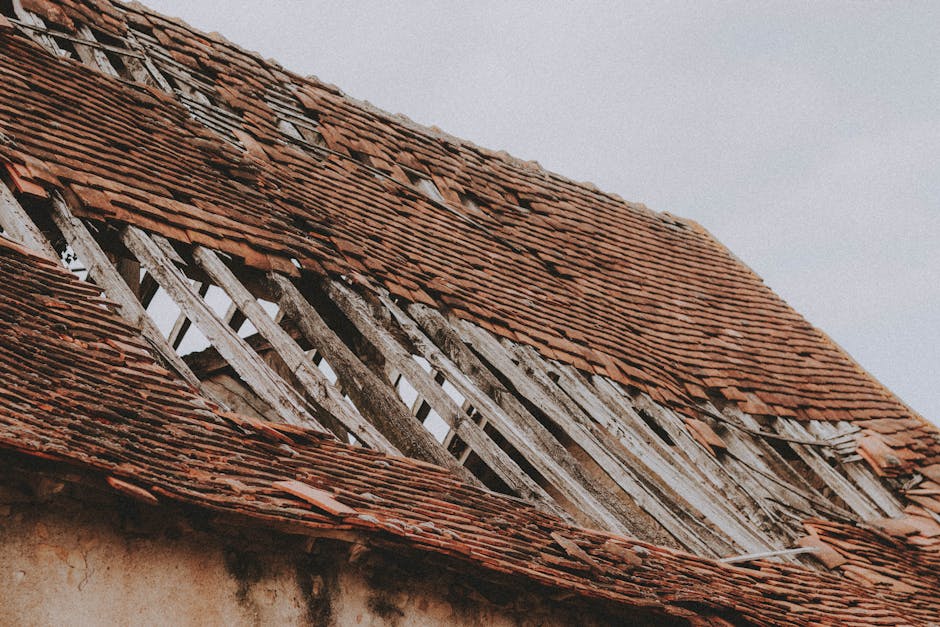
Here are some of the most common culprits we encounter:
- Damaged or missing shingles: High winds, hail, or age can cause shingles to crack, curl, or blow off, creating entry points for water.
- Aged roofing materials: Over time, all roofing materials degrade from UV rays, temperature fluctuations, and exposure, causing them to become brittle and crack.
- Cracked or worn flashing: Flashing, the metal or rubber strips around chimneys, vents, and skylights, is crucial for sealing these areas. If it cracks or pulls away, water will find its way in.
- Ice dams (especially in Colorado): A significant concern in Colorado, ice dams form when snow melts, runs down, and refreezes at the colder eaves. This dam causes water to back up under shingles and seep into your home.
- Clogged gutters: Full gutters cause water to overflow, pool at the roof's edge, and potentially seep under shingles or into your walls.
- Storm damage from wind or hail: Severe weather like hailstorms can crack shingles, while strong winds can lift or tear them away, leaving your roof exposed.
For more information on the various issues that can lead to water intrusion, you can refer to common causes of roof leaks.
Pinpointing the Problem: How to Find the Source of a Roof Leak
Finding the source of a roof leak can be tricky because water travels. A drip on your ceiling might be several feet from the actual entry point, as water runs along rafters and pipes before appearing.
Our process for locating a leak often starts with a thorough attic inspection. Using a flashlight, we look for signs of water intrusion on the underside of the roof decking, rafters, and insulation, such as water stains, wet spots, or mold. Sometimes, daylight is visible through a hole.
If the leak isn't obvious in the attic, we may use the "garden hose test." This involves one person systematically spraying sections of the roof while another person watches for drips inside. We start low and work up, isolating sections until the leak appears. This helps pinpoint the exact area. Always prioritize safety when working on a roof and have a helper.
Here's a list of common leak locations we carefully inspect:
- Vents: Plumbing, exhaust, and attic vents can leak if their seals or flashing become cracked or loose.
- Chimneys: The flashing around a chimney is a very common leak point that can crack, pull away, or deteriorate.
- Skylights: Similar to chimneys, skylights are vulnerable around their perimeters where seals can break down or flashing can fail.
- Valleys: These are the V-shaped channels where two roof planes meet. Damaged or clogged flashing in a valley almost guarantees a leak.
- Flashing points: Any area where the roof meets a vertical surface has flashing. Failure of these critical seals is a frequent cause of leaks.
DIY Fixes vs. Professional Leaking Roof Repair Service
Many homeowners wonder if they can fix a leaky roof themselves. While the DIY spirit is admirable, it's crucial to know the difference between a temporary patch and a lasting solution, and when to call professionals for a reliable leaking roof repair service.

Temporary DIY Fixes for Emergencies
Temporary DIY fixes can prevent further damage while you wait for professional help. These are not long-term solutions, but they can buy you precious time.
- Roof tarping method: This is an effective temporary fix. Use a large, heavy-duty tarp to cover the leaky area, extending several feet beyond it. Secure the tarp by rolling its edges around 2x4 boards and weighing them down or attaching them with ropes. Do not nail the tarp into the roof, as this creates more holes. You can find more detailed instructions on how to make temporary roof repairs.
- Applying roofing cement or sealant: For small, known holes, a dab of roofing cement or silicone sealant can provide a temporary patch after cleaning the area thoroughly. This is a short-term fix.
- Sliding in temporary flashing: If a shingle is missing, you can slide a piece of galvanized sheet metal flashing underneath the damaged area to divert water. This is a stop-gap measure.
When to Call a Professional Leaking Roof Repair Service
While temporary fixes can help, calling a professional leaking roof repair service is essential for your safety and your home's longevity in the following situations:
- Widespread damage: If the leak is due to multiple damaged shingles, large-scale flashing issues, or structural problems, it's beyond a simple DIY patch.
- Leak is difficult to find: If you can't pinpoint the source, a professional has the tools and experience to locate elusive leaks.
- Signs of rotted wood or structural issues: Soft wood or sagging ceilings indicate significant water damage that requires expert assessment to ensure structural integrity.
- Mold is present: Mold is a health hazard and a sign of prolonged moisture. Professionals can address the leak and advise on remediation.
- Leaks around complex structures like chimneys or skylights: These areas require precise flashing and sealing. Improper DIY repairs can cause more damage.
- Safety concerns on steep or high roofs: Working on a roof is dangerous. If your roof is steep, high, or you're uncomfortable with heights, leave it to trained professionals with proper safety gear. Reviewing fall protection safety systems, such as this guide provided by Princeton University, highlights the serious risks involved.
Understanding the Cost of a Leaking Roof Repair Service
Homeowners often ask about the cost of leaking roof repair service. We believe in transparency and fair pricing.
On average, roof repairs in our service areas cost between $350 to $1,500. A minor repair like replacing a few shingles could be as low as $150, while more complex jobs range from $400 to $1,000. Labor costs typically fall between $45 and $80 per hour.
Key factors that influence the cost of your leaking roof repair service include:
- Roof material: Repairing asphalt shingles is generally less expensive than repairing tile, metal, or specialty roofs.
- Accessibility: A leak on a single-story home with an easily accessible roof will cost less to repair than one on a multi-story home with a steep pitch.
- Extent of damage: A small, localized leak is much cheaper to fix than one that has caused extensive damage to the roof deck, insulation, or interior.
- Time of year: Emergency repairs during peak storm season or winter might incur higher costs due to demand and challenging conditions.
For an accurate estimate custom to your specific situation, we offer free inspections and encourage you to get an Instant Quote from our team.
The Dangers of Delay: Why Ignoring a Leak is a Costly Mistake
It's tempting to put off a roof leak, but ignoring it is one of the most expensive mistakes a homeowner can make. A minor inconvenience can quickly escalate into costly problems, impacting your home's structure, your health, and your wallet.
Here are the potential long-term consequences of neglecting a leaky roof:
- Structural damage to rafters and joists: Water saturates and weakens wooden components in your attic and ceiling, leading to rot and instability.
- Ceiling and wall damage: Beyond stains, prolonged leaks cause plaster to bubble, paint to peel, and drywall to sag or collapse.
- Insulation destruction: Wet insulation loses its effectiveness, leading to higher energy bills, and can become a breeding ground for mold.
- Mold and mildew health risks: Mold can spread throughout the home’s structure and HVAC system, invading carpets and furniture. This can lead to serious health issues, including respiratory problems and allergies.
- Fire hazard from shorted wires: If electrical wiring is in a wet attic or ceiling, a leak could cause a fire from shorted wires. Turn off electricity to the affected area and have an electrician examine it.
- Foundation issues from prolonged water exposure: In severe cases, water running down the exterior can saturate the ground near your foundation, leading to erosion and potential cracks.
The initial dangers of a roof leak are damage to the attic and items stored there. If there is no attic, or the leak is large, it will damage the interior ceiling and nearby walls. These are not just theoretical problems; we've seen them in homes across Colorado. For more insights into the severe implications, you can read about the unexpected dangers of a leaky roof. Acting quickly with professional leaking roof repair service can save you from these costly and unhealthy outcomes.
Roof Repair vs. Roof Replacement: Making the Right Call
When we assess a roof leak, one of the most important decisions we help you make is whether a repair is sufficient or if a full roof replacement is the smarter long-term investment. This isn't always an easy choice, but considering several factors can guide us to the best solution for your Colorado home.
Here's a comparison to help you understand the options:
| Feature | Roof Repair | Roof Replacement |
|---|---|---|
| Cost | Lower upfront cost ($300-$3,000 for most repairs) | Higher upfront cost ($5,000-$15,000+) |
| Scope of Work | Addresses localized damage, specific leak sources | Replaces entire roofing system, including underlayment |
| Lifespan Impact | Extends life of existing roof if damage is minor | Provides a completely new lifespan for the roof |
| Warranty | Often limited to repaired section | Full manufacturer and labor warranty on new roof |
| Disruption | Less disruptive, quicker completion | More disruptive, longer completion time |
Here are the key factors we consider with you:
- Roof age: This is often the biggest factor. Most asphalt shingle roofs in Colorado last 15-20 years, though some can go up to 30 with ideal conditions and maintenance. If your roof is nearing or past its typical lifespan, a replacement is often more cost-effective in the long run than continuous repairs. Metal and tile roofs can last 50 years or longer.
- Extent of damage (localized vs. widespread): Is the leak due to a few missing shingles or a small section of damaged flashing? That's a strong candidate for repair. If there are multiple leaks in different areas, widespread shingle damage, or significant structural rot, a replacement makes more sense.
- Frequency of repairs: If you find yourself calling for leaking roof repair service every year for new issues, those recurring costs can quickly add up and even exceed the cost of a new roof. This is a clear sign that your roof's overall integrity is compromised.
- Long-term plans for the home: Are you planning to sell your home in the next few years? A new roof can significantly boost curb appeal and resale value. If you plan to stay long-term, investing in a replacement now can provide decades of peace of mind.
- Cost (30% rule): A good rule of thumb is the "30% rule." If the cost of repairs climbs to around 30 percent or more of what a full replacement would cost, investing in a new roof is often the smarter long-term decision.
We're here to help you weigh these factors and make an informed decision that protects your home and your investment. For a deeper dive into this crucial decision, we recommend reading our article on How to Know When It's Time to Replace Your Roof.
Frequently Asked Questions about Roof Leaks
Here are some of the most common questions we hear from Colorado homeowners about roof leaks.
How can I prevent future roof leaks?
Proactive maintenance can significantly reduce your risk. We recommend:
- Regular professional inspections: Schedule a professional roof inspection at least once a year (ideally in spring and fall) to spot potential issues early.
- Keep gutters clean: Clogged gutters cause water to back up under shingles. Clean them in the spring and fall.
- Trim overhanging tree branches: Branches can wear down or damage shingles. Keep them trimmed away from your roofline.
- Ensure proper attic ventilation: Good ventilation helps regulate temperature and moisture, preventing condensation and ice dams.
- Address minor issues promptly: Don't let a curled shingle or small crack escalate into a bigger problem.
How long does a roof repair take?
The duration of a roof repair depends on the damage.
- Simple repairs: Replacing a few shingles or sealing a small crack can often be done in 2-5 hours.
- More complex repairs: Issues involving flashing, the roof deck, or widespread damage might take a full day or longer, depending on weather and accessibility.
We always strive for efficient, timely repairs without compromising on quality.
Will my homeowner's insurance cover a roof leak?
Coverage depends on the cause of the leak.
- Typically covers sudden, accidental damage: Most policies cover leaks from unforeseen events like storms (wind, hail) or falling trees.
- Often excludes damage from lack of maintenance or old age: Policies generally do not cover leaks from gradual wear and tear or a roof's natural aging.
- Important note: Many policies also exclude damage that could have been prevented if the initial leak was addressed promptly, reinforcing the need for immediate action.
We have extensive experience working with insurance companies in Colorado and can help you steer the claims process with detailed documentation.
Your Partner in Roof Protection
We hope this guide has shed some light on the importance of addressing roof leaks promptly and effectively. From the moment you hear that dreaded drip, to the decision between repair and replacement, our goal is to empower you with the knowledge to protect your most valuable asset – your home.
The key steps are always: contain the immediate damage, identify the source of the leak, and then choose the most appropriate leaking roof repair service solution. Acting fast can save you significant money and prevent a host of headaches down the line.
At Alta Roofing, Inc., we are a Colorado-based roofing and storm restoration company specializing in roof replacement, repairs, and comprehensive storm damage restoration. We understand the unique challenges that homes in Denver, Aurora, Colorado Springs, and all our service areas face, from relentless hail to heavy snow. Our unique selling proposition is handling insurance claims and coordinating all necessary trades, acting as a single point of contact for homeowners, particularly here in Colorado. We're here to make the process as seamless and stress-free as possible.
Don't let a small leak turn into a big problem. For a comprehensive inspection and expert leaking roof repair service, contact our team today. Let us be your trusted partner in keeping your home safe and dry, no matter what the Colorado weather throws its way.
