
Colorado Hail Repair: Expert Solutions for Your Vehicle
Why Acting Fast on Colorado Hail Repair Matters
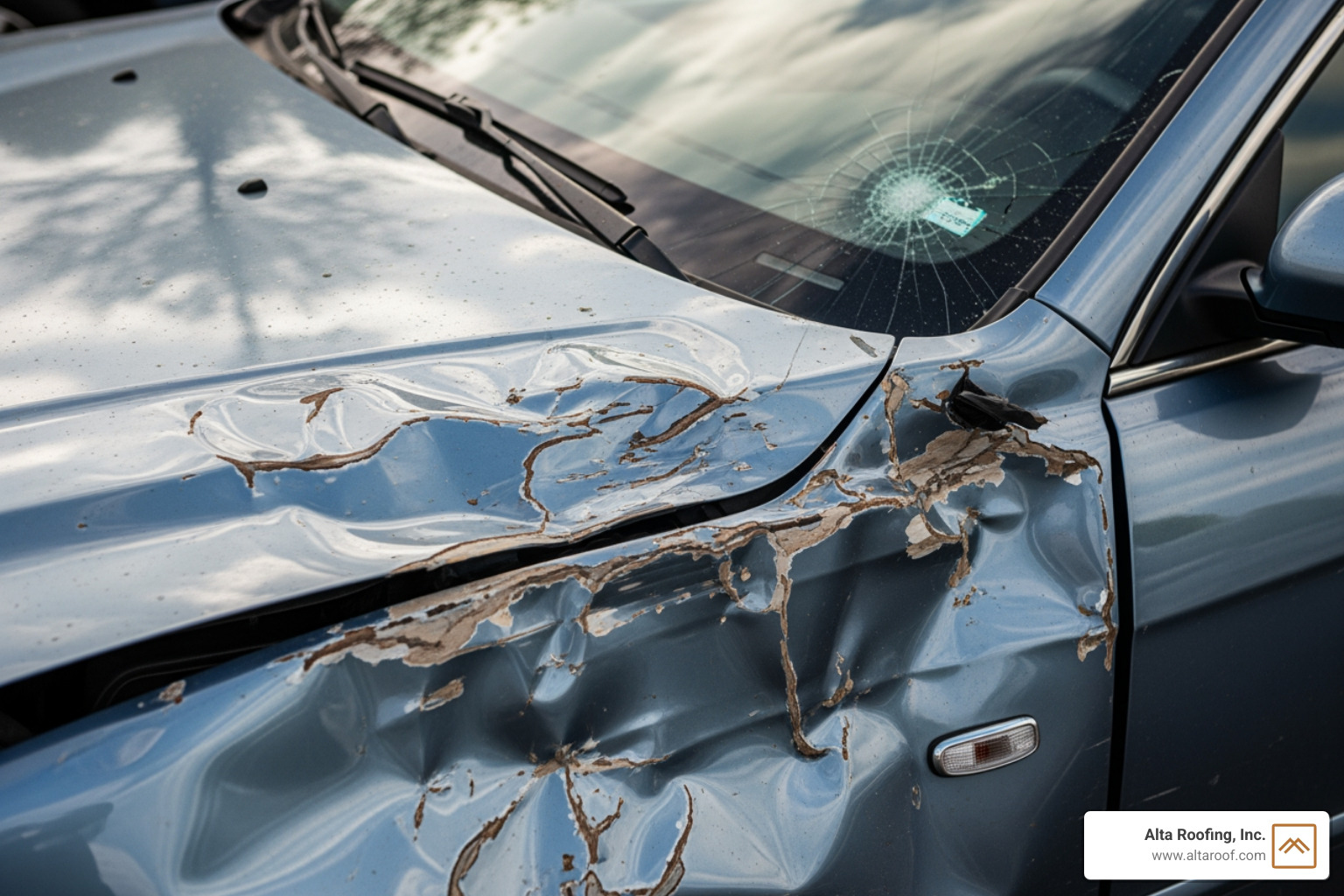
Colorado hail repair services restore vehicles damaged by hailstorms using specialized techniques like Paintless Dent Repair (PDR). Here's what you need to know:
Quick Answer for Colorado Hail Repair:
- Best Method: Paintless Dent Repair (PDR) preserves factory paint and costs less
- Insurance Coverage: Most comprehensive policies cover hail damage with $0 out-of-pocket
- Timeline: 7-10 business days for typical repairs after insurance approval
- Average Cost: $2,000-$14,000 depending on damage severity
- No Rate Increase: Hail claims are "Act of God" events that won't raise your premiums
Colorado sits in Hail Alley, where storms drop hail up to 4 inches wide—sometimes even grapefruit-sized. When a hailstorm leaves your vehicle covered in dents, you face a ticking clock. Insurance companies set strict filing windows, and unrepaired damage only gets worse.
The good news? Most Colorado residents with comprehensive insurance pay nothing out-of-pocket for repairs. Many shops cover deductibles up to $1,000 and provide free rental cars during the repair process.
Time is critical. Delays can complicate insurance claims, lower your vehicle's resale value, and even lead to a total loss declaration if damage worsens. The right repair shop will handle your insurance coordination, provide a lifetime warranty, and use PDR to restore your vehicle to like-new condition—often in under two weeks.
I'm Barry Goers, founder of Alta Roofing, Inc., and I've spent years helping Colorado property owners steer complex storm damage repairs and insurance claims. Whether it's your vehicle or your home, understanding the Colorado hail repair process means faster recovery and better outcomes.
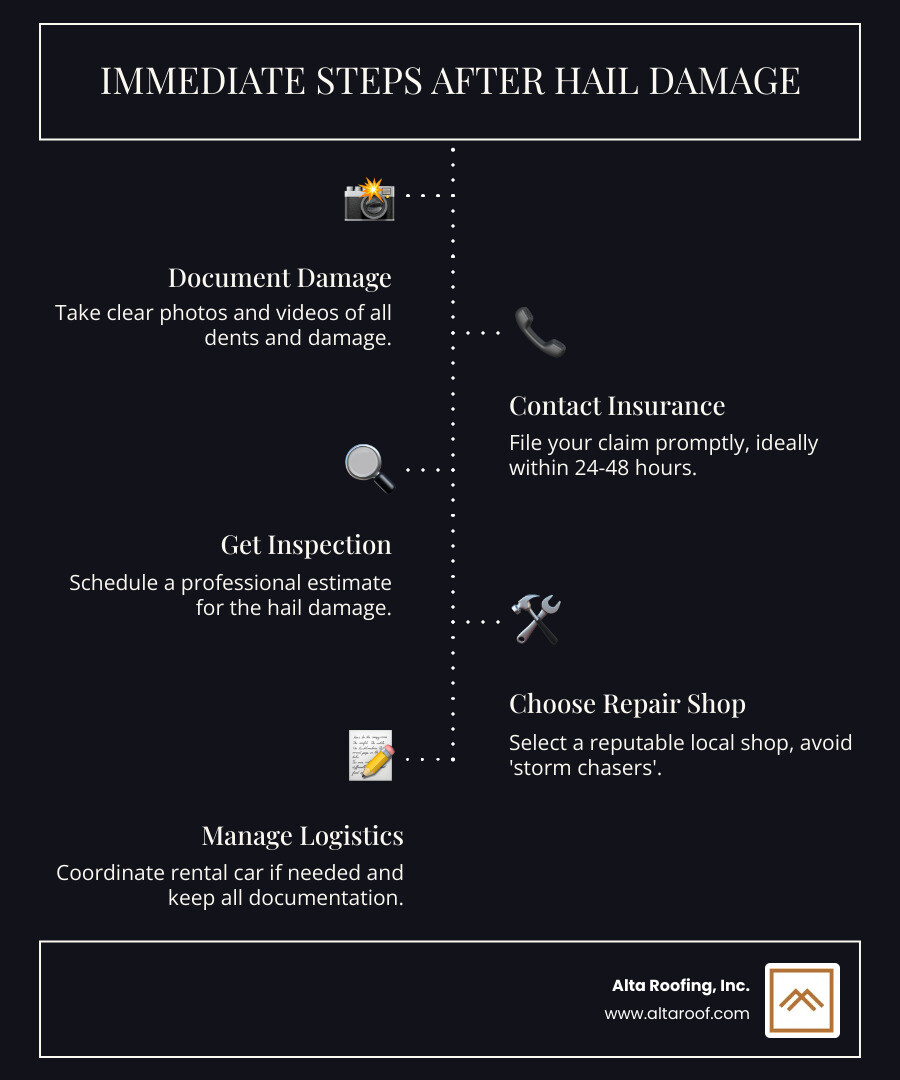
What to Do Immediately After a Hailstorm
A hailstorm can strike quickly, leaving behind a trail of damage. For vehicle owners across Colorado—from Denver and Aurora to Colorado Springs and Castle Rock—knowing what to do in the immediate aftermath can save you time, money, and stress. We've seen it countless times: quick, informed action makes all the difference.
First and foremost, prioritize safety. Once the storm has passed and it's safe to go outside, you'll want to assess the damage to your vehicle.
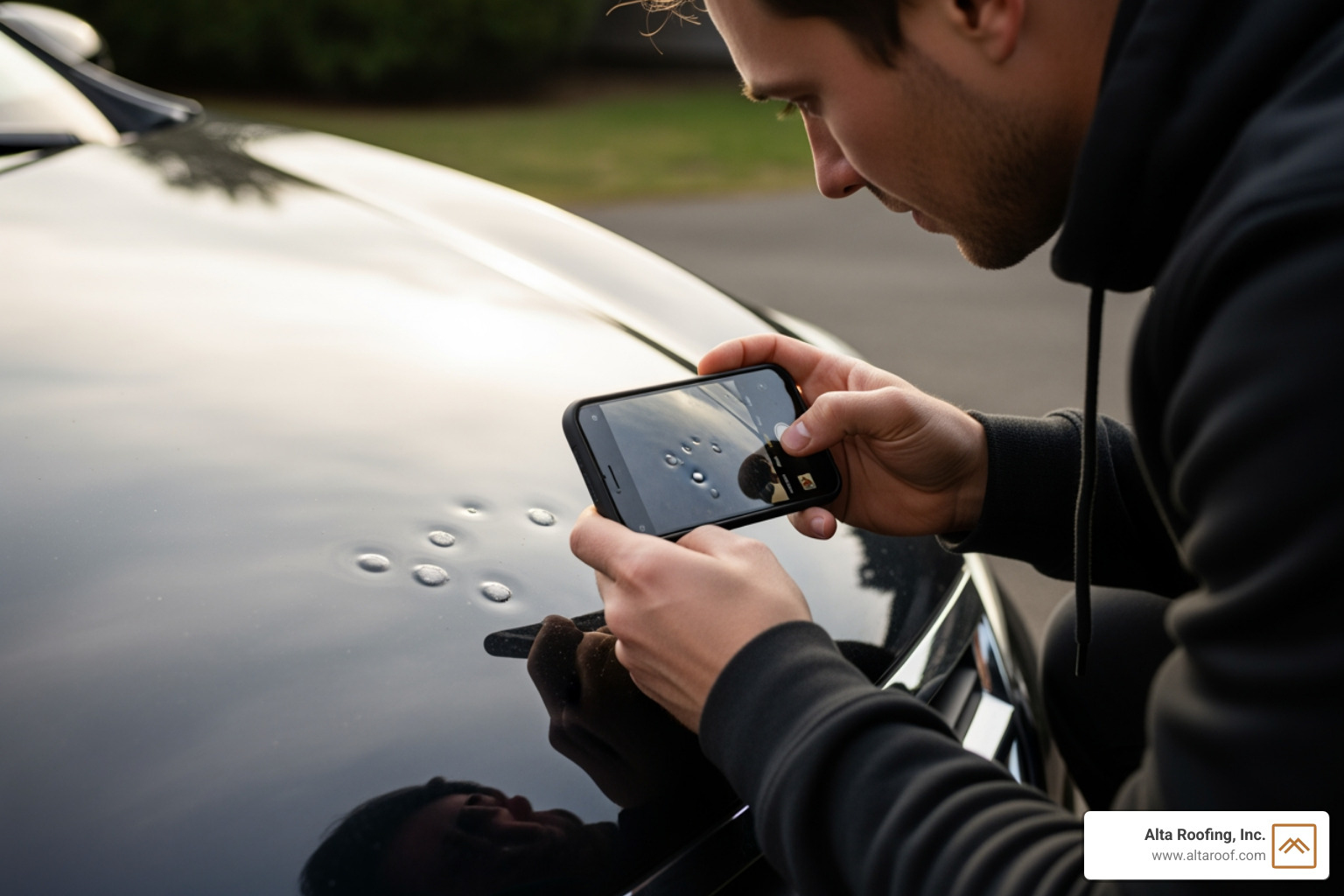
Document the Damage Thoroughly
This is your first and most crucial step. We recommend taking extensive photos and videos of all affected areas of your vehicle. Don't just focus on the obvious dents; capture overall shots, close-ups, and even the surrounding environment. This visual evidence will be invaluable for your insurance claim. Note the date and time the damage occurred. The goal is to create a clear, undeniable record of the hail's impact.
Protect Your Vehicle from Further Damage
If your windshield or windows are cracked, or your sunroof is damaged, take immediate steps to prevent water from entering your vehicle. Use tarps, plastic sheeting, or even heavy-duty tape to cover any openings. Water damage can quickly escalate repair costs and even lead to a total loss, so this preventative measure is key.
Contact Your Insurance Agent Promptly
Once you've documented the damage, contact your insurance provider as soon as possible. Most comprehensive insurance policies cover hail damage, and it's typically considered a "no-fault" or "Act of God" claim, meaning it generally won't affect your insurance rates. However, there's often a limited window (sometimes as little as 24-48 hours) to file a claim. Delaying could complicate the process. We'll dive deeper into the insurance process shortly, but for now, the priority is to get the claim filed.
Avoid 'Storm Chasers'
After a significant hailstorm, you might encounter out-of-state companies, often referred to as "storm chasers," who come into areas like Thornton, Lakewood, and Elizabeth to offer quick repairs. While some may be legitimate, many are not. They might offer deals that sound too good to be true, perform shoddy work, or disappear before the job is complete. We strongly advise against engaging with unsolicited offers. Always choose a reputable, local Colorado hail repair specialist with a proven track record.
Find Temporary Cover
If possible, move your vehicle to a covered area, such as a garage or carport, to protect it from subsequent storms or falling debris. This is especially important in Colorado, where one hailstorm can often be followed by another.
By taking these immediate steps, you're setting yourself up for a smoother, less stressful Colorado hail repair experience.
Understanding Your Repair Options: PDR vs. Traditional Body Work
When it comes to fixing hail damage, you generally have two main options: Paintless Dent Repair (PDR) and traditional auto body repair. We've seen that understanding the differences is crucial for making the best decision for your vehicle's value and your wallet.
What is Paintless Dent Repair (PDR)?
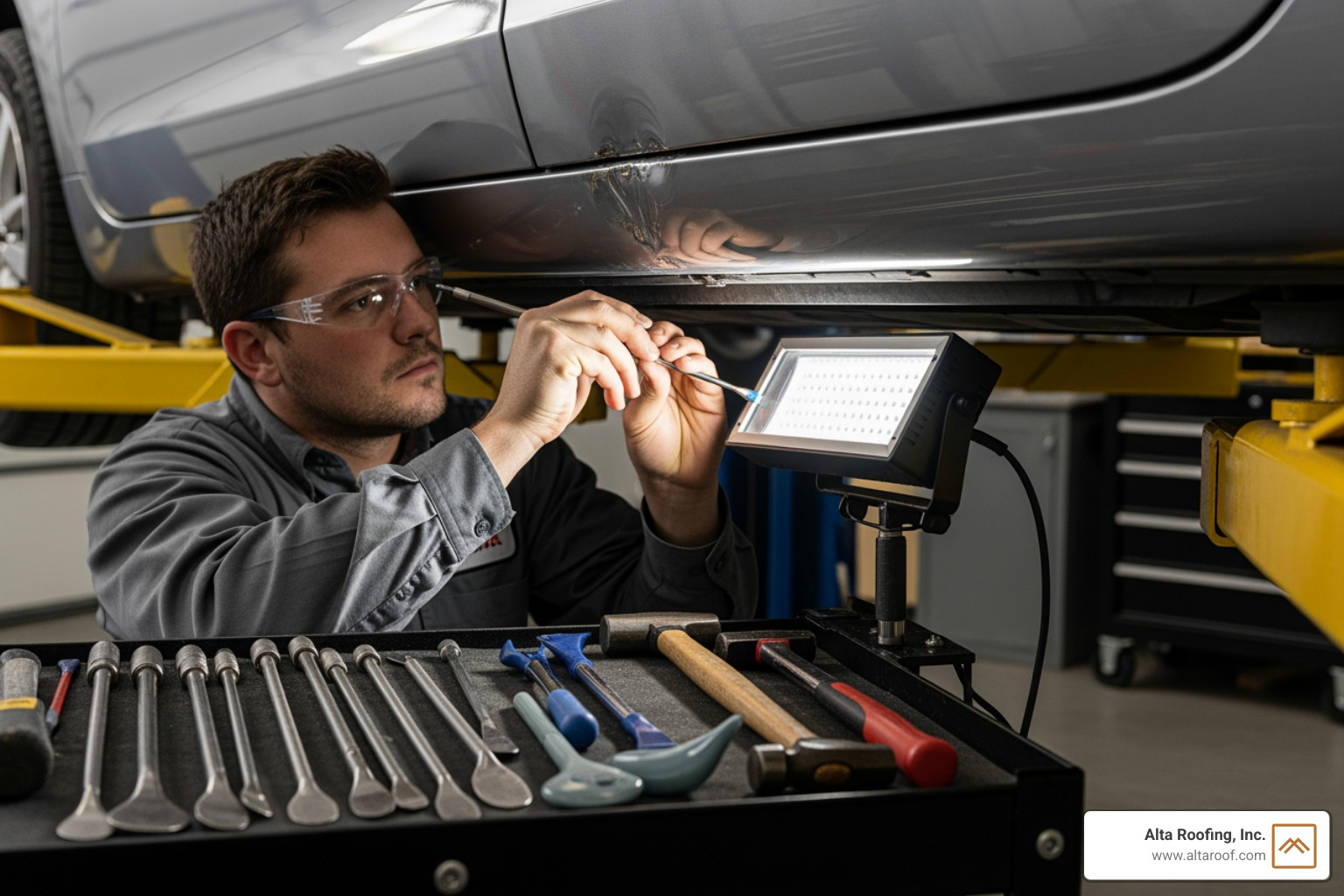
Paintless Dent Repair (PDR) is the preferred method for hail damage repair in Colorado, and for good reason. It’s a highly specialized technique that allows trained technicians to remove dents and dings from your vehicle's body without affecting the original paint finish.
How does it work? PDR technicians use specialized tools to carefully "massage" or push the metal back into its original shape from the underside of the panel. This process requires extreme precision and skill. Because there's no need for sanding, body fillers, or repainting, PDR preserves your vehicle's factory finish and its value. It's also an eco-friendly method, as it avoids the use of chemicals and paints. Many of the top-tier Colorado hail repair shops, especially across the Front Range cities like Arvada, Golden, and Centennial, specialize in PDR.
PDR vs. Traditional Repair for Hail Damage
So, which method is right for your vehicle? Here's a quick comparison to help you understand the key differences:
| Feature | Paintless Dent Repair (PDR) | Traditional Auto Body Repair |
|---|---|---|
| Cost | Generally less expensive (can be $0 out-of-pocket with insurance) | Typically more expensive due to labor and materials |
| Time | Faster, often 7-10 business days for typical hail damage | Slower, can take weeks due to painting and drying |
| Value Retention | Preserves original factory paint, maximizing resale value | Involves repainting, which can slightly diminish original value |
| Damage Fixed | Dents where paint is intact and metal isn't overly stretched | Any damage, including deep dents, creases, and cracked paint |
| Process | Specialized tools reshape metal from behind | Sanding, filling, priming, painting, clear coating |
For most hail damage, PDR is the superior choice. It’s quicker, more affordable (especially with insurance), and maintains the integrity and value of your vehicle.
When is PDR Not an Option?
While PDR is incredibly effective, it's not a magic bullet for every type of damage. There are specific scenarios where traditional repair methods become necessary:
- Cracked or Chipped Paint: If the hail impact has broken through your vehicle's paint, PDR alone won't be sufficient. The area will need to be repainted.
- Overly Stretched Metal: Extremely deep or sharp dents can stretch the metal beyond its elastic limit, creating an "oil can" effect or "soup bowls" that PDR cannot fully resolve. In these cases, even if the paint is intact, traditional bodywork might be needed to achieve a perfect finish.
- Aluminum Panels: While some PDR technicians can work on aluminum, it's more challenging than steel. Aluminum is stiffer and has less memory, making it harder to reshape without causing further damage. Repairing aluminum typically costs about 25% more and requires specialized skills.
- Inaccessible Dents: If a dent is in an area that technicians cannot reach with their specialized tools (e.g., certain structural components), PDR might not be possible.
- Previous Bodywork: If a panel has been previously repaired using traditional methods (fillers, paint), PDR is generally not an option, as the previous repair might crack or fail.
- Plastic Panels or Rocker Panels: PDR is designed for metal. Plastic bumpers or rocker panels that are dented or cracked will require different repair techniques, often involving heat, reshaping, or replacement.
A reputable Colorado hail repair shop will always perform a thorough assessment to determine if PDR is the best course of action or if a hybrid approach combining PDR with traditional repair is needed.
Navigating the Insurance Claim Process for Colorado Hail Repair
Dealing with insurance can feel like a maze, but for Colorado hail repair, we want to assure you it’s often a straightforward process, especially with the right guidance. Most hail damage claims in Colorado are covered by comprehensive insurance, often with $0 out-of-pocket expense for the vehicle owner.
Filing Your Hail Damage Claim
Here’s how we recommend approaching the insurance claim process:
- Contacting Your Insurer: As mentioned, call your insurance company as soon as you've documented the damage. Explain that your vehicle sustained hail damage and you wish to file a comprehensive claim. Hail damage is considered a 'no-fault' or 'Act of God' claim in Colorado, meaning it typically does not affect insurance rates.
- Obtain a Claim Number: Your insurer will assign you a claim number. Keep this number handy, as you'll need it for all future communications.
- Scheduling an Adjustment: Your insurance company will likely want to send an adjuster to inspect your vehicle and provide an initial estimate. While you can schedule this at your home or workplace, many Colorado hail repair shops prefer to handle this directly. They can ensure the adjuster sees all the damage under proper lighting, which often leads to a more accurate estimate.
- Your Right to Choose a Shop: This is crucial. Your insurance company cannot dictate where you get your vehicle repaired. You have the right to choose any reputable shop in Colorado, whether it's in Parker, Highlands Ranch, or Fountain. Don't feel pressured to use their "preferred" network if you've found a local specialist you trust.
- The Supplement Process: Initial estimates often miss damage, especially with hail. A good Colorado hail repair shop will conduct its own thorough inspection using specialized PDR lights. If their estimate is higher than your insurance company's initial assessment, they will negotiate "supplements" directly with your insurer. This is a common and necessary part of the process to ensure your vehicle is fully restored to its pre-loss condition. We've seen cases where initial estimates were drastically low, but a skilled repair shop successfully negotiated with the insurer to cover the true cost of comprehensive repair.
Understanding Total Loss from Hail
Sometimes, the extent of hail damage can lead to a "total loss" declaration. This typically happens when the cost to repair the vehicle exceeds a certain percentage of its actual cash value (ACV) at the time of the loss. While there are no specific laws in Colorado that define a total loss threshold, it's a business decision made by the insurance company based on their guidelines.
- Repair Cost vs. Vehicle Value: If your car is an older model or has a lower market value, even moderate hail damage can push it into total loss territory. For example, a $7,000 car with severe damage (broken glass, lights, and extensive dents) might be totaled, whereas a $30,000 new car with similar damage might still be repairable.
- Colorado Salvage Title Laws: Interestingly, Colorado motor vehicle law specifically exempts a total loss due to hail from requiring a salvage title. This is good news for owners who choose to retain and repair a hail-damaged vehicle.
- Keeping a Totaled Vehicle: If your vehicle is declared a total loss, your insurer will offer you the ACV. You might have the option to keep the vehicle (and receive a lower payout), but be aware that you might not be able to get comprehensive or collision coverage on it afterward. If the insurer takes possession, they are essentially "buying" the vehicle from you and would pay any sales tax owed on that purchase.
- GAP Insurance: If your claim payment doesn't cover your loan amount, you are responsible for the difference. This is where GAP (Guaranteed Asset Protection) insurance comes in, covering the difference between the claim payout and your outstanding loan balance.
State-Specific Regulations for Colorado Hail Repair
Colorado has some specific nuances when it comes to auto insurance and hail damage, which we believe are important for every vehicle owner to know:
- No-Fault Claim Status: As highlighted, hail damage is universally treated as a "no-fault" or "Act of God" claim. This means you are not considered at fault for the damage.
- No Rate Increase for Single Claim: Under Colorado law, your insurance rates generally cannot be increased solely because you filed a single hail damage claim. Insurance companies cannot single you out for a rate hike due to an event outside your control. However, it's worth noting that after major hail events, insurers might increase "areas of risk," which could lead to slight premium increases for everyone in a geographic area, even if they didn't file a claim.
- Consumer Protection: The Colorado Division of Insurance (DORA) provides valuable resources and answers to frequently asked questions about hail storms and insurance. We encourage you to review their After a Hail Storm - Insurance FAQs for more detailed information.
- #NoRoofScams Campaign Awareness: While this campaign primarily targets roofing fraud, the principle applies to auto hail repair as well. Be cautious of contractors who pressure you, demand large upfront payments, or promise to waive your deductible without transparently explaining how. Always protect yourself by working with reputable, established local businesses.
Choosing a Reputable Hail Repair Shop in Colorado
Selecting the right Colorado hail repair shop is perhaps the most critical decision you'll make after a hailstorm. We've seen the difference a quality shop can make, not just in the final repair but in the entire experience. Your goal is to find a local specialist who will restore your vehicle flawlessly, handle the insurance complexities, and provide peace of mind.
Key Qualities of a Top-Tier Shop
Here’s what we look for in a reputable Colorado hail repair specialist, especially for those in our service areas like Castle Pines, Monument, and Woodland Park:
- Local and Established: Choose a company with a physical presence and a long history in Colorado. Businesses like Colorado Hail Masters, with over 22 years of service in Southern Colorado, or Elite Hail Systems, voted 'Best of the Best' in 18 cities for six consecutive years, are examples of established local expertise. This ensures they’ll be there if you need them later, unlike transient "storm chasers."
- PDR Specialization: As discussed, PDR is the preferred method for most hail damage. Look for shops that highlight their PDR expertise, skilled technicians (some boast 20+ year PDR lead techs), and state-of-the-art tools.
- Lifetime Warranty: A reputable shop should offer a lifetime warranty on their PDR services, guaranteeing the repairs for as long as you own or lease the vehicle. Companies like Hail Medic, StormWise, and Hail Inc. proudly offer this. This shows confidence in their workmanship.
- Deductible Assistance: Many top Colorado hail repair shops offer to cover all or a portion of your insurance deductible (often up to $1,000). This can result in truly $0 out-of-pocket expenses for you. Always ask how they manage this transparently.
- Free Rental Car Coordination: Being without your vehicle is inconvenient. The best shops will coordinate a free rental car for you during the repair process, even if your insurance doesn't cover it. Some even offer valet services, picking up your car and dropping off the rental.
Common Mistakes to Avoid
We often see vehicle owners make preventable errors that can lead to frustration and subpar repairs:
- Choosing the Insurer's Preferred Shop Without Research: While insurance companies have "preferred" networks, these shops are often chosen for their cost-effectiveness for the insurer, not necessarily for their quality or customer service for you. You have the right to choose your own shop; exercise it wisely.
- Not Getting a Written Warranty: Never proceed with repairs without a clear, written lifetime warranty. This protects your investment and ensures recourse if any issues arise.
- Paying Out-of-Pocket for Deductibles Without Understanding the Terms: If a shop offers to cover your deductible, ensure it's done transparently and legally. Some less scrupulous businesses might cut corners to cover the deductible, leading to compromised repair quality. A good shop will explain how they achieve the $0 out-of-pocket goal through legitimate means.
- Ignoring Bad Reviews: Online reviews (Google, Yelp, BBB) are a powerful tool. Pay attention to consistent negative feedback, especially regarding repair quality, communication, or customer service. Conversely, look for shops with overwhelmingly positive reviews that highlight professionalism, efficiency, and excellent results.
Questions to ask a repair shop:
- Do you specialize in Paintless Dent Repair for hail damage?
- What kind of warranty do you offer on your repairs?
- How do you handle the insurance claims process, including supplements?
- Do you offer deductible assistance or waive deductibles?
- Can you arrange for a rental car during the repair period?
- How long do you estimate the repairs will take?
- Can you provide references or show examples of your work?
- Are you a locally owned and operated business with a physical location?
By being diligent and asking the right questions, you can ensure your vehicle receives the expert Colorado hail repair it deserves.
Frequently Asked Questions about Cost, Timelines, and Vehicle Value
We understand you have questions about the practical aspects of Colorado hail repair – how much it costs, how long it takes, and what it means for your car's value. Let's break down these common concerns.
How much does Colorado hail repair cost and will I have out-of-pocket expenses?
The cost of Colorado hail repair can vary significantly. For light damage, you might expect costs around $2,000, while severe damage requiring panel replacement can exceed $14,000. The average cost in Colorado can range from $2,000 for light damage to over $14,000 for severe damage.
However, the good news for most vehicle owners in Denver, Aurora, and across the Front Range is that hail damage is typically covered by your comprehensive insurance policy. Many top-tier Colorado hail repair shops aim for a "$0 out-of-pocket" experience for you. This is achieved through:
- Comprehensive Insurance Coverage: This is your primary shield. As we've discussed, it covers hail damage as an "Act of God."
- Deductible Assistance Programs: Many reputable shops offer to cover all or a portion of your deductible, often up to $1,000. This is a common practice to help ease the financial burden on vehicle owners.
- Negotiation with Insurers: Skilled repair shops are adept at negotiating with insurance companies to ensure all damage is properly accounted for and covered, minimizing any potential out-of-pocket costs for you.
So, while the overall cost can be substantial, with the right insurance and a cooperative repair shop, you often won't pay anything beyond your premium.
What is the average turnaround time for hail damage repairs?
The turnaround time for Colorado hail repair depends on several factors, but most reputable shops strive for efficiency. Here's a typical breakdown:
- Initial Evaluation: This usually takes an hour or less. The shop will assess the damage and provide an estimate.
- Insurance Approval: This step can vary. It involves the adjuster inspecting the vehicle and approving the repair plan. Some insurance companies are quicker than others.
- PDR-Only Repairs: If your vehicle primarily needs PDR, the repair itself is often quite fast. Many shops can complete PDR work in 7-10 business days after receiving insurance approval and parts (if any are needed).
- Parts Replacement Delays: If your vehicle requires new panels, glass, or other parts, the repair time can be extended based on parts availability.
- Shop Busyness: After a major hailstorm, repair shops in areas like Littleton, Lone Tree, and Englewood can get very busy, which might lead to longer waiting lists for repairs. Elite Hail Systems mentions an entire process that may take 2-3 weeks, with repairs typically taking 7-10 business days after approval.
We recommend asking for a clear timeline upfront from your chosen repair shop. Many will provide weekly updates or even photos of the progress.
How does hail damage affect my car's resale value?
Unrepaired hail damage can significantly diminish your vehicle's resale value. Potential buyers are often hesitant to purchase a car with visible damage, and if they do, they'll expect a substantial discount. Here's why:
- Diminished Value: Even if the damage is purely cosmetic, it signals to buyers that the car has been through a traumatic event.
- Impact of Unrepaired Damage: If you choose to forgo repairs and settle for a cash payout from your insurer, your policy might be flagged with a restriction for the un-repaired damage. This can complicate future insurance claims and further reduce your vehicle's value. Unrepaired damage can also worsen over time, compromising structural integrity or leading to rust if paint is compromised.
- CarFax Reports: While PDR aims to keep hail damage off your CarFax report, if the damage is severe enough to require traditional bodywork or parts replacement, it might appear on the vehicle history report, further impacting resale value.
- Value Restoration Through Quality Repair: High-quality Colorado hail repair, particularly PDR, can effectively mitigate this diminished value. By restoring your vehicle to its pre-loss condition without affecting the factory paint, you preserve its aesthetic appeal and market worth. We believe that investing in proper repair is an investment in your vehicle's long-term value.
- Importance of PDR: Because PDR preserves the original factory paint, it's the best way to ensure your vehicle looks as good as new, helping it retain as much of its resale value as possible.
Conclusion
We've covered a lot about Colorado hail repair, and we hope this guide empowers you to steer the process with confidence. Remember these key takeaways:
- Act Quickly: Document damage, contact your insurer, and protect your vehicle from further harm immediately after a hailstorm. Time is truly of the essence for claims and preventing escalating damage.
- Choose PDR When Possible: For most hail damage, Paintless Dent Repair (PDR) is the superior method, preserving your vehicle's original finish and value while being faster and often more affordable.
- Vet Your Repair Shop Thoroughly: Opt for local, reputable Colorado hail repair specialists with strong warranties, PDR expertise, and a commitment to customer service, including deductible assistance and rental car coordination. Avoid storm chasers and don't blindly follow your insurer's recommendations.
- Protect Your Investment: Quality repair not only restores your vehicle's appearance but also safeguards its resale value and prevents future issues. Most hail damage claims are covered by comprehensive insurance with little to no out-of-pocket cost.
While your vehicle is a top priority, hail can also cause significant damage to your home's roof. For a complete storm restoration solution, including expert management of your homeowner's insurance claim, trust a local specialist like Alta Roofing, Inc. to handle all aspects of your property's recovery. We're here to be your single point of contact for comprehensive storm damage restoration across Denver, Aurora, Thornton, Lakewood, Colorado Springs, Castle Rock, Manitou Springs, Elizabeth, Parker, Golden, Arvada, Woodland Park, Highlands Ranch, Littleton, Lone Tree, Fountain, Centennial, Englewood, Castle Pines, and Monument.
