
Emergency Roof Repair: Top 10 Detailed Reviews
When Every Minute Counts: Understanding Emergency Roof Repair

Emergency roof repair is the urgent response needed when your roof fails, threatening your home's interior or structural integrity. When water pours through your ceiling or a storm tears shingles from your roof, you don't have days to wait—you have hours to act.
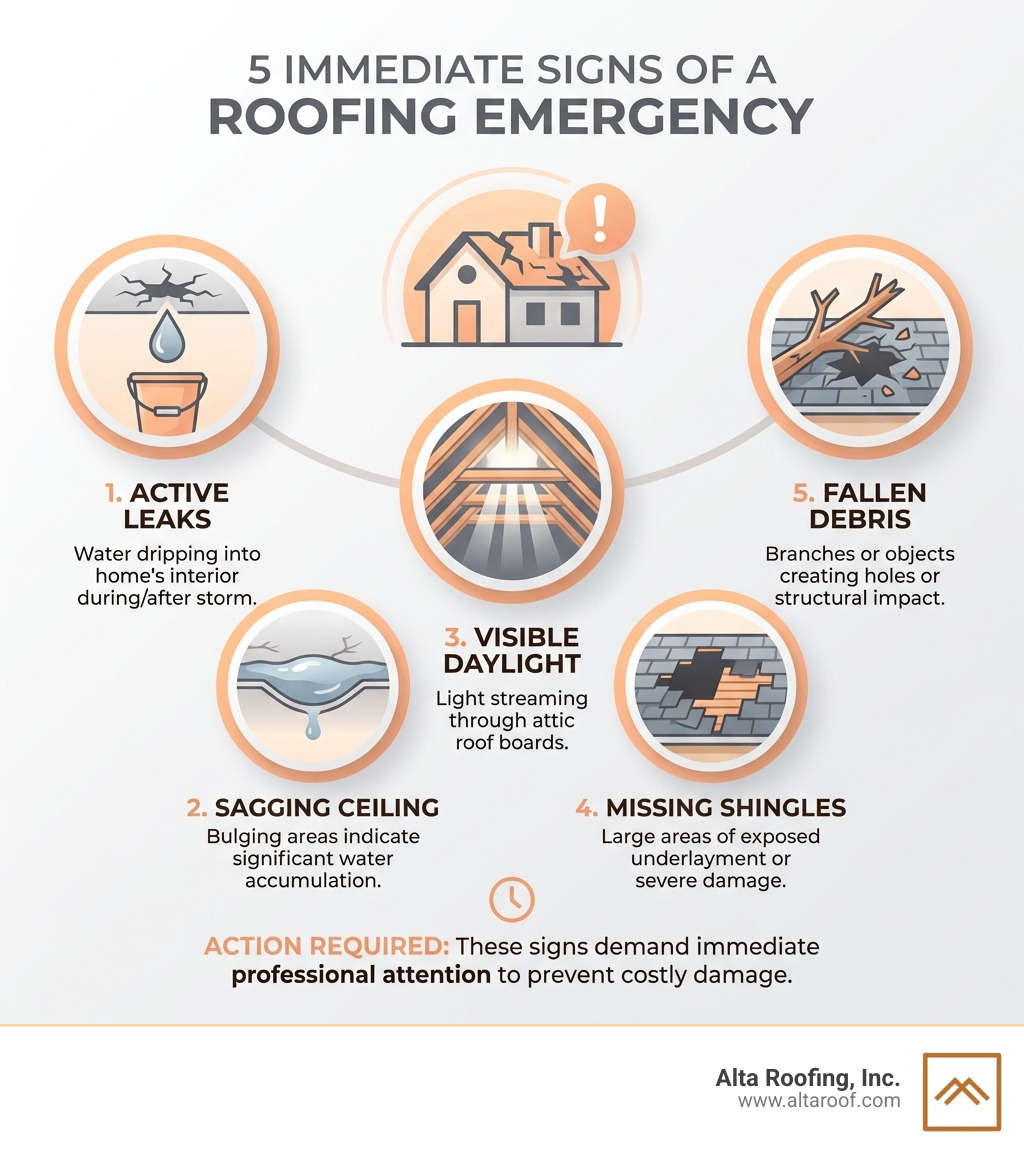
Here's what qualifies as a roofing emergency:
- Active leaks during or after a storm with water entering your home
- Sagging ceilings or visible structural damage to the roof deck
- Missing shingles across large sections of your roof
- Fallen trees or branches that have punctured the roof
- Visible daylight shining through your attic or roof boards
These situations demand immediate professional attention to minimize costly secondary damage like mold, electrical hazards, and structural deterioration.
Colorado's severe weather takes a brutal toll on roofs. High winds can tear off shingles, and heavy rains can pour into exposed areas. If left unaddressed, even minor damage can escalate into serious issues.
By following a clear action plan—prioritizing safety, containing damage, documenting everything, and securing professional help—you can protect your home and family.
I'm Barry Goers, and through my work with construction industry ventures, I've seen how quick action during a roofing crisis makes the difference between a manageable repair and catastrophic damage. My experience has taught me that understanding the emergency roof repair process empowers homeowners to make smart decisions when minutes matter most.
First 60 Minutes: Your Immediate Action Plan for a Roofing Emergency
When disaster strikes your roof, taking swift, decisive action can significantly reduce further damage. Our immediate action plan focuses on prioritizing safety, containing interior damage, and documenting everything for your insurance claim. These steps put you back in control and lay the groundwork for a smooth professional emergency roof repair.
Prioritize Safety Above All Else
Your family's safety is the first priority. Roof emergencies can be dangerous, especially with active leaks or structural damage. Never attempt to inspect or repair your roof during severe weather.
Here's how to prioritize safety:
- Evacuate if Necessary: If you suspect severe structural damage, such as a significantly sagging roof or large penetration, it's safer to evacuate. If you see signs like shifted foundations or slanted walls, consult a professional engineer immediately.
- Beware of Electrical Hazards: Water and electricity are a dangerous mix. If water is leaking near outlets or light fixtures, turn off the circuit breaker for that area. Do not touch wet electrical fixtures.
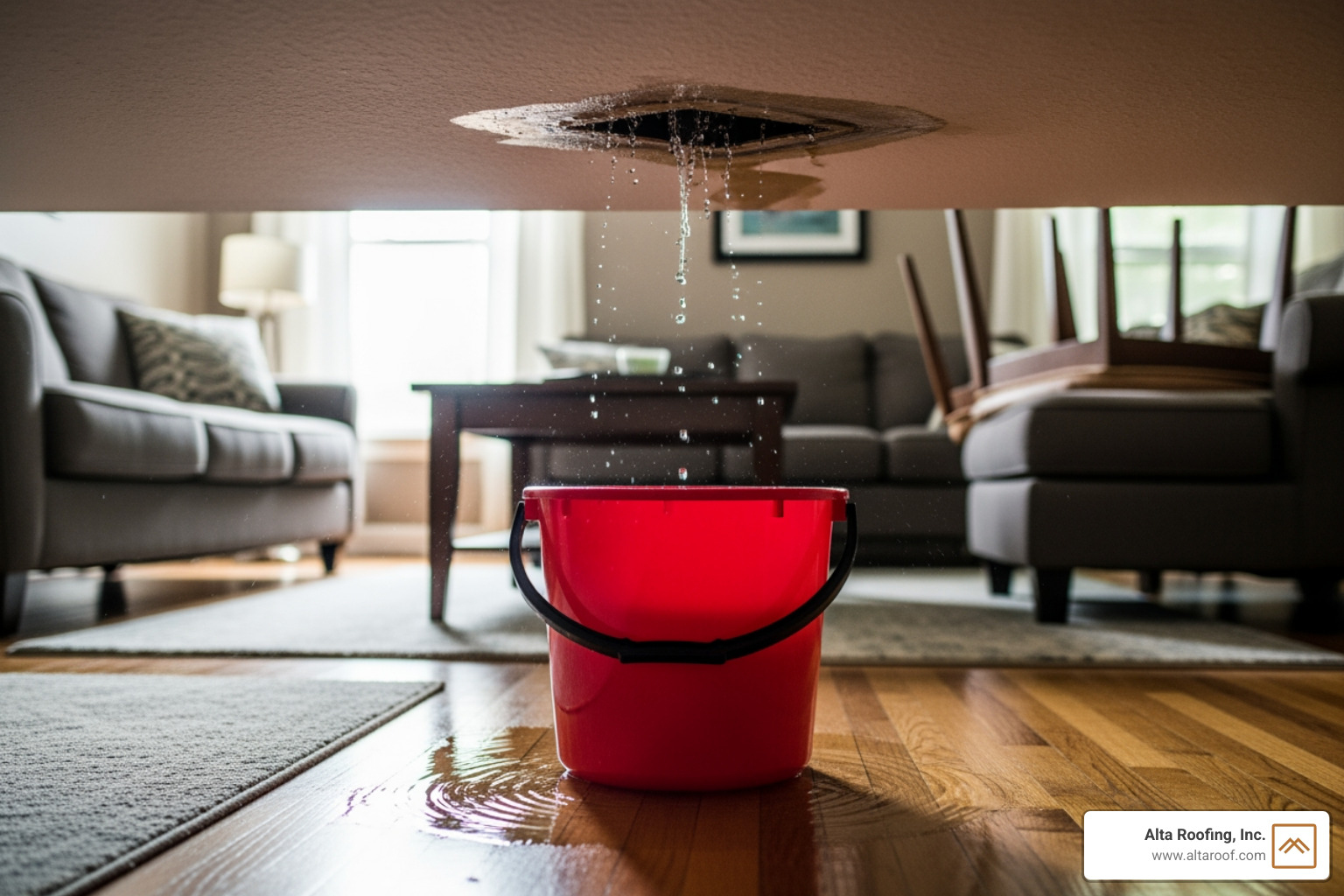
- Avoid Sagging Ceilings: A water-soaked ceiling can collapse. Clear the room below any sagging or bulging spots and place a bucket underneath to catch drips.
- Stay Off the Roof: We cannot stress this enough: do not climb onto your roof. Wet or damaged surfaces are extremely slippery and unstable. Leave roof access to licensed, trained professionals. For more guidance, check out this guide to handling emergencies.
Contain Interior Damage Immediately
Once everyone is safe, mitigate interior damage to prevent water from spreading.
- Place Buckets and Containers: Position buckets or trash cans directly under active leaks to catch water.
- Protect Valuables: Move furniture, electronics, and other belongings away from affected areas. Use plastic sheeting to cover items that cannot be moved.
- Soak Up Spills: Use towels to absorb standing water. Fans or dehumidifiers can help dry the area after you've documented the initial damage.
- Channel Attic Drips: In an accessible attic, you can control leaks. Place a bucket on a piece of plywood spanning two joists. Thread a string from the leak point down into the bucket; water will follow the string, channeling drips into one spot.
These steps are about containment, not repair. You're buying time until professional help arrives.
Document Everything for Your Insurance Claim
Thorough documentation can significantly expedite your insurance claim.
- Take Photos and Videos: If it's safe, take clear photos and videos of all visible damage, both inside and out. Capture the leak source, damaged shingles, and interior water stains. Time-stamped images are particularly useful.
- Note the Details: Record the date, time, and weather conditions when the damage occurred.
- Keep Records: Maintain a log of all communications with your insurance company and roofer. Keep receipts for any temporary supplies you purchase.
Our team at Alta Roofing understands the importance of precise documentation. We provide detailed inspection reports and photo documentation to support your claim and communicate directly with your adjuster.
How to Get Professional Emergency Roof Repair Help Fast
When your roof is compromised, time is of the essence. The quicker you connect with a reliable roofing professional, the sooner your home can be secured. This section guides you through finding the right help and what to expect when you call.
Finding a Reliable 24/7 Roofing Contractor
Choosing the right contractor is a critical decision. As a Colorado-based company serving Denver, Aurora, Thornton, Lakewood, Colorado Springs, Castle Rock, and many other local communities, we understand the challenges homeowners face.
Here’s what to look for:
- 24/7 Availability: A true emergency service is available around the clock. We provide prompt, reliable 24/7 emergency roof repair services.
- Licensed and Insured: Always verify that any contractor is fully licensed and insured. This protects you and ensures they meet professional standards.
- Local Expertise: Choose a contractor familiar with Colorado's weather and building codes.
- Reputation and Reviews: Check online reviews and ask for references from any reputable company.
- Avoid "Storm Chasers": After severe weather, out-of-state contractors often appear. They may provide low-quality work or engage in unethical practices. Always choose a local, established company. We are a veteran-owned company dedicated to serving our community. You can see examples of our work on our website.
What to Expect from an Emergency Call
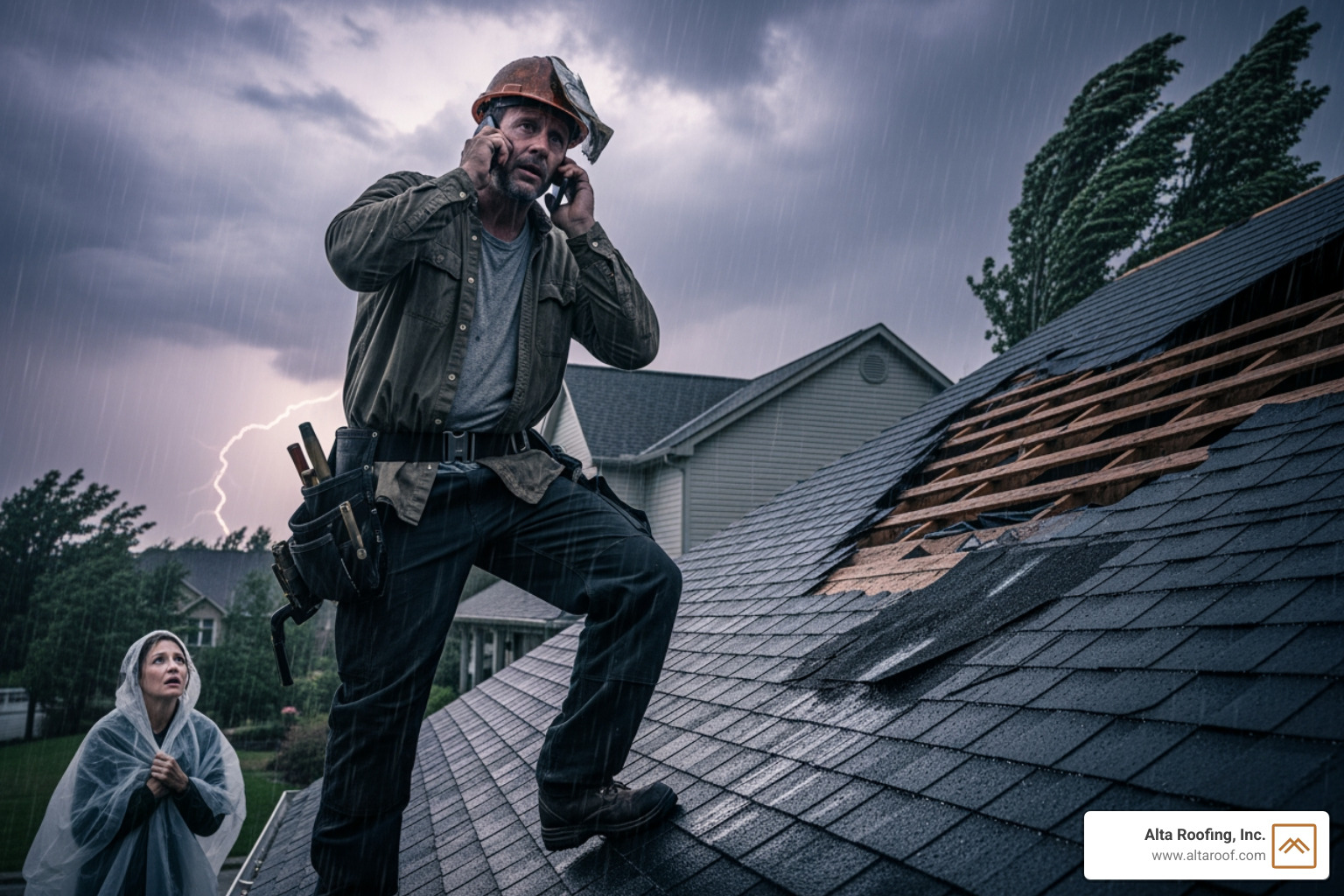
When you call us for an emergency roof repair, our priority is to get you help quickly.
- Prompt Response: Our team responds promptly and can often arrange a same-day or next-day inspection.
- Key Questions: Be prepared to provide your address, roof type (e.g., asphalt, tile, metal), and a description of the damage. Photos are incredibly helpful.
- Dispatch Process: Based on your information, we'll dispatch a team with the right equipment to stabilize the situation and prevent further water intrusion.
The Initial On-Site Assessment
Once our emergency crew arrives, they will:
- Inspect the Damage: Our technicians will conduct a full damage assessment, looking for both visible and hidden issues.
- Evaluate Safety: We'll evaluate the structural integrity of your roof to ensure it's safe.
- Provide Temporary Solutions: If weather prevents a full repair, we will install temporary coverings or tarps to stop active leaks.
- Deliver an Initial Report: Our team will explain the damage, outline potential repair options, and provide a quote range and timeline.
The Professional Process: From Temporary Protection to Permanent Fix
Once our team has assessed the situation, the focus shifts to protecting your home from further damage. This involves professional temporary measures, followed by expert repairs custom to your roof type.
The Critical Role of Professional Emergency Protection
When water is entering your home, the primary goal is to stop it until permanent repairs can be made. It's always safer and more effective to leave this to professionals.
- Preventing Further Damage: A professionally installed tarp protects your home's interior, insulation, and structural components from ongoing moisture, helping avoid mold and rot.
- Dangers of DIY Attempts: Getting on a damaged, wet roof is incredibly dangerous. Improper tarping can also worsen the damage. Professionals have the proper safety gear and experience.
- Professional Anchoring and Installation: Our experts know how to properly anchor tarps to withstand wind and divert water, often securing them with batten boards for a tight seal. This is far more effective than a DIY attempt. For more on proper tarping, see this resource on how to tarp a roof.
Here's a quick comparison of DIY vs. Professional Emergency Protection:
| Feature | DIY Attempts | Professional Emergency Protection |
|---|---|---|
| Safety | High risk of falls, injury, or electrical hazards. | Trained crews with safety gear, fall protection, and experience. |
| Effectiveness | Often temporary, prone to failure in adverse weather. | Securely anchored, designed to withstand weather, effectively diverts water. |
| Cost | Initial low material cost, but high risk of further damage. | Higher initial cost, but prevents costly secondary damage. |
| Insurance Acceptance | May not be fully reimbursed; could complicate claims. | Often covered by insurance; provides credible documentation. |
Emergency Repair Approaches for Different Roof Types
Each roofing material requires a specific approach for emergency roof repair.
- Asphalt Shingles: For missing or damaged shingles, we can often apply a temporary patch or use professional tarping for larger areas.
- Tile Roofs: The underlayment beneath the tiles provides the waterproofing. Walking on tiles can easily crack them. For emergencies, we focus on placing a tarp from the ridge downward to protect this crucial layer.
- Flat Roofs: For leaks on modified bitumen or asphalt roll roofing, we apply a two-part patch. For TPO or PVC roofs, a heat-welded patch is the correct long-term solution after a temporary tape patch. It's critical to address standing water on flat roofs quickly.
- Metal Roofs: Emergency repairs typically involve using specialized sealants to fix punctures or re-seal compromised seams. For larger damage, professional tarping may be necessary.
When a Full Roof Replacement Becomes Necessary
Sometimes, an emergency roof repair reveals that a full replacement is the only safe, long-term solution.
- Widespread Damage: If your roof has extensive damage from a severe storm, repairing individual sections may not be practical.
- Advanced Roof Age: If your roof is nearing the end of its typical 20-30 year lifespan, even minor damage can indicate system failure.
- Persistent Leaks: A history of recurring leaks often points to underlying issues that a simple repair won't fix.
- Compromised Structural Integrity: If the roof decking is spongy, rotting, or sagging, it suggests a deeper structural problem that requires a full replacement for safety.
- Cost-Effectiveness: Sometimes, the cost of extensive repairs can approach or exceed the cost of a new roof. We provide an honest assessment to help you decide.
Navigating Insurance and Costs for Your Emergency Repair
Dealing with an emergency roof repair is stressful enough without worrying about insurance and costs. At Alta Roofing, we specialize in making this process smooth for Colorado Springs homeowners. We act as your single point of contact, coordinating trades and guiding you through the complexities of insurance.
How Insurance Covers Emergency Roof Repair
Most homeowner's insurance policies cover sudden and accidental damage from events like hail or wind.
- Coverage for Temporary Repairs: A crucial part of most policies is coverage for "reasonable steps" taken to prevent further damage. This means the cost of professional tarping is often reimbursed by your insurance. Taking immediate action is key to fulfilling your policy's requirements.
- Permanent Fix Process: Once temporary measures are in place, we work with your insurance adjuster to assess the full scope of damage. Our team provides detailed reports, estimates, and photos to support your claim and ensure a fair assessment.
- Material Upgrades: Depending on your policy and local building codes, insurance may also cover material upgrades if required during replacement.
- Policy Specifics: Every policy is different. We encourage you to contact us after an emergency, and we can help you understand your coverage and guide you through the claims process.
Essential Documentation for a Successful Claim
To ensure a smooth insurance claim, meticulous documentation is key.
Here's a list of essential documents:
- Time-Stamped Photos and Videos: Visual evidence of interior and exterior damage, taken before cleanup (if safe).
- Professional Roofer's Inspection Report: A detailed report from us outlining the damage and recommended repairs.
- Detailed Repair Estimates: Itemized estimates for both temporary and permanent work.
- Receipts for Temporary Measures: Any expenses for emergency supplies.
- Communication Log: A record of all interactions with your insurance company.
- Moisture Readings: We can provide moisture readings to document the extent of water intrusion for your claim.
Understanding the Potential Costs
The costs of emergency roof repair vary, but understanding the factors can help you prepare.
- Emergency Protection Costs: The cost to professionally tarp a roof depends on factors like roof pitch, accessibility, and urgency, ranging from a few hundred to several thousand dollars.
- Repair Costs: The cost of permanent repairs depends on the damage extent, roofing material, and whether underlying components need replacement.
- Factors Affecting Price:
- Roof Type: Tile and metal roofs often have higher repair costs than asphalt shingles.
- Damage Extent: A small puncture is cheaper to fix than a large section of blown-off roof.
- Accessibility: Steep or multi-story roofs incur higher labor costs.
- Time of Day/Weather: Emergency services outside normal business hours may have higher rates.
- Full Replacement Costs: If a full replacement is necessary, we provide transparent pricing and work with your insurance to ensure you understand all costs involved.
Proactive Maintenance to Prevent Future Emergencies
While some roofing emergencies are unavoidable—you can't control a falling tree or a severe hailstorm—many can be prevented with regular, proactive maintenance. Think of it as your roof's annual check-up! Investing a little time and effort now can save you significant stress and money on emergency roof repair down the line.
- Schedule Regular Inspections: The key to avoiding emergencies is catching small issues before they become major problems. We recommend scheduling professional roof inspections at least once or twice a year, especially before and after Colorado's challenging storm seasons. Our experts can identify minor issues like cracked flashing, loose shingles, or deteriorating pipe boots that might otherwise go unnoticed until a leak appears.
- Keep Gutters and Drains Clear: Clogged gutters are a leading cause of roof leaks and structural stress. When gutters are blocked, water can back up, seep under shingles, and rot fascia and soffits. Ensure your gutters and downspouts are cleared at least twice annually, and especially after heavy storms or leaf fall. This ensures proper water flow away from your roof and foundation.
- Trim Overhanging Trees: Falling branches are one of the most common causes of emergency roof damage. Keeping nearby trees trimmed and removing weak or dead limbs helps prevent impact damage during strong winds or heavy snow loads. We recommend trimming branches back from the roof by at least 6 to 10 feet.
- Address Small Leaks Promptly: Even a seemingly minor leak can worsen quickly, especially during severe weather. If you notice any signs of water intrusion—even just a small water stain on your ceiling or attic—schedule prompt repairs. Addressing these small problems ensures they are fixed before they develop into major emergencies.
- Check for Warning Signs: After any significant wind event (over 40 mph), scan your yard for shingle pieces and check your roof for shiny nail heads at the ridge. These are subtle clues that your roof may have sustained damage requiring attention. Also, keep an eye out for cracked pipe boots, as older neoprene boots can split at the cone, creating a leak path.
By adopting these simple habits and utilizing our comprehensive services, you can significantly reduce the risk of a sudden roofing disaster and prolong the life of your roof.
Frequently Asked Questions about Emergency Roof Repair
We understand that when a roofing emergency strikes, you'll have a lot of questions. Here are answers to some of the most common ones we hear from Colorado homeowners.
What officially constitutes a roofing emergency?
An emergency roof repair situation is one that exposes your home's interior to the elements or compromises its structural integrity, demanding immediate attention. This includes:
- Active water intrusion: Water is actively dripping into your home.
- Significant storm damage: Large sections of missing shingles or exposed roof decking.
- Structural issues: A sagging roof deck or visible light coming through the attic.
- Penetrations: A hole in the roof from a fallen tree or other debris.
Any of these situations require immediate action to protect your home.
Is it safe to attempt a DIY patch on my roof?
No, attempting a DIY patch, especially during or after a storm, is extremely dangerous and not recommended. Here's why:
- Safety Risks: Wet or damaged roofs are incredibly slippery and unstable.
- Ineffectiveness: Most DIY attempts are temporary at best and can often worsen the damage.
- Voiding Warranties: Improper DIY repairs can void your roof's warranty.
- Insurance Complications: Your insurance company may not cover damages resulting from improper DIY repairs.
The risk of a fall or making things worse far exceeds the cost of calling a professional for emergency roof repair.
How long will a temporary roof tarp last?
A temporary roof tarp is a short-term solution. Its lifespan depends on its quality and the weather conditions it endures.
- Quality and Installation: A heavy-duty, professionally installed tarp will last much longer than a cheap one, potentially 30 to 60 days in calm conditions.
- Weather Conditions: Colorado's storms, high winds, and sun can degrade tarps and stress fasteners quickly. Any temporary cover should be checked after each storm.
A temporary measure should be replaced with a permanent repair as soon as it is safe to do so.
When is it advisable to contact a professional engineer in addition to a roofer?
While our roofing experts can assess most roof damage, a professional structural engineer is crucial in certain situations.
- Suspected Structural Compromise: Involve an engineer if you notice signs like:
- The entire structure has shifted on its foundation.
- There are broken pilings or noticeably slanted walls.
- The foundation has shifted, or floors are no longer level.
- Erosion has undermined the foundation.
- Major Load-Bearing Damage: If a large tree has damaged the underlying trusses, rafters, or load-bearing walls.
An engineer can perform a thorough evaluation to determine if the building is sound before extensive repairs begin. When in doubt about structural integrity, always call a professional engineer.
Conclusion: Secure Your Home and Peace of Mind
Facing a roofing emergency is daunting, but prompt action makes all the difference. The first hour is critical. By prioritizing safety, containing water, documenting damage, and swiftly contacting a trusted professional, you can effectively manage the situation and prevent costly secondary issues like mold and structural weakening.
As a trusted partner for Colorado homeowners, Alta Roofing, Inc. specializes in roof replacement, repairs, and storm damage restoration. We are committed to providing 24/7 emergency roof repair services. Our unique selling proposition is handling insurance claims and coordinating all necessary trades, acting as a single point of contact for homeowners throughout the Colorado Springs and Denver metro areas, including Castle Rock, Parker, and Monument.
For comprehensive storm damage restoration and expert assistance, explore our Services. We're here to help you secure your home and restore your peace of mind.
