
Don't Get Ripped Off: How to Pick a Top Roofing Contractor in Colorado Springs
Your Guide to Choosing the Right Roofer
Finding a trustworthy Colorado Springs roofing contractor is critical, especially after our state's unpredictable weather damages your home. The right contractor can make the difference between a smooth project and a nightmare of delays, poor work, and insurance headaches.
A top contractor should have a local presence, proper licensing and insurance, strong certifications (like GAF Master Elite), high customer ratings, insurance claim expertise, and comprehensive warranties.
Colorado Springs presents unique challenges: high-altitude UV exposure, sudden hailstorms, extreme temperature swings, and heavy snow loads. You need a contractor who understands how to build and repair roofs engineered for our climate. A bad choice can lead to a roof that fails prematurely, voided warranties, or out-of-pocket expenses when an insurance claim is mishandled. A great contractor acts as your single point of contact, using proven materials and ensuring your insurance company covers everything it should.
This guide will walk you through vetting contractors, choosing the right materials, understanding costs, and navigating the insurance process. You'll learn to spot red flags and hire a professional who will deliver a roof that protects your home for decades.
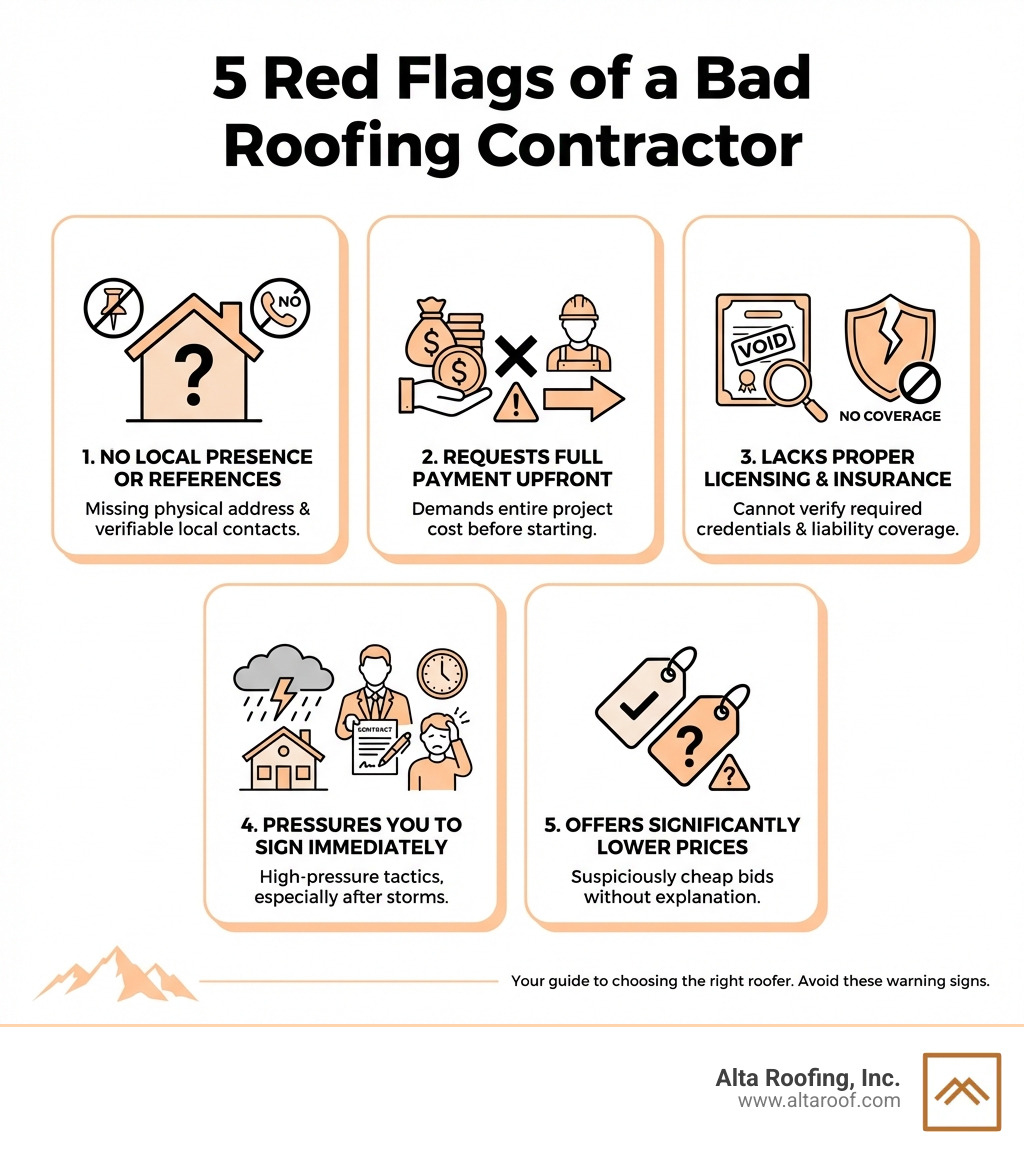
Signs Your Colorado Springs Roof Needs Attention
Ignoring early signs of roof damage can lead to costlier problems. Here are common indicators that your roof needs professional attention:
- Missing or Damaged Shingles: After a windstorm, you might find shingles on your lawn or see bare spots on your roof. This requires an immediate inspection.
- Granule Loss in Gutters: A large accumulation of sand-like shingle granules in your gutters indicates your shingles are aging and losing their protective layer.
- Ceiling Water Stains: Brown or yellow stains on interior ceilings or walls are a critical sign of a leak, which can lead to structural damage or mold.
- Dented or Damaged Flashing: Flashing is the metal around chimneys, vents, and skylights. If it's bent or cracked, often from hail, water can seep into your roofing system.
- Ice Dams: These ridges of ice at your roof's edge prevent proper drainage, causing water to back up under shingles. This often points to attic ventilation or insulation issues.
- Sagging Roof Deck: A visible sag in your roofline is a serious structural issue that needs immediate professional assessment.
- Age of Your Roof: If your asphalt shingle roof is approaching 20-30 years old, it's wise to have it inspected, even without obvious damage.
Some damage, like from hail, isn't always visible from the ground. That's why a professional inspection is crucial after a major storm. For more details, see our guide on How to Know When It's Time to Replace Your Roof.
Vetting Your Colorado Springs Roofing Contractor
Choosing a Colorado Springs roofing contractor is a significant investment in your home's protection. Based on our experience serving Colorado homeowners, here are the key qualities to look for.
Key Qualities of a Top Colorado Springs Roofing Contractor
These are the essential qualities that separate the good from the great:
- Local Presence and Experience: A reputable contractor will have a physical office and a long history in the community (e.g., 15+ years). This ensures they understand local climate challenges, building codes, and won't disappear after the job is done.
- Customer Reviews and Reputation: Check online platforms like the BBB, Google, and Yelp for consistently high ratings (e.g., 4.9+ stars) and positive reviews. A strong reputation is a clear indicator of reliable service.
- Proper Licensing and Insurance: This is non-negotiable. The contractor must be fully licensed and carry both general liability and workers' compensation insurance. Always ask for and verify proof to protect yourself.
- BBB A+ Rating: An A+ rating from the Better Business Bureau signifies a commitment to ethical business practices and customer satisfaction.
- Insurance Claim Expertise: In a hail-prone area like ours, you need a contractor who specializes in handling insurance claims. They should guide you through the process, meet with adjusters, and ensure a fair settlement.
- Comprehensive Warranties: Look for strong warranties on both materials and workmanship. A lifetime workmanship warranty is a sign of a contractor who stands behind their work.
- Free, No-Obligation Inspections: A trustworthy contractor will offer a free inspection with detailed photos and a clear report, allowing you to make an informed decision without pressure.

Here's a list of questions we recommend you ask any potential Colorado Springs roofing contractor during your vetting process:
- Are you licensed and insured in Colorado? Can I see proof?
- How long have you been operating in Colorado Springs?
- Can you provide local references or examples of your work in the area?
- What certifications do you hold (e.g., GAF Master Elite, Owens Corning Platinum Preferred)?
- What kind of warranties do you offer on workmanship and materials?
- How do you handle the insurance claims process? Will you meet with my adjuster?
- What types of roofing materials do you recommend for Colorado Springs' climate, and why?
- What is your project timeline, from start to finish?
- How do you ensure a clean and safe job site?
- What is your communication process during the project?
- Do you offer financing options?
By asking these questions, you'll gain valuable insights into a contractor's professionalism, experience, and commitment to customer satisfaction.
Understanding Certifications and Warranties
Certifications and warranties provide peace of mind and protect your investment.
The Power of Certifications: GAF Master Elite and Owens Corning Platinum Preferred
Certifications like GAF Master Elite or Owens Corning Platinum Preferred are marks of a top-tier contractor. To earn these, a roofer must be properly licensed, insured, have a proven reputation, and commit to ongoing training.
- GAF Master Elite Status: Only a small percentage of roofers achieve this status. It allows them to offer GAF's strongest warranties, like the Golden Pledge® Limited Warranty, which covers both manufacturing defects and workmanship.
- Owens Corning Platinum Preferred Contractor: Similar to GAF's certification, this status signifies that a contractor meets strict standards for professionalism and expertise. These contractors can also offer exclusive, comprehensive warranties.
Hiring a certified contractor ensures they are knowledgeable and that their work is backed by leading manufacturers.
Warranties: Your Shield of Protection
A reputable Colorado Springs roofing contractor should offer two main types of warranties:
- Workmanship Warranty: This covers the quality of the installation. A "lifetime workmanship warranty" provides long-term assurance that the installation will withstand Colorado's weather.
- Manufacturer Warranty: This covers defects in the roofing materials themselves. Certified contractors can often offer improved manufacturer warranties that provide greater protection than standard ones.
Always get warranties in writing and understand what they cover. A strong warranty package is your ultimate peace of mind.
The Nuts and Bolts: Materials, Costs, and Timelines
Let's explore the practicalities of a roofing project: materials, costs, and timelines. A roof is a complex system, including the deck, underlayment, ice and water barriers, ventilation, and the outer shingles, all working together to protect your home.
Best Roofing Materials for Colorado's Climate
Colorado Springs homeowners face heavy snow, high-altitude UV exposure, hail, and freeze-thaw cycles. The right materials are about resilience.

Here are the best materials for our weather:
- Impact-Resistant Shingles (Class 4): A must-have for Colorado, these shingles are rated for "Class 4 hail protection" and can often lead to insurance premium discounts.
- Architectural Asphalt Shingles: Thicker and more durable than traditional shingles, they offer a longer lifespan and better wind resistance.
- Metal Roofing Systems: Excellent for handling heavy snow loads and resisting hail. Metal roofs are long-lasting (50+ years), low-maintenance, and can reduce cooling costs.
- Synthetic Roofing Solutions: Composite slate or shake offers the look of natural materials with superior durability and impact resistance.
- Tile Roofing Applications: Clay and concrete tiles are incredibly durable (50+ years) and resistant to fire and hail, but are heavier and may require a reinforced roof structure.
To see how different styles might look, use this shingle color selector. You can also view examples of our projects in Our Work.
Typical Costs and Project Timelines in Colorado Springs
While an exact price requires an inspection, costs are influenced by several factors:
- Roof Size and Complexity: Larger or more complex roofs require more materials and labor.
- Material Choice: Costs vary significantly between asphalt shingles and premium options like metal or tile.
- Extent of Damage: Repairing underlying structural damage will add to the cost.
- Permits and Disposal: Fees for permits and the disposal of old materials are part of the total cost.
A reputable contractor provides a detailed estimate. The cheapest bid isn't always the best value. We also offer financing options for your project.
Most residential roof replacements in Colorado Springs take 1-3 days, depending on the roof's size, complexity, and weather conditions. We schedule projects efficiently, usually within 1-2 weeks of approval, to minimize disruption.
Services Beyond the Roof
A comprehensive Colorado Springs roofing contractor often provides related services. This allows you to coordinate multiple repairs with a single, trusted team.
- Seamless Gutters: Custom-fabricated on-site to reduce leaks and protect your foundation.
- Attic Insulation: Improves energy efficiency and helps prevent ice dams.
- Exterior Painting: A fresh coat of paint after a new roof boosts curb appeal.
- Siding Repair and Replacement: We can repair siding damaged by the same storms that affected your roof.
- Skylight Services: We install, repair, and replace skylights, ensuring they are properly sealed.
- Comprehensive Storm Damage Restoration: We act as a single point of contact to coordinate all trades for repairs to windows, fences, and more.
Explore our full range of Services to see how we can protect and beautify your home.
Navigating Roof Insurance Claims Like a Pro
Dealing with roof damage and insurance claims can be a headache. As a leading Colorado Springs roofing contractor, we specialize in guiding homeowners through this confusing process. We handle insurance claims and coordinate all necessary trades, acting as your single point of contact to ensure you receive a fair settlement.
Colorado insurance policies typically cover sudden storm damage from hail, wind, and snow. If you suspect damage, don't hesitate to file a claim.
The Insurance Claim Process Step-by-Step
Here’s how we simplify the insurance process for you:
- Free Inspection: Contact us for a comprehensive, no-obligation inspection. We'll thoroughly document all hail, wind, or other storm damage with detailed photos and notes.
- Filing the Claim: We provide you with a clear report and guide you on how to contact your insurance provider to open a claim, ensuring the initial report is accurate.
- Meeting the Adjuster: This is a crucial step. We meet your insurance adjuster on-site to point out all damages, ensuring nothing is overlooked and advocating for a complete and fair assessment.
- Reviewing the Scope of Work: Your insurer will provide a "Scope of Loss." We review this document with you to ensure it covers all necessary repairs and materials to restore your home to pre-storm condition and meet current building codes.
- Supplementing for Missing Items: If the initial estimate is insufficient, we work to "supplement" the claim for any missed items or necessary code upgrades, ensuring you receive full compensation.
- Project Commencement and Final Invoicing: Once the scope and funding are approved, we complete your project. Upon completion, we submit the final invoice to your insurance company for the remaining payment, making the process smooth and transparent.
This guided approach minimizes your stress and maximizes your insurance payout, ensuring your home gets the quality repairs it deserves.
Frequently Asked Questions about Roofing in Colorado Springs
Here are answers to some of the most common questions we receive from homeowners in Colorado Springs.
How do I know if I need a roof repair or a full replacement?
The decision depends on a few factors. A full replacement is often the best choice if your roof is over 20 years old, has widespread damage from hail or wind, or has leaks in multiple areas. For isolated issues like a few missing shingles, a repair may be sufficient. A professional inspection is the best way to get an honest recommendation. You can get a preliminary idea of costs with an Instant Quote.
How long does a typical roof replacement take?
Most residential roof replacements in Colorado Springs take 1-3 days. The exact timeline depends on the weather, the size and complexity of your roof, and the materials being used. We work efficiently and communicate clearly to minimize disruption.
What are the most common roofing issues in Colorado Springs?
Our local climate presents unique challenges. Our Colorado Springs roofing contractor teams are experienced in handling:
- Hail Damage: Hail can bruise, crack, and puncture shingles, compromising their integrity.
- Wind Damage: High-speed gusts can lift and tear shingles, leaving your roof exposed.
- Freeze-Thaw Cycles: Daily temperature swings cause water to freeze and expand under shingles, leading to cracks and ice dams.
- Heavy Snow Load Stress: Heavy snow places immense weight on a roof's structure, which can lead to sagging or failure.
- UV Degradation: Our high altitude means more intense UV radiation, which accelerates the aging of roofing materials.
Choosing a local contractor who understands these issues is critical for a long-lasting roof.
Your Partner for a Secure and Lasting Roof
Choosing the right Colorado Springs roofing contractor is simple when you know what to look for.
Remember these key takeaways:
- Vet Your Contractor: Prioritize local experience, top certifications (like GAF Master Elite), and strong warranties.
- Choose Climate-Appropriate Materials: Use impact-resistant shingles or metal roofing to withstand Colorado's hail, wind, and UV exposure.
- Simplify the Insurance Process: Partner with an expert who can manage your claim and coordinate all repairs.
At Alta Roofing, we are committed to serving the Colorado Springs community with integrity and craftsmanship. We ensure a smooth, transparent, and high-quality roofing experience, from the free inspection to the final nail.
Don't let Colorado's weather get the best of your home. Contact Us for a free, no-obligation inspection today. Let us provide you with a durable, beautiful roof that will protect your home for decades.
Explore our comprehensive roofing services to learn more.
